Books by William Faulkner
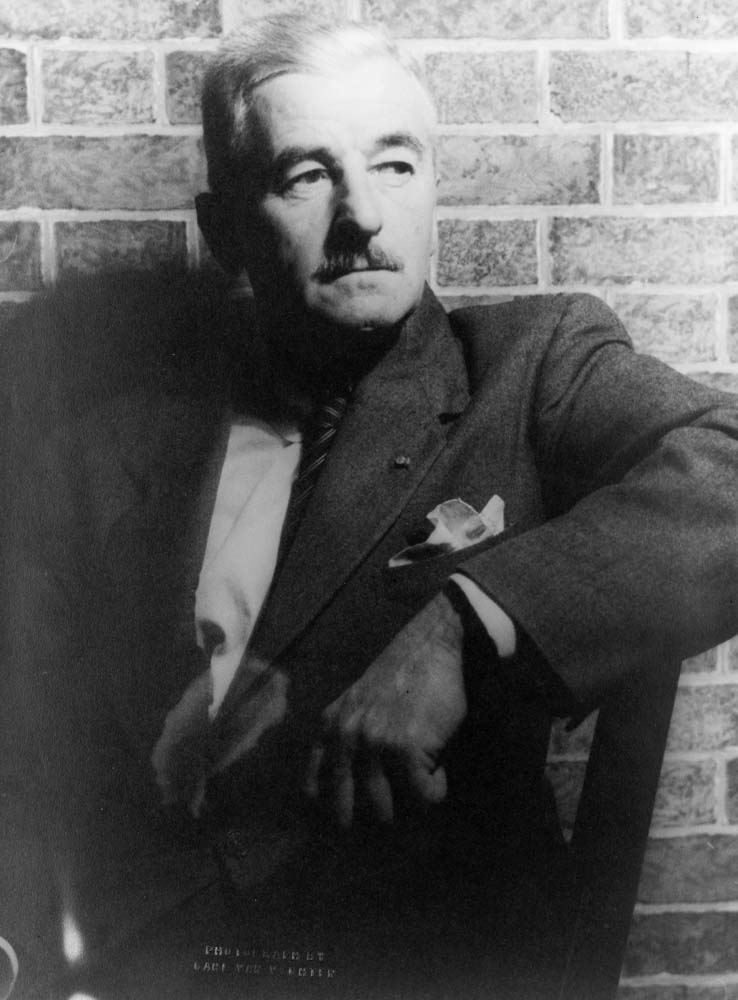
Born: 09/25/1897; Died: 07/06/1962William Faulkner Biography & Notes
William Faulkner wrote works of psychological drama and emotional depth, typically with long serpentine prose and high, meticulously-chosen diction. Like most prolific authors, he suffered the envy and scorn of others, and was considered to be the stylistic rival to Ernest Hemingway (his long sentences contrasted to Hemingway's short, 'minimalist' style). He is perhaps also considered to be the only true American Modernist prose fiction writer of the 1930s, following in experimental tradition European writers such as James Joyce, Virginia Woolf, and Marcel Proust, and known for using groundbreaking literary devices such as stream of consciousness, multiple narrations or points of view, and time-shifts within narrative.
Faulkner was born William Falkner (no "U") in New Albany, Mississippi, and raised in and heavily influenced by that state, as well as the general ambience of the South. Mississippi marked his sense of humor, his sense of the tragic position of Blacks and Whites, his keen characterization of usual Southern characters and his timeless themes, one of them being that fiercely intelligent people dwelled behind the facade of good old boys and simpletons. An early editor misspelled Falkner's name as "Faulkner", and the author decided to keep the spelling.
Faulkner's most celebrated novels include The Sound and the Fury (1929), As I Lay Dying (1930), Light in August (1932), The Unvanquished (1938), and Absalom, Absalom! (1936), which are usually considered masterpieces. Faulkner was a prolific writer of short stories: his first short story collection, These 13 (1931), includes many of his most acclaimed (and most frequently anthologized) stories, including "A Rose for Emily," "Red Leaves," "That Evening Sun," and "Dry September." During the 1930s, in an effort to make money, Faulkner crafted a sensationalist "pulp" novel entitled Sanctuary (first published in 1931). Its themes of evil and corruption (bearing Southern Gothic tones), resonate to this day. A sequel to the book, Requiem for a Nun, is the only play that he has published. It involves an introduction that is actually one sentence that spans for a couple pages. He received a Pulitzer Prize for A Fable, and won a National Book Award (posthumously) for his Collected Stories.
Faulkner was also an acclaimed writer of mysteries, publishing a collection of crime fiction, Knight's Gambit, that featured Gavin Stevens, an attorney, wise to the ways of folk living in Yoknapatawpha County. He set many of his short stories and novels in his fictional Yoknapatawpha County, based on--and nearly identical to in terms of geography--Lafayette County, of which his hometown of Oxford, Mississippi is the county seat; Yoknapatawpha was his very own "postage stamp" and it is considered to be one of the most monumetal fictional creations in the history of literature.
In his later years Faulkner moved to Hollywood to be a screenwriter (producing scripts for Raymond Chandler's The Big Sleep and Ernest Hemingway's To Have and Have Not--both directed by Howard Hawks). Faulkner started an affair with a secretary for Hawks, Meta Carpenter.
Faulkner was known rather infamously for his drinking problem as well, and throughout his life was known to be an alcoholic.
He was awarded the Nobel Prize in literature in 1949. He drank shortly before he had to sail to Stockholm to receive the distinguished prize. Once there, he delivered one of the greatest speeches any literature recipient had ever given. In it, he remarked "I decline to accept the end of man...Man will not only endure, but prevail..." Both events were fully in character. Faulkner donated his Nobel winnings, "to establish a fund to support and encourage new fiction writers", eventually resulting in the PEN/Faulkner Award for Fiction.
Faulkner served as Writer-In-Residence at the University of Virginia from 1957 until his death in 1962.
Faulkner was born William Falkner (no "U") in New Albany, Mississippi, and raised in and heavily influenced by that state, as well as the general ambience of the South. Mississippi marked his sense of humor, his sense of the tragic position of Blacks and Whites, his keen characterization of usual Southern characters and his timeless themes, one of them being that fiercely intelligent people dwelled behind the facade of good old boys and simpletons. An early editor misspelled Falkner's name as "Faulkner", and the author decided to keep the spelling.
Faulkner's most celebrated novels include The Sound and the Fury (1929), As I Lay Dying (1930), Light in August (1932), The Unvanquished (1938), and Absalom, Absalom! (1936), which are usually considered masterpieces. Faulkner was a prolific writer of short stories: his first short story collection, These 13 (1931), includes many of his most acclaimed (and most frequently anthologized) stories, including "A Rose for Emily," "Red Leaves," "That Evening Sun," and "Dry September." During the 1930s, in an effort to make money, Faulkner crafted a sensationalist "pulp" novel entitled Sanctuary (first published in 1931). Its themes of evil and corruption (bearing Southern Gothic tones), resonate to this day. A sequel to the book, Requiem for a Nun, is the only play that he has published. It involves an introduction that is actually one sentence that spans for a couple pages. He received a Pulitzer Prize for A Fable, and won a National Book Award (posthumously) for his Collected Stories.
Faulkner was also an acclaimed writer of mysteries, publishing a collection of crime fiction, Knight's Gambit, that featured Gavin Stevens, an attorney, wise to the ways of folk living in Yoknapatawpha County. He set many of his short stories and novels in his fictional Yoknapatawpha County, based on--and nearly identical to in terms of geography--Lafayette County, of which his hometown of Oxford, Mississippi is the county seat; Yoknapatawpha was his very own "postage stamp" and it is considered to be one of the most monumetal fictional creations in the history of literature.
In his later years Faulkner moved to Hollywood to be a screenwriter (producing scripts for Raymond Chandler's The Big Sleep and Ernest Hemingway's To Have and Have Not--both directed by Howard Hawks). Faulkner started an affair with a secretary for Hawks, Meta Carpenter.
Faulkner was known rather infamously for his drinking problem as well, and throughout his life was known to be an alcoholic.
He was awarded the Nobel Prize in literature in 1949. He drank shortly before he had to sail to Stockholm to receive the distinguished prize. Once there, he delivered one of the greatest speeches any literature recipient had ever given. In it, he remarked "I decline to accept the end of man...Man will not only endure, but prevail..." Both events were fully in character. Faulkner donated his Nobel winnings, "to establish a fund to support and encourage new fiction writers", eventually resulting in the PEN/Faulkner Award for Fiction.
Faulkner served as Writer-In-Residence at the University of Virginia from 1957 until his death in 1962.
Suggestions or corrections for the editor? Click here.
|
"Unpublished" Stories by William Faulkner, Thomas L. McHaney ( 1987)
These 45 stories were unpublished, turned into novels, or omitted from previous collections. In Faulkner's short fiction, he further explores many of the themes and characters of his novels--all part of the continuing saga of Mississippi past and present that consumed Faulkner as a writer all his life.
|
|
|
Absalom Absalom A Concordance to the Novel by William Faulkner, Noel Polk, John D. Hart ( 1989)
ABSALOM, ABSALOM! is often considered to be Faulkner's greatest book, and one of his most compelling explorations of race, gender, and the burdens of the past. The plot revolves around the character of Thomas Sutpen, son of poor whites in Faulkner's fictional Yoknapatawpha County. Densely written and notoriously "difficult," the novel explores the question of why Sutpen's son, Henry, killed Charles Bon, his friend and classmate, and the suitor of his sister, Judith. The action shifts from the early 19th century, when this event took place, to the "present" (1909-1910), when Quentin Compson, a student at Harvard, becomes obsessed with discovering the truth about his ancestor Sutpen--and hence about his family's past--and the relevance of that truth to the present.
|
|
|
Absalom, Absalom by William Faulkner ( 1972)
Recounts the story of the Sutpens, a Southern family, and how their dynasty fell into decadence after the Civil War.
|
|
Absalon, Absalon / Absalom, Abasalom by William Faulkner ( 2000) |
|
Absolon, Absolon / Absalom, Absalom by William Faulkner ( 2004)
ABSALOM, ABSALOM! is often considered to be Faulkner's greatest book, and one of his most compelling explorations of race, gender, and the burdens of the past. The plot revolves around the character of Thomas Sutpen, son of poor whites in Faulkner's fictional Yoknapatawpha County. Densely written and notoriously "difficult," the novel explores the question of why Sutpen's son, Henry, killed Charles Bon, his friend and classmate, and the suitor of his sister, Judith. The action shifts from the early 19th century, when this event took place, to the "present" (1909-1910), when Quentin Compson, a student at Harvard, becomes obsessed with discovering the truth about his ancestor Sutpen--and hence about his family's past--and the relevance of that truth to the present.
|
|
Annotations to William Faulkner's the Town by William Faulkner, Merrill Horton ( 1996) |
|
As I Lay Dying The Corrected Text by William Faulkner ( 2000)
The members of a Southern family contribute their individual tribulations to this encompassing impression of rural poverty.
|
|
As I Lay Dying A Concordance to the Novel by William Faulkner, Jack L. Capps ( 1977)
William Faulkner's AS I LAY DYING was published in 1930, exactly a year after THE SOUND AND THE FURY. A stream-of-consciousness novel narrated from 15 different points of view, AS I LAY DYING opens as the Bundren matriarch, Addie, is dying at the family home in Faulkner's fictional Yoknapatawpha County, Mississippi. (His later novel ABSALOM, ABSALOM includes a map of the place.) The novel chronicles the struggle of this clan of poor whites--Addie's husband, Anse, and their extended family--to travel to Jefferson, the county seat, to bury Addie, at her request, in the town she came from. Their hapless nine-day journey includes a flooded river, drowned mules, a broken leg, impatient buzzards circling the body, and a fire in a barn where they take refuge. Faulkner's bleakly comic novel, which explores the nature of grief, community, and family, is considered one of his masterpieces.
|
|
|
Barn Burning by William Faulkner ( 1979) |
|
Battle Cry Faulkner a Comprehensive Guide to the Brodsky Collection by William Faulkner ( 1985) |
|
|
The Bear by William Faulkner ( 1990)
"The Bear" is one chapter in GO DOWN, MOSES, a cycle of seven interrelated episodes that examine the complex, changing relationships among the descendents of the McCaslin family in Faulkner's mythical Yoknapatawpha County, Mississippi.
|
|
|
Big Woods The Hunting Stories by William Faulkner ( 1994)
"The Bear, " "The Old People, " "A Bear Hunt, " "Race at Morning"--some of Nobel Prize-winning author William Faulkner's most famous stories are collected in this volume--in which he observed, celebrated, and mourned the fragile otherness that is nature, as well as the cruelty and humanity of men. "Contains some of Faulkner's best work."
|
|
Classic American Short Stories by Conrad Aiken, Stephen Vincent Benet, Robert Penn Warren, William Faulkner, Thomas Wolfe, Edith Wharton, Willa Cather ( 2001) |
|
Collected Stories of William Faulkner Concordances to the Forty-Two Short Stories, with Statistical Summaries and Vocabulary Listings for Collected Stories, These 13, and Dr. Martino and Other Stories by William Faulkner, Noel Polk, John D. Hart ( 1990) |
|
|
Collected Stories of William Faulkner by William Faulkner ( 1995)
This magisterial collection of short works by Nobel Prize-winning author William Faulkner reminds readers of his ability to compress his epic vision into narratives as hard and wounding as bullets. Among the 42 selections in this book are such classics as "A Bear Hunt, " "A Rose for Emily, " Two Soldiers, " and "The Brooch."
|
|
Collected Stories of William Faulkner by William Faulkner ( 1995) |
|
|
Country Lawyer and Other Stories for the Screen by William Faulkner, Robert W. Hamblin, Louis Daniel Brodsky ( 1987)
Three screenplays deal with a conflict between generations, petty problems that delay the production of a warplane, and love between a poor girl and a rich boy.
|
|
|
Desciende, Moises / Go Down, Moses by William Faulkner ( 2004) |
|
|
Doctor Martino and Other Stories by William Faulkner, Simon Jones, Thomas L. McHaney ( 1987)
In Faulkner's short fiction, he further explores many of the themes and characters of his novels--all part of the continuing saga of Mississippi past and present that consumed Faulkner as a writer all his life.
|
|
|
Elmer by William Faulkner ( 1984) |
|
|
Essays, Speeches and Public Letters. by William Faulkner, James B. Meriwether ( 2004)
An essential collection of William Faulkner’s mature nonfiction work, updated, with an abundance of new material.
This unique volume includes Faulkner’s Nobel Prize acceptance speech, a review of Hemingway’s The Old Man and the Sea (in which he suggests that Hemingway has found God), and newly collected gems, such as the acerbic essay “On Criticism” and the beguiling “Note on A Fable.” It also contains eloquently opinionated public letters on everything from race relations and the nature of fiction to wild-squirrel hunting on his property. This is the most comprehensive collection of Faulkner’s brilliant non-fiction work, and a rare look into the life of an American master. |
|
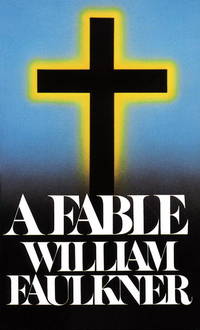
A Fable by William Faulkner ( 1978)
An allegorical story of World War I set in the trenches in France and dealing ostensibly with a mutiny in a French regiment.
|
|
Father Abraham by William Faulkner ( 1984)
A sale of fiery wild ponies, which manage to escape their corral after they are sold, introduce Flem Snopes, the man behind the sale, to the town of Frenchman's Bend.
|
|
|
Father Abraham Bound With the Wishing Tree by William Faulkner ( 1987) |
|
|
The Faulkner Reader Selections from the Works of William Faulkner by William Faulkner ( 1977)
One complete novel and excerpts from six others, three novellas, eight short stories, and Faulkner's Nobel Prize address comprise this reader.
|
|
|
Faulkner at Nagano by William Faulkner ( 1973) |
|
|
Faulkner at West Point by William Faulkner, Robert Paul Ashley ( 2002) |
|
Faulkner's MGM Screenplays by William Faulkner, Bruce F. Kawin ( 1982)
To supplement his meager earnings as a novelist, William Faulkner worked during the 1930s and '40s as a Hollywood script writer. but did not particularly distinguish himself in that genre. However, he was a co-writer for some great movies, including TO HAVE AND HAVE NOT and THE BIG SLEEP (among several other Howard Hawks films), GUNGA DIN, and BATTLE CRY.
|
|
|
The Faulkner-Cowley File Letters and Memories, 1944-1962 by William Faulkner, Malcolm Cowley ( 1978) |
|
|
Film Scripts One Henry 5, Streetcar Named Desire, the Big Sleep by William Faulkner, Laurence Olivier, Leigh Brackett, Reginald Beck, Fur ( 1989) |
|
|
Flags in the Dust by William Faulkner ( 1974)
The complete text of Faulkner's third novel, published for the first time in 1973, appeared with his reluctant consent in a much cut version in 1929 as Sartoris.
|
|
Gambito De Caballo/ Knight's Gambit by William Faulkner ( 2004) |
|
Go Down, Moses by William Faulkner ( 1991)
Faulkner examines the changing relationship of black to white and of man to the land, and weaves a complex work that is rich in understanding of the human condition.
|
|
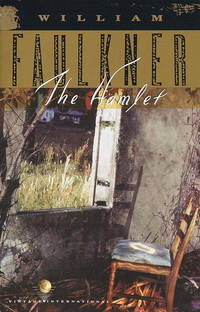
The Hamlet The Corrected Text by William Faulkner ( 1991)
This darkly comic masterpiece is the first novel of the trilogy about the Snopes family, the grasping clan that comes to dominate the mythical county of Yoknapatawpha, Mississippi after the fall of the Confederacy.
|
|
Helen A Courtship by William Faulkner ( 1981) |
|
|
Humo/Smoke by William Faulkner ( 1998) |
|
|
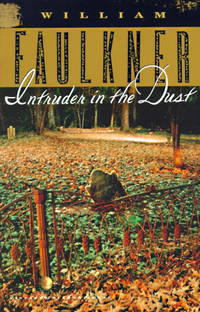
Intruder in the Dust by William Faulkner ( 1991)
A classic Faulkner novel which explores the lives of a family of characters in the South. An aging black who has long refused to adopt the black's traditionally servile attitude is wrongfully accused of murdering a white woman.
|
|
Intruder in the Dust A Concordance to the Novel by William Faulkner, Noel Polk ( 1983) |
|
|
Jealousy and Episode by William Faulkner ( 1977) |
|
|
Knight's Gambit by William Faulkner ( 1987)
Gavin Stevens, the wise student of crime and folkways of Mississippi's Yoknapatawpha county, plays the major role in these six stories of violence.
|
|
LA Mansion by William Faulkner ( 1996) |
|
|
Light in August by William Faulkner ( 1965)
William Faulkner's 1932 novel, LIGHT IN AUGUST, takes place in the first two decades of the 20th century. Its characters are mostly marginal outcasts, but most of the story concerns Joe Christmas, an orphaned man with a mysterious past who believes himself to be part black and is, accordingly, shunned--until he meets a tragic and gruesome end at the hands of the aptly named Percy Grimm, a driven and obsessive bigot who embodies the worst of his society. Faulkner originally titled this powerful novel DARK HOUSE, but after a chance remark from his wife he went into his study, crossed out that title, and replaced it with LIGHT IN AUGUST. Like so many of Faulkner's novels from this period onward, this one deals with the difficulties of transcending race and gender in the American South.
|
|
|
Light in August by William Faulkner ( 1968)
Several stories are woven together to show man's inner alienation from the society about him.
|
|
Light in August A Concordance to the Novel by William Faulkner, Jack L. Capps ( 1979)
William Faulkner's 1932 novel, LIGHT IN AUGUST, takes place in the first two decades of the 20th century. Its characters are mostly marginal outcasts, but most of the story concerns Joe Christmas, an orphaned man with a mysterious past who believes himself to be part black and is, accordingly, shunned--until he meets a tragic and gruesome end at the hands of the aptly named Percy Grimm, a driven and obsessive bigot who embodies the worst of his society. Faulkner originally titled this powerful novel DARK HOUSE, but after a chance remark from his wife he went into his study, crossed out that title, and replaced it with LIGHT IN AUGUST. Like so many of Faulkner's novels from this period onward, this one deals with the difficulties of transcending race and gender in the American South.
|
|
|
Mansion by William Faulkner ( 1965)
This completes the great trilogy of the Snopes family in Yoknapatawpha and traces the downfall of this indomitable post-bellum family.
|
|
Mansion A Concordance to the Novel by William Faulkner, Noel Polk, John D. Hart ( 1988) |
|
|
The Marble Faun and a Green Bough by William Faulkner ( 1965) |
|
|
The Marionettes by William Faulkner ( 1978)
MARIONETTES is a one-act play, considered one of Faulkner's minor works.
|
|
|
Mayday by William Faulkner ( 1980)
An obscure allegorical fable, written during the mid-1920s, recounts the troubled quest of a young medieval knight, Sir Galwyn of Arthgyl, who sets out in search of the woman he believes is destined for him.
|
|
|
Mientras Agonizo / As I Lay Dying by William Faulkner ( 2004) |
|
Mirrors of Chartres Street by William Faulkner ( 1977) |
|
|
Miss Zilphia Gant by William Faulkner ( 2002) |
|
|
Mosquitoes A Novel by William Faulkner ( 1996)
"Mosquitoes" centers around a colorful assortment of passengers, out on a boating excursion from New Orleans. The rich and the aspiring, social butterflies and dissolute dilettantes are all easy game for Faulkners barbed wit in this engaging high-spirited novel which offers a fascinating glimpse of Faulkner as a young artist.
|
|
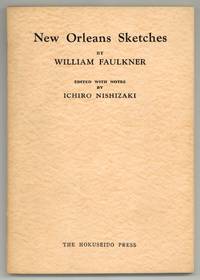
New Orleans Sketches by Carvel Collins, William Faulkner ( 2002)
Faulkner lived and worked in New Orleans as a young man, and he set several short pieces there, which are collected in this book.
|
|
Nobel Prize Acceptance Speech by William Faulkner ( 1986) |
|
|
Novels 1930-1935 As I Lay Dying, Sanctuary, Light in Augst, Pylon by William Faulkner ( 1985)
The library of America is dedicated to publishing America's best and most significant writing in handsome, enduring volumes, featuring authoritative texts. Hailed as the "finest-looking, longest-lasting editions ever made" (The New Republic), Library of America volumes make a fine gift for any occasion. Now, with exactly one hundred volumes to choose from, there is a perfect gift for everyone.
|
|
Novels, 1957-1962 The Town, the Mansion, the Reivers by William Faulkner ( 1999)
Three novels from the celebrated Southern writer chronicle offer a sampling of Faulkner's infamous Snopes saga--including The Mansion, which portrays the downfall of the rapacious, cruel dynasty--and his lesser-known comic novel The Reivers, which is set around a Memphis brothel.
|
|
El Oso / The Bear by William Faulkner ( 2003) |
|
|
The Portable Faulkner by William Faulkner, Malcolm Cowley ( 1977)
In prose of biblical grandeur and feverish intensity, William Faulkner reconstructed the history of the American South as a tragic legend of courage and cruelty, gallantry and greed, futile nobility, and obscene crimes. He set this legend in a small, minutely realized parallel universe he called Yoknapatawpha County, Mississippi.
|
|
Pylon A Concordance to the Novel by William Faulkner, Noel Polk, John D. Hart ( 1989)
PYLON, one of Faulkner's minor novels, is set in New Orleans during Mardi Gras, and centers on a group of airmen who are in town for the festivities. It was published in 1935.
|
|
|
Pylon The Corrected Text by William Faulkner ( 1987)
The new Vintage edition of the corrected text.
|
|
Rad Tech's Guide to Mri Basic Physics, Instrumentation, and Quality Control by William Faulkner ( 2001) |
|
Reading Faulkner Light in August Glossary and Commentary by William Faulkner, Robert McCoy, James Hinkle, Hugh M. Ruppersburg ( 1994)
William Faulkner's 1932 novel, LIGHT IN AUGUST, takes place in the first two decades of the 20th century. Its characters are mostly marginal outcasts, but most of the story concerns Joe Christmas, an orphaned man with a mysterious past who believes himself to be part black and is, accordingly, shunned--until he meets a tragic and gruesome end at the hands of the aptly named Percy Grimm, a driven and obsessive bigot who embodies the worst of his society. Faulkner originally titled this powerful novel DARK HOUSE, but after a chance remark from his wife he went into his study, crossed out that title, and replaced it with LIGHT IN AUGUST. Like so many of Faulkner's novels from this period onward, this one deals with the difficulties of transcending race and gender in the American South.
|
|
Reading Faulkner's Best Short Stories by William Faulkner, Hans H. Skei ( 1999)
A Nobel Prize-winning chronicler of the South, William Faulkner is best known for his novels The Sound and the Fury, As I Lay Dying, Sanctuary, and Light in August. But his achievements in the development of the novel are closely related to his often-neglected contributions to the short-story form. His best short fiction shows the master storyteller's command of "old tales and talking" and often concentrates on material later developed in novels. Faulkner's searching curiosity and his willingness to try repeatedly to improve a story, to find the right angle in order to catch the exact atmosphere, led to the creation of one of the most impressive bodies of short fiction in American literature. Reading Faulkner's Best Short Stories provides readers with an introduction to Faulkner as a short-story writer and offers close readings of twelve short stories representative of his most successful achievements within the genre. Dividing the study into two main parts, Hans H. Skei first concentrates on the writer's short-story career -- describing the circumstances surrounding the stories' composition, revision, publication, and collection -- and outlines scholarly studies of the body of his short fiction. Skei also emphasizes Faulkner's contributions to the short-story genre and explains the principles governing the selection of the short stories examined in this volume, Skei then turns to an analysis of the individual stories in terms of Faulkner's mastery of the form. Each chapter contains extensive textual information and publication history accompanied by brief comments on the story's place in the Faulkner canon and its relation to other works. Even though Faulkner's work in theshort-story genre is by definition not as polyphonic and dialogic as his novels, Faulkner was a major practitioner of the short-story form. His short fiction gives a vivid and diverse impression of his writing, fictional world, and limitless search for insight into human nature.
|
|
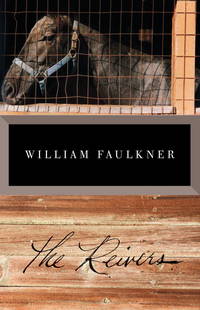
The Reivers A Reminiscence by William Faulkner ( 1992)
This grand misadventure is the story of three unlikely thieves, or reivers: 11-year-old Lucius Priest and two of his family's retainers. In 1905, these three set out from Mississippi for Memphis in a stolen motorcar. The astonishing and complicated results reveal Faulkner as a master of the picaresque.
|
|
Requiem for a Nun Playscript Materials by William Faulkner ( 1975)
This sequel to Faulkner's Sanctuary written 20 years later, takes up the story of Temple Drake eight years after the events related in Sanctuary.
|
|
Requiem for a Nun A Concordance to the Novel by William Faulkner, Noel Polk ( 1979)
REQUIEM FOR A NUN is a sequel to the earlier SANCTUARY, and continues the story of Temple Drake eight years later. Now married to Gowan Stevens, Temple tries to save the life of a nurse who is accused of murdering Temple and Gowan's child. Most of the novel is presented in the form of a play. Each act begins with an essay giving the background of the events and a history of the mythical Yoknapatawpha County, as well as a consideration of the ways in which the past affects the present--Faulkner's perennial theme.
|
|
|
Review Questions for Mri by William Faulkner, Carolyn Kaut ( 1995)
An invaluable tool for study and self-assessment of the techniques involved in magnetic resonance imaging. With illustrations and photos throughout, this review book is the ultimate test prep and refresher for the ARRT Registry Examination in MRI.
|
|
The Road to Glory A Screenplay by William Faulkner, Joel Sayre ( 1981) |
|
|
El Ruido Y La Furia/ The Noise and the Fury by William Faulkner ( 2005) |
|
Sanctuary The Corrected Text by William Faulkner ( 1993)
An assortment of perverse characters act out this dramatic story of the kidnapping of a Mississippi debutante.
|
|
Santuario / Sanctuary by William Faulkner ( 2006) |
|
|
Sartoris French Language Edition by William Faulkner ( 1977)
SARTORIS is Faulkner's first novel to be set in Yoknapatawpha County, the fictional locale that was to preoccupy him throughout his career--though here it is called "Yocona." The story of a disillusioned and world-weary Southern soldier returning home from World War I, SARTORIS also introduces several of Faulkner's main themes: the decline of an old culture, the influence of the past on the present, and the subtle destruction of personality wrought by war.
|
|
|
Schwarze Musik/Black Music by William Faulkner ( 1994) |
|
|
Selected Letters of William Faulkner by William Faulkner ( 1978)
Reveals, through selected correspondences, the sources and intentions of Faulkner's art as well as his aesthetic, philosophical, social, and political attitudes.
|
|
|
Selected Short Stories of William Faulkner by William Faulkner ( 1993)
Faulkner was a master of the short story. Most of the stories in this collection are drawn from the greatest period in his writing life, the fifteen or so years beginning in 1929, when he published The Sound and the Fury. They deal with many of the themes found in the novels and with the subjects and characters of small-town Mississippi life that are uniquely Faulkner's. In "A Rose for Emily", the first of his stories to appear in a national magazine, a straightforward, neighborly narrator relates a tale of love, betrayal, murder, and implied necrophilia. The vicious Snopes family of The Hamlet trilogy turns up in "Barn Burning" (1938), about a son's response to the activities of his arsonist father. Other inhabitants of Yoknapatawpha County appearing here include Jason and Caddy Compson, childish witnesses to the terror of the pregnant black laundress in "That Evening Sun" (1930), who fears that her lover will murder her.
|
|
Short Stories Holograph Manuscripts and Typescripts by William Faulkner, Joseph Leo Blotner ( 1987) |
|
|
Snopes The Hamlet, the Town, the Mansion/Three Novels in 1 by William Faulkner ( 1994)
Includes the author's trilogy about a pioneer family, set in rural Mississippi.
|
|
Soldiers' Pay by William Faulkner ( 1996)
Faulkner's first novel, published in 1926, is one of the most memorable works to emerge from the First World War. The story of a wounded veterans homecoming, it is partly autobiographical, filled with hope, dark laughter, and despair.
|
|
The Sound and the Fury by William Faulkner ( )
First published in 1929, Faulkner created his "heart's darling", the beautiful and tragic Caddy Compson, whose story Faulkner told through separate monologues by her three brothers: the idiot Benjy, the neurotic suicidal Quentin, and the monstrous Jason.
|
|
The Sound and the Fury by William Faulkner ( 1967)
THE SOUND AND THE FURY, Faulkner's fourth novel (1929), is his first true masterpiece. Depicting the decline of the once aristocratic Compson family, the novel is composed of four stream-of-consciousness narratives, each told by a different character with his or her own way of relating events. The first is sweet, gentle Benjy Compson, who at the Christlike age of 33 is severely retarded, writing in an elliptical, time-free, sometimes obscure style. (He describes two men playing golf as: "They took the flag out, and they were hitting. Then they put the flag back and they went to the table, and he hit and the other hit.") Then the narrative moves back 18 years, to 1910, and is supplied by Benjy's brother Quentin, a student at Harvard about to commit suicide, who is obsessed with his sister, Caddy. The story returns to the present--1928--with the voice of Jason, the third Compson brother, a cruel and rapacious man who reveals certain family secrets that have been hinted at in the other sections, and introduces Caddy's almost grown daughter, also named Quentin. The bulk of the fourth and final section revolves around Dilsey, the black woman who has been a Compson family servant for much of her life. THE SOUND AND THE FURY was Faulkner's own favorite novel, primarily, he says, because it is his "most splendid failure." But many consider it to be his finest work.
|
|
Sparknotes As I Lay Dying by William Faulkner ( 2003)
William Faulkner's AS I LAY DYING was published in 1930, exactly a year after THE SOUND AND THE FURY. A stream-of-consciousness novel narrated from 15 different points of view, AS I LAY DYING opens as the Bundren matriarch, Addie, is dying at the family home in Faulkner's fictional Yoknapatawpha County, Mississippi. (His later novel ABSALOM, ABSALOM includes a map of the place.) The novel chronicles the struggle of this clan of poor whites--Addie's husband, Anse, and their extended family--to travel to Jefferson, the county seat, to bury Addie, at her request, in the town she came from. Their hapless nine-day journey includes a flooded river, drowned mules, a broken leg, impatient buzzards circling the body, and a fire in a barn where they take refuge. Faulkner's bleakly comic novel, which explores the nature of grief, community, and family, is considered one of his masterpieces.
|
|
Stallion Road A Screenplay by William Faulkner, Robert W. Hamblin, Louis Daniel Brodsky ( 1989)
Faulkner wrote several screenplays during his stint in Hollywood in the 1930s. Most of them were flops, but this is one of his more successful efforts.
|
|
|
A Summer of Faulkner As I Lay Dying/ The Sound and the Fury/ Light in August by William Faulkner ( 2005)
Oprah Winfrey's demanding but rewarding reading selection for summer, 2005, is actually three novels, all by William Faulkner. Included are AS I LAY DYING, a stream-of-consciousness novel narrated from 15 different points of view, about the efforts of a family of poor whites to transport the dead body of Addie, the matriarch, for burial back to her home town in Faulkner's fictional Yoknapatawpha County, Mississippi; THE SOUND AND THE FURY, considered by many to be Faulkner's finest work, about the decline of the once aristocratic Compson family, as told in four often challenging stream-of-consciousness narratives; and LIGHT IN AUGUST, a dark novel about race relations in the South, in which Joe Christmas, an orphaned man with a mysterious past, shunned because he is part black, meets a tragic and gruesome end at the hands of a driven and obsessive bigot who embodies the worst of his society.
|
|
These 13 by William Faulkner ( 1987) |
|
|
Thinking of Home William Faulkner's Letters to His Mother and Father 1918-1925 by William Faulkner ( 2000)
"How often have I lain beneath rain on a strange roof, thinking of home," says Darl Bundren in William Faulkner's As I Lay Dying. How much Faulkner himself is speaking may be suggested by this moving collection of nearly 150 letters. Written during his twenties, these letters describe Faulkner's first encounters with the North ("...I made my first subway trip yesterday. The experience showed me that we are not descended from monkeys, as some say, but from lice."); his brief World War I military service, which grew in the retelling; the productive New Orleans months with Sherwood Anderson; and his first trip to Europe, with cold autumn days in Paris ("Good thing the Lord gave these folks wine--they rate a recompense of some kind for this climate.") Fascinating in themselves for their close observation of people and places, the letters also offer glimmers of The Sound and the Fury and other future works, as the young writer stores up characters, settings, and events that will re-emerge, transformed, int the great novels of his maturity. Never before published, these letters are from the Faulkner collection at the Harry Ransom Humanities Research Center at the University of Texas at Austin.
|
|
Three Famous Short Novels by William Faulkner ( 1958)
Three different ways to approach Faulkner, each of them representative of his work as a whole. Includes 'Spotted Horses,' 'Old Man,' and his famous 'The Bear.'
|
|
To Have and Have Not Screenplay by Ernest Hemingway, William Faulkner, Jules Furthman ( 1980) |
|
The Town A Novel of the Snopes Family by William Faulkner ( 1973)
This is the second volume of Faulkner's trilogy about the Snopes family--his symbol for the grasping, destructive element in the post-bellum South.
|
|
Town A Concordance to the Novel by William Faulkner, Lawrence Z. Pizzi ( 1985)
The second volume of Faulkner's "Snopes" trilogy, this novel continues the exploits of the ruthless and ambitious Flem Snopes. Flem moves from Frenchman's Bend to Jefferson, where he begins his scheme of taking over the town, beginning with a job at the power plant and later working at the bank. What also preoccupies him, however, is his plan for avenging his wife's infidelity.
|
|
|
Uncollected Stories of William Faulkner Concordances to the Forty-Five Short Stories by William Faulkner, Noel Polk, John D. Hart ( 1990) |
|
|
Unvanquished by William Faulkner ( 1991)
Set in Mississippi during the Civil War and Reconstruction, THE UNVANQUISHED focuses on the Sartoris family, who, with their code of personal responsibility and courage, stand for the best of the Old South's traditions.
|
|
Vision in Spring by William Faulkner ( 1984) |
|
|
The Wild Palms If I Forget Thee, Jerusalem by William Faulkner ( 1995) |
|
The Wild Palms by William Faulkner ( 1984)
A young doctor whose career is wrecked by a love affair and a convict who is swept to unwanted freedom by a flood are the central characters in Faulkner's work on flight and refuge.
|
|
|
The William Faulkner Audio Collection Rose for Emily/That Evening Sun/Spotted Horses/Wash/Barn Burning by William Faulkner ( 2003) William Faulkner never stood taller than five feet, six inches, but in the realm of American literature, he is a giant. More than simply a renowned Mississippi writer, the Nobel-Prize winning novelist and short story writer is acclaimed throughout the world as one of the twentieth century's greatest writers, one who transformed his "postage stamp" of native soil into an apocryphal setting in which he explored, articulated, and challenged the "old verities and truths of the heart." In this collection, we are proud to present a historic recording of Mr. Faulkner reading his 1949 Nobel acceptance speech and excerpts from As I Lay Dying and The Old Man. |
|
William Faulkner Novels 1926-1929 Soldiers' Pay / Mosquitoes / Flags in the Dust / The Sound And The Fury by William Faulkner ( 2006)
A final installment of an authoritative, five-volume collection includes Soldiers' Pay, Mosquitoes, and newly restored editions of Flags in the Dust and The Sound and the Fury, in a volume that features restored passages that were edited by the works' original publishers.
|
|
William Faulkner's Absalom Absalom by William Faulkner ( 1970)
ABSALOM, ABSALOM! is often considered to be Faulkner's greatest book, and one of his most compelling explorations of race, gender, and the burdens of the past. The plot revolves around the character of Thomas Sutpen, son of poor whites in Faulkner's fictional Yoknapatawpha County. Densely written and notoriously "difficult," the novel explores the question of why Sutpen's son, Henry, killed Charles Bon, his friend and classmate, and the suitor of his sister, Judith. The action shifts from the early 19th century, when this event took place, to the "present" (1909-1910), when Quentin Compson, a student at Harvard, becomes obsessed with discovering the truth about his ancestor Sutpen--and hence about his family's past--and the relevance of that truth to the present.
|
|
|
William Faulkner's As I Lay Dying by William Faulkner ( 1974)
William Faulkner's AS I LAY DYING was published in 1930, exactly a year after THE SOUND AND THE FURY. A stream-of-consciousness novel narrated from 15 different points of view, AS I LAY DYING opens as the Bundren matriarch, Addie, is dying at the family home in Faulkner's fictional Yoknapatawpha County, Mississippi. (His later novel ABSALOM, ABSALOM includes a map of the place.) The novel chronicles the struggle of this clan of poor whites--Addie's husband, Anse, and their extended family--to travel to Jefferson, the county seat, to bury Addie, at her request, in the town she came from. Their hapless nine-day journey includes a flooded river, drowned mules, a broken leg, impatient buzzards circling the body, and a fire in a barn where they take refuge. Faulkner's bleakly comic novel, which explores the nature of grief, community, and family, is considered one of his masterpieces.
|
|
|
William Faulkner's Sanctuary by William Faulkner ( 1987)
A collection of critical essays on Faulkner's "Sanctuary" arranged in chronological order of their original publication.
|
|
William Faulkner's Short Stories by William Faulkner, James B. Carothers ( 1985)
In Faulkner's short fiction, he further explores many of the themes and characters of his novels--all part of the continuing saga of Mississippi past and present that consumed Faulkner as a writer all his life.
|
|
|
William Faulkner's The Sound and the Fury by William Faulkner ( 2008) |
|
William Faulkner's the Sound and the Fury by William Faulkner ( 1985)
A guide to reading "The Sound and the Fury" encourages analysis of plot, style, form, and structure, and includes background on the author's life and times, sample tests, term paper suggestions, and a reading list.
|
|
Wishing Tree by William Faulkner ( 1967) |
|
|
El arbol de los deseos/ The Wishing Tree by William Faulkner, Mikel Mardones ( 2009) |
|
|
El ruido y la furia / The Sound and the Fury by William Faulkner ( 2004) |
|
uvres Romanesques by William Faulkner, Michel Gresset ( 2000) |
|