cart Cart 0 items
Login | Register | Help

Books by Joan Didion

Born: 12/05/1934

Joan Didion Biography & Notes


Joan Didion attended the University of California at Berkeley and then moved to New York. She was an editor at Vogue until 1963, when she became a published writer. She married John Gregory Dunne in 1964 and began to collaborate with him on screenplays. They lived in California for many years--where their daughter Quintana Roo was born in 1966--but eventually settled in New York City.


Suggestions or corrections for the editor? Click here.

After Henry After Henry by Joan Didion ( 1993)
In her latest forays into the American scene, the author of Miami, Democracy, and Salvador covers ground from Washington to Los Angeles and from a TV producer's mansion to the racial battlefields of New York's criminal courts. And along the way, she reveals the mythic narratives that other commentators miss.
A Book of Common Prayer A Book of Common Prayer by Joan Didion ( 1995)
In this Conradian masterpiece of American innocence and evil set in the fictional Central American country of Boca Grande, two American women face the harsh realities, political and personal, of living on the edge in a land with an uncertain future. Writing with her signature telegraphic swiftness, the author creates a terrifying commentary on an age of conscienceless authority.
Democracy Democracy by Joan Didion ( 1995)
Moving between Honolulu, Jakarta and Saigon, against the historical backdrop of the final withdrawal from Vietnam, this novel is a bitingly funny, cumulatively devastating post-mortem of our national mores and institutions. A U.S. Senator, his wife, senatorial groupies and international arms dealing intersect with one another in this blistering indictment of American amnesia.
Fixed Ideas Fixed Ideas America Since 9.11 by Joan Didion, Frank Rich ( 2003)
Joan Didion's outraged essay decries the passivity with which most Americans have greeted the "new unilateralism" of the administration of George W. Bush in the wake of 9/11. Didion takes great pains in analyzing the government's opportunistic public relations campaign to sell the war on terrorism, and in explaining the "Bush Doctrine"--its obfuscating rhetoric and its potential for harm. The essay was greeted with an outpouring of reader reaction when it was first published in the New York Review of Books. Frank Rich of the New York Times contributes an introduction.
Joan Didion Essays & Conversations by Ellen G. Friedman, Joan Didion ( 1984)
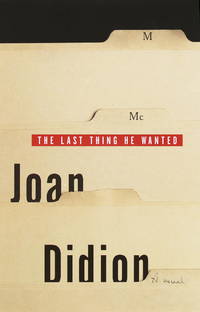
The Last Thing He Wanted The Last Thing He Wanted by Joan Didion ( 1997)
Creating a "menacing world where the reader is held hostage" ("Los Angeles Times"), the legendary author of "Slouching Toward Bethlehem" now trains her eye on the far frontiers of the Monroe Doctrine, where history dissolves into conspiracy--Dallas, 1963; Iran Contra in 1984--and fashions a moral thriller as hypnotic and provocative as any by Joseph Conrad or Graham Greene.
Miami Miami by Joan Didion ( 1998)
It is where Fidel Castro raised money to overthrow Batista and where two generations of Castros enemies have raised armies to overthrow him, so far without success. It is where the bitter opera of Cuban exile intersects with the cynicism of U.S. foreign policy. It is a city whose skyrocketing murder rate is fueled by the cocaine trade, racial discontent, and an undeclared war on the island ninety miles to the south. As Didion follows Miami's drift into a Third World capital, she also locates its position in the secret history of the Cold War, from the Bay of Pigs to the Reagan doctrine and from the Kennedy assassination to the Watergate break-in. Miami is not just a portrait of a city, but a masterly study of immigration and exile, passion, hypocrisy, and political violence.
Play It As It Lays Play It As It Lays A Novel by Joan Didion ( 2005)
Maria Wyeth, an actress in Los Angeles, is stumbling through her life after the trauma of an abortion that was forced on her by her husband. Her marriage ends, as does the love affair she was involved in, and she is unable to prevent the suicide of a good friend. Clinging to her only child, a mentally damaged daughter named Kate, the nihilistic Maria struggles to stay afloat in a world marked by shallow frivolity and a complete absence of values. Much of the story centers on Maria's compulsive driving through the Mojave Desert, as she meditates on the hollowness of the film world and, by extension, American culture. Joan Didion's lean and cool-headed novel was a sensation when it was originally published in 1971.
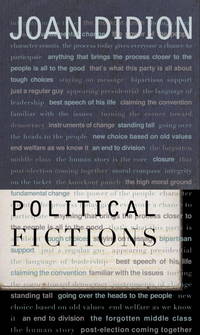
Political Fictions Political Fictions by Joan Didion ( 2002)
In 1988, Joan Didion began looking at the American political process for The New York Review of Books. What she found was not a mechanism that offered the nation’s citizens a voice in its affairs but one designed by—and for—“that handful of insiders who invent, year in and year out, the narrative of public life.” The eight pieces collected here from The New York Review build, one on the other, to a stunning whole, a portrait of the American political landscape that tells us, devastatingly, how we got where we are today.

In Political Fictions, tracing the dreamwork that was already clear at the time of the first Bush ascendance in 1988, Didion covers the ways in which the continuing and polarizing nostalgia for an imagined America led to the entrenchment of a small percentage of the electorate as the nation’s deciding political force, the ways in which the two major political parties have worked to narrow the electorate to this manageable element, the readiness with which the media collaborated in this process, and, finally and at length, how this mindset led inexorably over the past dozen years to the crisis that was the 2000 election. In this book Didion cuts to the core of the deceptions and deflections to explain and illuminate what came to be called “the disconnect”—and to reveal a political class increasingly intolerant of the nation that sustains it.

Joan Didion’s profound understanding of America’s political and cultural terrain, her sense of historical irony, and the play of her imagination make Political Fictions a disturbing and brilliant tour de force.
Run, River Run, River by Joan Didion ( 1994)
Joan Didion's electrifying first novel begins with a murder on the bank of the Sacramento River--a murder that is at once an act of vengeance and a blind attempt to shore up a disintegrating marriage. Out of that act, Didion constructs a tragic and beautifully nuanced work of fiction.
Salvador Salvador by Joan Didion ( 1994)
In 1982, Didion traveled to El Salvador at the height of the ghastly civil war. From battlefields to body dumps, she trained a merciless eye not only on the terror but also on the depredations and evasions of our own country's foreign policy.
Salvador by Joan Didion ( 1983)
The author recounts her 1982 visit to El Salvador and describes the terror, fear and political repression that permeated the country.
Seduction and Betrayal Seduction and Betrayal Women and Literature by Elizabeth Hardwick ( 2001)
Slouching Towards Bethlehem Essays by Joan Didion ( 1968)
Twenty essays on such diverse topics as John Wayne, the Haight-Ashbury culture, and the Newport mansions.
Vintage Didion Vintage Didion by Joan Didion ( 2004)
Vintage Readers are a perfect introduction to some of the greatest modern writers presented in attractive, accessible paperback editions.

“Didion has the instincts of an exceptional reporter and the focus of a historian . . . a novelist’s appreciation of the surreal.” —Los Angeles Times Book Review

Whether she’s writing about civil war in Central America, political scurrility in Washington, or the tightl -braided myths and realities of her native California, Joan Didion expresses an unblinking vision of the truth.

Vintage Didion includes three chapters from Miami; an excerpt from Salvador; and three separate essays from After Henry that cover topics from Ronald Reagan to the Central Park jogger case. Also included is “Clinton Agonistes” from Political Fictions, and “Fixed Opinions, or the Hinge of History,” a scathing analysis of the ongoing war on terror.
We Tell Ourselves Stories in Order to Live We Tell Ourselves Stories in Order to Live Collected Nonfiction by Joan Didion ( 2006)
A definitive compilation of essays and nonfiction writings spanning more than forty years includes the author's reflections on politics, lifestyle, place, and cultural figures, including her studies of Haight-Ashbury, the Manson family, the Black Panthers, California earthquakes, Bill Clinton and Kenneth Starr, and much more.
Where I Was from Where I Was from by Joan Didion ( 2003)
In this moving and unexpected book, Joan Didion reassesses parts of her life, her work, her history, and ours. Where I Was From, in Didion’s words, “represents an exploration into my own confusions about the place and the way in which I grew up, confusions as much about America as about California, misapprehensions and misunderstandings so much a part of who I became that I can still to this day confront them only obliquely.” The book is a haunting narrative of how her own family moved west with the frontier from the birth of her great-great-great-great-great-grandmother in Virginia in 1766 to the death of her mother on the edge of the Pacific in 2001; of how the wagon-train stories of hardship and abandonment and endurance created a culture in which survival would seem the sole virtue.

In Where I Was From, Didion turns what John Leonard has called “her sonar ear, her radar eye” onto her own work, as well as that of such California writers as Frank Norris and Jack London and Henry George, to examine how the folly and recklessness in the very grain of the California settlement led to the California we know today–a state mortgaged first to the railroad, then to the aerospace industry, and overwhelmingly to the federal government, a dependent colony of those political and corporate owners who fly in for the annual encampment of the
Bohemian Club. Here is the one writer we always want to read on California showing us the startling contradictions in its–and in America’s–core values.

Joan Didion’s unerring sense of America and its spirit, her acute interpretation of its institutions and literature, and her incisive questioning of the stories it tells itself make this fiercely intelligent book a provocative and important tour de force from one of our greatest writers.

Joan Didion was born in California and lives in New York. She is the author of five novels and six previous books of nonfiction: Political Fictions, After Henry, Miami, Salvador, The White Album, and Slouching Towards Bethlehem.
The White Album The White Album Essays by Joan Didion ( 2009)
The White Album by Joan Didion ( 1980)
Joan Didion's second book of essays, written in her now-celebrated cool, minimalist prose, covers such topics as Janis Joplin, the Doors, Huey Newton, the Manson Family, Roman Polanski, the politics of water in Los Angeles, and Ronald Reagan's $1.4 million never-used governor's mansion. There are also interesting essays on Georgia O'Keeffe and Doris Lessing, and many more personal essays as well, including one about her migraines ("In Bed").
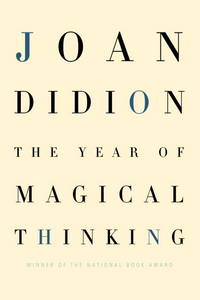
The Year of Magical Thinking The Year of Magical Thinking by Joan Didion ( 2008)
In THE YEAR OF MAGICAL THINKING, Joan Didion writes an account of her life since the 2003 death of her husband, John Gregory Dunne. Didion's grief was profound and debilitating; she and Dunne had been married for nearly 40 years, during which they were hardly ever apart. But in the course of her mourning period, she also gained crucial insights into herself, her marriage, death, and loss. Winner of the 2005 National Book Award for Nonfiction and named one of the 10 Best Books of 2005 by the New York Times.
The Year of Magical Thinking The Play by Joan Didion ( 2007)

My shopping cart


...your cart is currently empty


Sign up to receive offers and updates: