
Book reviews from feeney
North Carolina, United States
- Number of reviews
- 205
- Average review
-
feeney's average rating is 5 of 5 Stars.

The Cancer Chronicles Unlocking Medicine's Deepest Mystery
by George Johnson
On Feb 28 2014, Feeney said:
feeney rated this book 5 of 5 Stars.
Science writer George Johnson builds his narrative around his wife's relatively successful experience with cancers in various parts of her body. The couple lived near Santa Fe, New Mexico. And the author began by describing fossil records in the western United States of dinosaurs and their cancers. He intersperses his narrative of efforts by himself and his wife to help doctors cure her with excursuses into the history of more than one form of cancer around the world. Treatments of cancer, including X-rays and radium, were often applied without understanding their own potential lethality. The book and its Index are up to date and informative. How are cancers to be understood? As some sort of alien Sci Fi invaders? As part of of our own human genetics and DNA with as much right to "do their thing" as our immune systems are to try to stop them in their tracks? So far cancers are holding their own in the face of ever improving science and medicine. We can expect cancer to live on among humans for an indifinite future to come.
Eat Move Sleep
by Tom Rath
On Dec 24 2013, Feeney said:
feeney rated this book 1 of 5 Stars.
I read Tom Rath's EAT MOVE SLEEP (no commas!) because a beloved personal trainer sang its praises. Indeed, in a recent newspaper review, my trainer wrote: "If I had to narrow my library to five books, 'Eat Move Sleep' would be one of them." To me personally she said: "I agree with every word in the book." And my wife during and after reading EAT MOVE SLEEP told me: "yes, I agree with everything the author says. But it is not well written." *** My take is, perhaps, somewhat more cynical. The words of EAT MOVE SLEEP are as true as the names, numbers and addresses in a telephone directory. At its very best, stylistically, this book is a very poor man's POOR RICHARD'S ALMANACK (Benjamin Franklin, 1732 - 1758). Compare three of Franklin's adages with three of Rath: *** -- Ben Franklin: (1) "Let thy maidservant be faithful, strong, and homely." (2) "Wine...a constant proof that God loves us, and loves to see us happy.” (3) “There cannot be good living where there is not good drinking.” ***-- Tom Rath: (1) "Ties can even cause eye problems, decreased range of motion in the neck, and increased tension in the back and shoulders" (Ch 28). (2) "Stigmatize Sinful Foods ... start to view fatty, fried, and sugary foods with contempt" (Ch. 17). (3) "Be Cold in Bed... try to sleep in a room that is a few degrees cooler than the temperature you are accustomed to during the day" (Ch. 13). *** Like my esteemed fitness coach and my wife, I find very little to disagree with in EAT MOVE SLEEP. But also very little new. A few weeks with WEIGHTWATCHERS will toss out aphorisms similar to Rath's: "Eat less, Move more!" "All Bites Count." Watching nurses doing 12 hour stints in hospitals, almost all of it on their feet tracks well with Rath's notion that sitting behind computers all day long is ruining the health of the human race. Perhaps most "original" in his presentation is the notion that sleep, eating and moving should not be held in mental isolation. Each impacts the other -- for better or for worse. ***The subtitle of EAT MOVE SLEEP is HOW SMALL CHOICES LEAD TO BIG CHANGES. The ancient Chinese believed that "a journey of 1,000 li begins with one step." Tom Rath urges us to have faith that small steps in a good direction can form habits leading to bigger and bolder experiments in good health. Start, for instance, by not "Surrounding a healthy food with two slices of bread. ... Do all you can to eat less bread. Take the top slice off a sandwich so you consume half as much. Better yet, replace bread with a bed of greens for a much healthier option" (Ch. 13). ***The book contains 30 numbered chapters. These are recapitulated at narrative's end by "First 30 Day Challenge." There are also end notes on each of the thirty chapters collected after page 219. To my annoyance, the notes are under chapter numbers without chapter names. There is no subject index. ***This book could be usefully condensed into a daily "health calendar" with an aphorism a day. Or it could be read daily or weekly, a page or two at a time. More sustained attention to EAT MOVE SLEEP would be as sophorific as reading a telephone directory. I find nothing inspired about this book. It is a barely coherent hodge podge of health aphorisms, most of which are reasonable, a few downright odd. Let the buyer beware! -OOO-

Trilby
by George Du Maurier
On Nov 9 2013, Feeney said:
feeney rated this book 5 of 5 Stars.
If you value your soul, young Miss Trilby O'Farrall, beware of musical geniuses like Svengali who are also powerful hypnotists! *** One of the most widely read novels in 1890s UK and USA was written by painter, book illustrator and social satirist George du Maurier (1834 - 1896), grandfather of novelist Daphne du Maurier (1907 - 1989). The novel is called TRILBY and has inspired at least three good feature films, two named for its villain "Svengali." And in one of the latter the great John Barrymore played the title role. ***The novel has a rather clumsy structure, in that the first 2/3 is light-hearted, even Bohemian, set in late 1850s, early 1860s Paris and in the ample painting studio shared by three young Britons: "Little Billee," Taffy and "the Laird." And the final third of TRILBY is depressingly tragic. *** None of the three men is married. A frequent visitor and virtual sister to the three artistic chums is 20 year old unmarried Trilby O'Farrall, an orphaned model whose father was a well educated Irishman and her Scottish mother a tradeswoman in Paris. Cheerful, innocent Trilby frequently poses in another artist's studio one storey above the three friends and drops in during her lunch break. Two other visitors to the studio round out the six main characters of TRILBY: a tall, sinister Jewish musical genius and pianist whose real name is Adler but who calls himself Svengali and his violinist friend and supinely devoted protege Gecko. ***For well beyond the first half of the novel, we see little enough of Svengali and Gecko. We focus rather on the two somewhat older British men and their rising admiration of and brotherly affection for the painting genius of 22-year old William Bagot nicknamed "Little Billee" after a young man in a poem by William Makepeace Thackeray. Life among the four friends is made up of daily painting, study under masters, picnics, parties, and for Trilby O'Farrall a round of both clad and unclad posing in studios while darning socks of and tidying up for the three Britons. She also poses for them. *** Things suddenly turn solemn and sad after a Christmas party when a drunken Billy Bagot proposes marriage to gorgeous but unsuitable Trilby O'Farrell for the two dozenth time and is finally accepted. Instantly Trilby knows it will not work. Within a week Billee's widowed mother and her clergyman brother have arrived in Paris and persuaded Trilby to break the engagement. Trilby agrees that she is not right for Little Billee and disappears. Billee is wild with grief and his health begins a long spiral toward death. He searches in vain for years for his vanished love. *** Meanwhile Trilby turns at last to an eager Svengali who cures with hypnotism her terrible headaches. He also thereby gains complete psychic control over the young woman whom he loves as well as does his much younger rival Billee Bagot. For her part, however, in her increasingly rare lucid moments, Trilby O'Farrall despises Svengali. *** Years earlier, using brilliant non-hypnotic pedagogical methods, Svengali had moulded short, semi-crippled Gecko into one of Europe's greatest violinists. Now Svengali realizes a new ambitious project of using hypnotism to make of tone deaf Trilby Europe's greatest female singer. In the process, alas, her health steadily declines as does Svengali's who eventually succumbs to a heart attack during Trilby's final public performance. *** Eventually the Laird, Taffy and Little Billee reconnect with rising performing stars Svengali, Gecko and Trilby. Will Billee be able to break Svengali's hold on his one true love? Will almost constantly mesmerized Trilby recognize through her mental fog young Billee as her one true love? Read TRILBY and find out! It is best to use a good scholarly edition with notes, such as Penguin Classics' TRILBY with introduction and notes by Daniel Pick. -OOO-

Gerald
by Daphne Du Maurier
On Oct 31 2013, Feeney said:
feeney rated this book 5 of 5 Stars.
Londoner Sir Gerald Hubert Edward Busson du Maurier lived from 1873 - 1934. He was a popular actor both on stage and in films. He became financially well off 1910 - 1925 when he managed for owner Frank Curzon Wyndham's Theatre in London. He then moved on with less success to managing the St James's Theatre. His sister's sons inspired J.M. Barrie to write PETER PAN, or THE BOY WHO WOULDN'T GROW UP. Du Maurier played both Captain Hook and George Darling in the 1904 stage premiere. *** Sir Gerald and his actress wife had three daughters: a painter and two novelists. Second daughter Daphne du Maurier (later to write REBECCA) penned GERALD: A PORTRAIT not long after her father's death from colon cancer. She portrayed him, it seems to me, as Peter Pan or at least as a boy who never grew up. The man himself never realized his potential. He had no religion, no serious interests, was an incessant practical joker and made life truly miserable for his three daughters as they passed beyond puberty and explored their sexuality without making him their confidant in their amours. *** As she matured, Dame Daphne du Maurier (1907 - 1989) became firmly convinced that each and every human being "echoes" his or her ancestors. Not just their blood, their genes, their DNA, but also the lives they lived, the books they read, the enemies they made. To understand her father, Sir Gerald du Maurier, it was, therefore, necessary to understand his parents, brothers and sisters and their friends and milieu. Thus the first quarter of GERALD: A PORTRAIT focuses on Gerald's parents. They were George Louis Palmella Busson du Maurier (1834 – 1896) and Emma Wightwick, who married in 1863. George was born in France, bilingual in French and English, a renowned painter and later cartoonist for PUNCH. Late in life he wrote three novels, of which the most famous is TRILBY and its sinister character the musical genius/hypnotist Svengali. Gerald du Maurier, as a very young actor, played in the stage version of his father's novel, TRILBY. Daphne never met her grandfather, but she read his novels and letters and seemed to love absolutely everything she learned of this genial, loving forebear. *** Readers who want to garner all they can learn about Daphne du Maurier will of necessity learn all they can about her distinguished family. GERALD: A PORTRAIT is a grand place to start. -OOO-
Writing On the Wall
by Tom Standage
On Oct 19 2013, Feeney said:
feeney rated this book 5 of 5 Stars.
SOCIAL MEDIA - THE FIRST 2,000 YEARS: what a great subtitle! Especially if the title is WRITING ON THE WALL (October 2013) and if the author is much published, insightful Tom Standage, digital editor of the ECONOMIST of London. *** For subjective me, this may be the best non-fiction book of the past ten years. It does two or three important things very well: frames within two thousand years of history today's fast evolving world of texting, FACEBOOK, SKYPE, TWITTER and other social networking media; argues suasively that the roughly 150 years (c. 1830 - c. 1980) of centralized one-way "broadcast" media dominance -- by newspapers, magazines, radio and television -- is an aberration. Writing for people you know who can return your message and pass it along to others who can pass it further along -- i.e., SOCIAL MEDIA -- is the normal, human way to communicate in writing. ***Sweeping through history, Tom Standage speculates about the origin of human language. He then reviews development of writing from Babylonian cuneiform through Egyptian hieroglyphics and into Semitic, Greek and Roman alphabets. Plato denounces writing as inferior to face to face dialog. Writing weakens your memory. Spoken dialog is the natural way to learn. *** One of Standage's finest chapters is on Rome. We see Caesar and Cicero exchanging letters. We find the letter-writing Roman aristocracy's ownership of cheap, learned Greek slaves as a plausible reason why Rome did not invent the printing press and moveable type despite all the elements being at hand. Slaves were just so doggone inexpensive! ***After Guttenberg and his Bibles, we are next shown Martin Luther and the rapid spread of his ideas in Germany once he stopped writing in learned Latin and switched to pithy German pamphlets. His first 60 Catholic opponents replied in academic Latin and Luther was outread by Germans at least ten to one. Those short printed pamphlets passed from hand to hand. They provoked discussion and revision. *** Tudor and Stuart England's experiments with government control of books, pamphlets and printers -- often by chopping off hands or execution -- was essentially dead by 1690. John Milton's 1644 AREOPAGITICA was an eloquent plea for freedom of the press. In the North American British colonies, both while still loyal and later in rebellion, England's efforts at press control failed. Thomas Paine's COMMON SENSE made him the best selling author in the world. Thomas Jefferson said that if he had to choose, he would opt for a free press over a free government! *** And so century by century WRITING ON THE WALL reviews Western Civilization's efforts to communicate in writing with friends without government interference or control -- via Social Networking, Social Media. Early American wired telegraphers formed the world's first simultaneous virtual communities and they used time between business messages to communicate with fellow telegraphers. Marconi made his wireless span the globe. Wireless chaos during and after sinking of the TITANIC ended the free-wheeling, unregulated days of wireless radio. *** Broadcast media became monopolies or oligopolies of governments or for profit capitalist owners and major advertisers. Letters to the editor were not their stock in trade. One-way broadcast messages were the norm for 150 years. Then came ARPANET, the internet, the world wide web, weblogging = BLOGGING, Twitter, Facebook and much much more: biographies, walls, texting, intstant interchanges with "friends." Conventions such as posting messages in reverse chronological order, etc. Today's social media are leveling. Anti-aristocratic. Democratic. But I think aristocrat-lite Cicero would have grasped how charmingly human today's social media are -- at least, at their best. -OOO-
Writing On the Wall
by Tom Standage
On Oct 19 2013, Feeney said:
feeney rated this book 5 of 5 Stars.
SOCIAL MEDIA - THE FIRST 2,000 YEARS: what a great subtitle! Especially if the title is WRITING ON THE WALL (October 2013) and if the author is much published, insightful Tom Standage, digital editor of the ECONOMIST of London. *** For subjective me, this may be the best non-fiction book of the past ten years. It does two or three important things very well: frames within two thousand years of history today's fast evolving world of texting, FACEBOOK, SKYPE, TWITTER and other social networking media; argues suasively that the roughly 150 years (c. 1830 - c. 1980) of centralized one-way "broadcast" media dominance -- by newspapers, magazines, radio and television -- is an aberration. Writing for people you know who can return your message and pass it along to others who can pass it further along -- i.e., SOCIAL MEDIA -- is the normal, human way to communicate in writing. ***Sweeping through history, Tom Standage speculates about the origin of human language. He then reviews development of writing from Babylonian cuneiform through Egyptian hieroglyphics and into Semitic, Greek and Roman alphabets. Plato denounces writing as inferior to face to face dialog. Writing weakens your memory. Spoken dialog is the natural way to learn. *** One of Standage's finest chapters is on Rome. We see Caesar and Cicero exchanging letters. We find the letter-writing Roman aristocracy's ownership of cheap, learned Greek slaves as a plausible reason why Rome did not invent the printing press and moveable type despite all the elements being at hand. Slaves were just so doggone inexpensive! ***After Guttenberg and his Bibles, we are next shown Martin Luther and the rapid spread of his ideas in Germany once he stopped writing in learned Latin and switched to pithy German pamphlets. His first 60 Catholic opponents replied in academic Latin and Luther was outread by Germans at least ten to one. Those short printed pamphlets passed from hand to hand. They provoked discussion and revision. *** Tudor and Stuart England's experiments with government control of books, pamphlets and printers -- often by chopping off hands or execution -- was essentially dead by 1690. John Milton's 1644 AREOPAGITICA was an eloquent plea for freedom of the press. In the North American British colonies, both while still loyal and later in rebellion, England's efforts at press control failed. Thomas Paine's COMMON SENSE made him the best selling author in the world. Thomas Jefferson said that if he had to choose, he would opt for a free press over a free government! *** And so century by century WRITING ON THE WALL reviews Western Civilization's efforts to communicate in writing with friends without government interference or control -- via Social Networking, Social Media. Early American wired telegraphers formed the world's first simultaneous virtual communities and they used time between business messages to communicate with fellow telegraphers. Marconi made his wireless span the globe. Wireless chaos during and after sinking of the TITANIC ended the free-wheeling, unregulated days of wireless radio. *** Broadcast media became monopolies or oligopolies of governments or for profit capitalist owners and major advertisers. Letters to the editor were not their stock in trade. One-way broadcast messages were the norm for 150 years. Then came ARPANET, the internet, the world wide web, weblogging = BLOGGING, Twitter, Facebook and much much more: biographies, walls, texting, intstant interchanges with "friends." Conventions such as posting messages in reverse chronological order, etc. Today's social media are leveling. Anti-aristocratic. Democratic. But I think aristocrat-lite Cicero would have grasped how charmingly human today's social media are -- at least, at their best. -OOO-
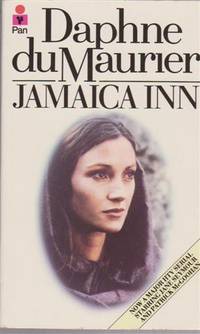
Jamaica Inn
by Daphne Du Maurier
On Oct 8 2013, Feeney said:
feeney rated this book 5 of 5 Stars.
I saw JAMAICA INN the 1939 movie before I read the 1936 novel. The movie, with young Maureen O'Hara and directed by Alfred Hitchcock, is very, very loosely, too loosely, based on the novel and in my opinion badly told to boot. Novel's author Daphne du Maurier wrote to her publisher: "Don't go and see it, it is a wretched affair." ***Hitchcock's JAMAICA INN frankly depressed me. It was that bad and demotivated me for reading the novel. But, in the end, dutifully, I opened du Maurier's tale of Cornish smugglers and killers in the early 19th Century and was drawn in at once to an astonishingly good yarn. 23-year old recently orphaned Mary Yellan travels by coach to the barren, forbidding interior uplands of Cornwall. There, as she promised her dying mother, she moves in with her mother's older sister Patience and the latter's abusive husband of ten years Joss Merlyn. By trickery Joss had bought from an upright local squire real and still existing Jamaica Inn, perched on a desolate stretch of highway between two towns on the dangerous moors. Joss is nearly seven feet tall, a hopeless alcoholic and apparent leader and brains behind a 100 man strong gang of smugglers. The smugglers are also "breakers," men who lure ships to destruction on rocks of the wild Cornish coast, murder survivors and steal their valuables. *** Mary Yellan is that indispensable figure of every true "thriller," the isolated hero, utterly friendless, up against powerful persons but supported by no allies, at least initially. Like a good modern historian, Daphne du Maurier is careful to make Mary Yellan know no more about what is going on about her than she can learn for herself. The third person narrator's point of view is not godlike. It is realistic. Mary falls in love with her uncle's much younger and far less reprehensible -- but no saint -- brother Jem. Jem despises churches, vicars, religion nore is very fond of women and makes his money stealing, disguising and selling horses from his neighbors across the moors. ***A mouthpiece for du Maurier's own experiences with men, animal-wise country woman Mary Yellan is at a loss to understand why otherwise sensible women fall for objectionable men. Some of her musings: --(1) "Animals did not reason... There was precious little romance in nature, and she would not look for it in her own life"; --(2) Telling Jem why she thinks she loves him and will relunctantly go with him on Jem's terms: "Because I want to; because I must; because now and forever more this is where I belong to be." *** Keep your eye on seldom seen Anglican priest Francis Davey, albino vicar of Altarnun on the moors. He becomes Mary's only friend, hears with apparent empathy her tales of evil that she has seen through living at Jamaica Inn. He is the first person with any real power to show Mary kindness. Yet more than once the novel shows a suspicious Mary Yellan worrying about who and what sort of "freak" albino Davey really might be. Incredibly, his part was written out for the 1939 movie version. -OOO-

Julius
by Daphne Du Maurier
On Sep 25 2013, Feeney said:
feeney rated this book 5 of 5 Stars.
Thoughtful observers have opined that no first three novels ever written differ from one another as much as Daphne du Maurier's THE LOVING SPIRIT (1931), I'LL NEVER BE YOUNG AGAIN (1932) and THE PROGRESS OF JULIUS later shortened to JULIUS (1933). Julius Levy as a boy endured the 1870 siege of Paris by invading Prussians. One wonders if he also observed the gallant famous use of balloons and carrier pigeons that the plucky Parisians hurled into the atmosphere to mock the surrounding Uhlan cavalrymen and other Prussians. Certainly Julius both as infant and old man was fascinated by clouds (the inspirers of unnavigable balloons). *** Clouds became the image for attractive things that Julius wanted to lay hands on, love, possess and share with no one. Rare brushes with his father's attractive, civilized Judaism tempt Julius in France, North Africa and England to be a good, normal human being. But in the course of the novel he successfully resists that temptation and becomes a thoroughly amoral, detestable human being. *** If Julius loves something but can't keep it, he kills or destroys it, so that no one else can enjoy it. He began that cycle by drowning he pet cat as his family fled from the invading Prussians into Paris. His father would soon enough strangle his unfaithful wife, with the approval of young son Julius. ***In time, through creating a string of restaurants and other innovations, Julius claws his way into respectability in England. His only child, a daughter, learns that she can get her father to do anything she wants -- except accept her falling in love with some man other than himself. -OOO-
On Sep 8 2013, Feeney said:
feeney rated this book 3 of 5 Stars.
How does a professor of biography approach ballooning? In 2013's FALLING UPWARDS: HOW WE TOOK TO THE AIR, Richard Holmes writes of ballooning as biography, as telling of personal stories! Not as pre-history, history or science but threading one ballooning story after another. He distinguishes three aspects of every human balloon ride: launch -- flight -- landing. ***Throughout this 416 page book, chock full of helpful drawings and photos, author Richard Holmes selects among his favorite tales, real and imagined, from cartoons, documentary and feature films and books by Edgar Allan Poe and others. Almost always the focus is on what common traits make men and women go up in balloons. Of his own December 1, 1783 first ever flight by anyone in a true hydrogen balloon, Dr Alexander Charles later wrote that he said to his companion Robert while in flight: "I'm finished with the earth. From now on our place is in the sky!" (Ch. 1). *** American Ambassador to France Benjamin Franklin watched that very flight with a telescope. Franklin then remarked that someone asked him "what's the use of a balloon?" The Philadelphia sage countered: "what's the use of a new-born baby?" *** This book lacks much of what I expected to learn: more on the transition from hot air to hydrogen as lifting element, how hydrogen was initially extracted from water and at what cost, for example. After a while one similar story after another of ballooning began to run together. I was minded of a lecture I heard five days ago by Dr Mary Neal, author of TO HEAVEN AND BACK. She has since shared with 400 others having similar true personal tales her own 1999 near death by drowning experience while kayaking in southern Chile. Dr Neal found not all that much difference from one tale to the other 399. -OOO-http://www.biblio.com/books/629563531.html
The Science Of the Cross
by Edith Stein
On Sep 2 2013, Feeney said:
feeney rated this book 5 of 5 Stars.
"Dost thou think, because thou art virtuous, there shall be no more cakes and ale?" Thus, In Shakespeare's 1601 play TWELFTH NIGHT tippling Sir Toby Belch taunts Mistress Olivia's spoil-sport puritan steward Malvolio (Act II. Scene III. l. 58). These words express an abiding two-way tug within Incarnation-based Christianity: "virtuous" v. "cakes and ale." *** Catholics and other Christians of 2013 need reminding from time to time that while "cakes and ale" are good and have their place, nonetheless, drawing deliberately closer to God requires something more: not just natural virtue, but supernatural hope: taking up our personal cross daily, thereby personally imitating and following Jesus, the Son of God. *** The Spanish Carmelite priest, mystic, spiritual director of souls and later Doctor of the Church, Saint John of the Cross (Juan de Ypes, 1542 - 1591) in a number of poems and essays taught Spanish Christians of his day how to draw closer to God through openness to personal suffering and consciously willed renunciation of both self and purely earthly pleasures. Centuries later, in a Carmelite convent for nuns in Echt, the Netherlands, the year 1942, 400th anniversary of Saint John's birth, was approaching. Exiled from her original convent in Cologne, German, one time atheist, Jewish Catholic philosopher, feminist, and finally Carmelite nun, Edith Stein aka Sister Teresa of the Cross, would be gassed to death at Auschwitz in August of that anniversary year 1942. Joining her would be her blood sister Rose and hundreds of other Jewish Catholics in the Netherlands, including one family of priests and nuns. Edith's convent superior had earlier directed Edith to prepare a celebratory text on the great Carmelite reformer Saint John of the Cross. Sister Teresa completed her well researched manuscript in 1942. That was not long before Edith and her sister Rose were removed by German Nazis from their Carmelite convent in Echt, Limburg Province, Netherlands, for deportation by rail to occupied Poland and next day execution. The future martyr, canonized saint (1998) and Patroness of Europe, had just composed in German as tribute to Saint John of the Cross, KREUZESWISSENSCHAFT: STUDIE UEBER JOANNES A CRUCE, translated into English and published in 2003 as THE SCIENCE OF THE CROSS. ***THE SCIENCE OF THE CROSS is Edith Stein's pellucid summary and commentary on Saint John of the Cross's description in classic poetry and prose of his recommended ways to discipline human memory, imagination, passions, intellect and will consciously to prepare in this life to receive -- not achieve! -- mystical union with God. For his part God freely bestows the joys and pains of mystical union as His Spirit wills. Thus some persons striving honestly and mightily to love and serve the Lord and also following the specific preparatory paths suggested by Carmelites Saint Teresa of Avila, Saint John and future Saint Edith Stein are never rewarded mystical gifts. On others by contrast, God mysteriously showers mystical, intuited love and union without obvious signs of merit or conscious preparation by the human recipients. *** Saint John of the Cross was the chosen spiritual advisor of the great Doctor of the Church Saint Teresa of Avila (1515 - 1582) and also confessor to one convent of her nuns. He was a highly valued spiritual director. In John's celebrated works in poetry and prose, the mystic saint constantly reminds Christians aspiring to closer union with God that they are members of a church, that while they must as indiviiduals be open to God's mysterious graces and doing things God's way, but that they must also submit their visions, stigmata and other signs to their spiritual advisor humbly and obediently and within the ancient framework of Catholic teachings about grace, faith, hope and charity. For it is not only God who can reach the human soul through joys, consolations and sorrows. So can Satan. And humans are so constituted by God as to need human advisors other than themselves for "discernment of spirits." *** Once atheist yet always consciously and proudly Jewish to her death, Edith Stein had been one of Europe's most promising young philosophers -- indispensable assistant to and expositor of her Professor Edmund Husserl (1859 - 1938), founder of Phenomenology -- when she became a Catholic convert in 1921, (baptized January 1922), then a teacher for a decade in a Dominican girls' school in Speyer, lecturer on feminism and finally in her 40s an austerely living Carmelite nun in Cologne, Germany just as Nazis were coming to power. ***Stein writes clear, direct, accessible German. If anyone can make clearer the already clear but breath-taking and daunting teachings of Saint John of the Cross about the cross of Jesus Christ as one freely chosen and personally emphasized Christian way to union with God, it is Saint Edith Stein. Tolle, lege! Tolle, lege! (Pick up this book, read it!) (Saint Augustine CONFESSIONS). -OOO-
German Europe
by Beck Ulrich
On Aug 29 2013, Feeney said:
feeney rated this book 4 of 5 Stars.
Greece, Portugal, Spain even Italy, are facing a debt crisis allegedly created by the impersonal forces of international capitalism led by imprudently lending, greedy giant banks. This unforeseen crisis is further analyzed by German sociology professor Ulrich Beck in DEUTSCHES EUROPA, translated into English by Rodney Livingstone for this Polity Press edition as GERMAN EUROPE. *** Professor Beck argues that Western, Central, Eastern and Southern Europe as currently organized (European Union plus non-members) has to become either more German or more democratic -- with rich EU members uncharacteristically taking empathetic pity on poorer EU members -- or more European, less European, be transformed from within or implode. The debt crisis and the single currency (EURO) crisis are each awesomely powerful and downright nasty in their combined impact on onetime great powers, now poorer EU members and EURO users: Greece, the fountainhead of Europe's culture, Italy which contributed both Roman Empire and Renaissance, Imperial Spain and Portugal. Beck describes the market-driven international financial forces at work either to destroy Europe, save Europe, possibly to improve Europe and ideally to make Europe work for the first time ever not just for European nation-states and national economies, but primarily for individual European men and women. *** More and more the young people of Europe think and act as if they had two names. Their family name is "European." Their personal name is "French" or "Danish" or "Croatian." It is unthinkable that Europe will revert to a system of fully independent nation-states with national borders manned once again by immigration and customs officials and with each nation having its own currency. But neither is Europe's future clear. Needed is a new paradigm of a Europe of conscious, accepted "risk," where old methods for managing crises do not work. At the moment Europe is "Merkiavellian": where the thoughts and policies that matter are those of cautious, indecisive, fiscally solid, Protestantly austere German Chancellor Angela Merkel and Europe's first theoretician of crisis management, Niccolo Machiavelli. Their ideas, to some, assure that the road to bliss must lead through hell. *** The book GERMAN EUROPE is small, restricted in its scope, not notably original but informative and stimulating. It should enliven all book clubs that look from time to time at Europe and debate whither it may be going. -OOO-
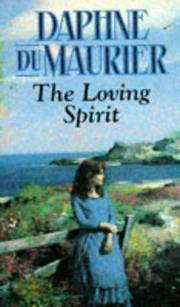
The Loving Spirit
by Daphne Du Maurier
On Aug 20 2013, Feeney said:
feeney rated this book 5 of 5 Stars.
Daphne du Maurier's THE LOVING SPIRIT (1931) may well be the finest first novel that I have ever read. And Daphne was only 22 when she finished it in Bodinnick-by-Fowey, Cornwall, England in January 1930! ***The novel's dominant theme is this: if an ancestor or ancestress cares enough for her genetic downline, even a hundred years later, he/she will find a way to reach a great granddaughter and nephew, show them love, protect, communicate with and be seen or sensed by them. *** We know that Ms du Maurier read Sir Walter Scott and her novel's viewpoint is practically the same as that which Sir Walter embodied in his two novels of Scotland during the Reformation: THE MONASTERY and THE ABBOT (1820). Both Scott and du Maurier show a mysterious, loving guardian spirit protecting a family down the generations through literal wreckage: the destruction of a Scottish Benedictine monastery in Scott's novels and the wreck of the merchant sailing vessel The Janet Coombe in du Maurier's THE LOVING SPIRIT. Both Scott and du Maurier based their novels on real historical events and persons. *** Daphne du Maurier's THE LOVING SPIRIT tells the story of the intertwined lives of a large Cornwall England family from 1830 - 1930. It contains four "Books" entitled in sequence Janet Coombe (1830 - 1863), Joseph Coombe (1863 - 1900) , Christopher Coombe (1888 - 1912) and Jennifer Coombe (1912 - 1930). *** Janet Coombe is "the loving spirit" whom nothing can prevent from watching over her favorite -- not far from incestuously so -- but deeply troubled sea captain son Joseph; his sometimes cowardly, but in the end heroically self-sacrificing son Christopher; and Christopher's youngest child Jennifer. *** By novel's end Jennifer has married and had a son Bill by John Stevens. The couple are third cousins, great grandchildren of Janet Coombe. The "unloving spirit" of this four (or five if we include young Bill Stevens) generation saga is Janet Coombe's youngest never married son Philip Coombe (born 1859), great uncle of Jennifer Coombe and John Stevens, who loves only himself, lives to pile up his money and finds steady joy in doing harm to his kinsmen. He dies spectacularly mad in the novel's last few pages. *** Other elements of THE LOVING SPIRIT derive from Daphne du Maurier's own intense young life, beginning with her love of wild, rugged Cornwall, the sea and boats, her sense that families live on in spirit for generations in their ancestral homes, proceeding through du Mauriet's fascination with incest as a natural human inclination, her belief in the struggle of two souls within every human body, her love of the gothic in literature, her willingness to think outside the box of traditional Christianity, a flirtatious romance since age 14 with an older twice married actor cousin and more. *** Be it known that a real life Cornish seagoing family of the renamed fictional seaside village of Plyn, known personally to du Maurier, had a history much like that of the Coombes, with an ancestress for whom an ultimately wrecked sailing vessel was named, whose likeness was carved into a wooden figurehead for the ship, a figurehead that came into possession of Daphne herself. *** At novel's end in 1930 young mother Jennifer Coombe Stevens , image of her greatgrandmother Janet Coombe at the same age, is looking at the detached figurehead of The Janet Coombe, now mounted outside son Bill's nursery. "She leans beyond them all, a little white figure with her hands at her breast, her chin in the air, her eyes gazing towards the sea. High above the clustered houses and the grey harbour waters of Plyn, the loving spirit smiles and is free." These are the last words of Daphne du Maurier's grand first novel THE LOVING SPIRIT. -OOO-
The Science Of Yoga
by William J Broad
On Aug 11 2013, Feeney said:
William J. Broad has been a yogi (male practitioner of yoga) since 1970. That makes 43 years immersion in yoga as of August 2013. He is also a Pulitzer prize winning science writer for the New York TIMES. See his home page athttp://williamjbroad.com/ *** In 2012 journalist William Broad issued THE SCIENCE OF YOGA: THE MYTHS AND THE REWARDS. Of it Broad writes: "The Science of Yoga, my newest book, ,,, shows how a century and a half of careful research has been ignored. Millions of people do yoga. But few realize what science has learned about its risks and rewards. My hope is that the book will help practitioners avoid the bad and integrate the good." ***This book has something for everyone, for yoga novices such as myself, and also for more advanced yogis and yoginis, their teachers and for the growing number of scientists and health professionals now laboring to find out what makes for good health in yoga, what is neutral and what is positively harmful. There is much history, much biography, much travel by the author, much interviewing in THE SCIENCE OF YOGA. *** From Broad's pages emerge a handful of heroes of scientific yoga: in alphabetical order, (1) Kenneth H. Cooper (1931 - ), coiner of "aerobics"; (2) Loren Fishman (1940), "Wrote books on yoga for arthritis, back pain, and other afflictions"; (3) Jagannath G. Gune (1883 - 1966), who in 1924 south of Bombay founded "world's first major experimental study of yoga"; (4) B.K.S. Iyengar (1918 - ), Southwest Indian Hindu Brahman, early student and popularizer of reasonably science-friendly and "safe" yoga; (5) N.C. Paul (c. 1820 - 1880), an early western-trained East Indian M.D. Paul performed "world's first scientific study of yoga." See his 1851 A TREATISE ON THE YOGA PHILOSOPHY; (6) Aurel von Toeroek (1842 - 1912), led 1896 Budapest "study of yogis claiming to go into deathlike trances" -- and a few more standout heroes. *** What stays with me from THE SCIENCE OF YOGA are a few of Broad's views, e.g., (1) Since Paul's 1851 TREATISE ON THE YOGA PHILOSOPHY, scientists have increasingly detached "the yogas" (so called from their many almost unconnected varieties) from yoga's misty origins in Hindu religion, Sanskrit language and from wildly exaggerated claims by older yogis to be able to stop and start their hearts, their breathing, etc. at will. (2) At its core, yoga is non-aerboic, stretching, relaxing. Admittedly, yoga styles have of late been created emphasizing hyperventilation and very fast repetitions of movements like Salute to the Sun, in 105 degree heat, etc., but even these are low level aerobic, at best. They are no match for swimming, basketball, tennis, etc. (3) Increasingly some postures are seen by scientists as almost intrinsically dangerous (head stands, Cobra, Wheel (Upward Bow, etc.). (4) Yoga or the Yogas remain decentralized, diverse and barely if at all regulated by governments. -OOO-
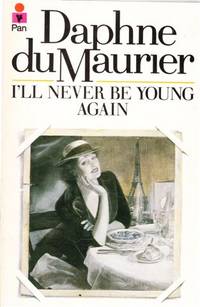
I'Ll Never Be Young Again
by Daphne Du Maurier
On Aug 3 2013, Feeney said:
feeney rated this book 4 of 5 Stars.
In London, June-July, 1930, barely 23-year old Daphne du Maurier, dashed off her second novel, I'LL NEVER BE YOUNG AGAIN. Its structure is simple. Its English anti-hero, Richard, tells the story of his own life more or less from birth to some time short of age 30. The book's Table of Contents reads merely: PART I Jake, PART II Hesta. *** Jake prevents a despairing young Richard/Dick from jumping from a bridge into the Thames and offing himself. We learn that Jake is seven years older than Dick and has just completed a prison term for killing in the boxing ring a man who had unthinkingly ruined an innocent young woman. For a year or so Jake takes Dick under his indulgent, healing wing. They ship out together as merchant marine sailors. They tour Norway on foot, on horseback and on a tourist vessel. Before drowning in a sea wreck off the coast of France, Jake makes it clear that he believes Dick will surely at some time get a grip on himself and turn out all right. Jake points out a bird to Dick that seems to sing to itself, "I'll never be young again -- I'll never be young again." *** Be it noted that scores of pages later Dick, now a steady, slowing rising young London banker, hears a bird sing from a tree in his London garden. "At first he is lost, and then he is happy again. Sometimes he is wistful, sometimes he is glad. He seems to be saying: 'I'll never be young again -- I'll never be young again." These are the final words of du Maurier's novel. *** Between the two widely separated bird songs, readers learn that Richard is the only child of England's greatest poet. His mother lives almost entirely for his father. His father is a genius. He ignores his son, considers that he will never amount to much but in the end leaves Richard his entire considerable estate. Richard, after floundering around for months with Jake, settles in Paris and eventually writes a play and a novel in order to eclipse his father's literary glory. In the process he relentlessly, selfishly seduces an innocent English girl devoted to her music. Richard makes it clear to Hesta that he cannot live without virtually unending sex with her. She gives in, moves in with him, gives up her music but wants marriage and children. *** Richard/Dick browbeats Hesta into seeing the world as he sees it: marriage is a trap; they must remain free of entanglements, etc. Maybe she should even consider prostitution! After months of self-indulgence Dick inexplicably and suddenly becomes absorbed by his writing. He then takes Hesta's presence for granted, much as he would a comfortable piece of furniture. Richard then goes off to London for two or three weeks to show his two completed manuscripts to his famous father's publisher, who has known Richard since Richard was a child. Richard says no to Hesta's request to go with him. Hesta warns Dick not to leave her alone. In London, both novel and play are rejected as something "anti-father" that Richard just had to get out of his system as the price of growing up. He is not meant to be a writer. *** Returned to their flat in Paris, Richard finds that Hesta has moved out to live with Julio, a violinist. Once naive and restrained, Hesta now uses lipstick, paints her nails and is determined to live for parties and fun, one man after another, as Richard has taught her to want to do. Richard is both stunned and relieved. He mulls over traveling the world to solace himself. *** Richard is, however, unexpectedly summoned by telegram back to London by news of his father's death. He then accepts the publisher's advice to enter a dull but socially useful carer and also the latter's recommendation of a good club to join for meals and helpful personal contacts. At novel's end narrator Richard claims: "I am happier now than I have ever been. The restlessness has gone ... There is peace and contentment." ***COMMENT: Persistently self-absorbed, whining, rootless, unattractive Richard accepts the publisher's assessment: "Your father sits alone, Richard, a genius ... caring for nothing and no one, while you live and love, and hurt yourself and are miserable, and are happy, and you aren't a genius, Richard, you are only an ordinary man" (Part II, Ch. VIII). Anti-hero is the right word for Richard. He ruins a good girl, a vile thing for doing which his savior Jake had killed another man. Richard has no religion, lives only for himself on the basis of the feeblest of insights and conscience, aspires to nothing morally good. He reacts. Richard does not mould himself into anything admirable. -OOO-
A Carnival Of Destruction
by Tom Elmore
On Jul 28 2013, Feeney said:
feeney rated this book 5 of 5 Stars.
Appearing in markets in September 2012, Tom Elmore's massive book (580 pages following xxxiii pages of preliminaries) with the subtitle SHERMAN'S INVASION OF SOUTH CAROLINA is today in July 2013 less than one year old. Its title A CARNIVAL OF DESTRUCTION encapsulates a remark by Union Major Genearal W. B. Hazen: From Pocataligo, Georgia "began a carnival of destruction that ended with the burning of Columbia, in which the frenzy seemed to exhaust itself. There was scarcely a building far or near on the line of that march that was not burned." ***Here are a few of the major points that linger in memory once a first reading of A CARNIVAL OF DESTRUCTION: SHERMAN'S INVASION OF SOUTH CAROLINA is done: (1) Union Major General Henry Slocum, commanding Sherman's left wing, on December 18th tried to establish a toehold in South Carolina but was repelled. By then the South was already clearly defeated. Atlanta and Savannah had fallen to commanding Major General William Tecumseh Sherman. Confederate General Hood's army, having lost Atlanta, was in the process of being annihilated in Tennessee and Kentucky. Nothing prevented Sherman from marching or sailing straight to Petersburg, VIrginia to join General U.S. Grant and compel Robert E. Lee to evacuate Richmond, the Confederate capital. *** (2) Continuous Union military actions in the South Carolina campaign lasted from January 19 to March 8, 1865. During that time Sherman continued and intensified his new concept of "total warfare" introduced in the "march to the sea" from Atlanta to Savannah. His troops took food without payment in a 50-mile swathe wherever they marched. In South Carolina -- despised as the birthplace of secession -- the Yankees burned far more houses, churches and masonic lodges than in Georgia. *** (3) Confederate military resistance to Sherman's 65,000 men was disorganized and downright stupid. The South spread its 35,000 or so troops available to defend the Palmetto State far too thin, tried to hold too many cities, including Charleston and Augusta. At the same time crafty Sherman succeeded in avoiding head-on big battles. Through feints elsewhere with his left and right wings, the Major General brilliantly concealed his real intention to capture Columbia, South Carolina's capital. Nowhere in South Carolina did he encounter armed resistance that seriously threatened his movements. Only Confederate and Union cavalry units engaged each other almost daily in skirmishes. *** (4) Sherman's greatest enemies were not rebel armed forces but ferociously cold, wet weather and more than a hundred miles of swamps and rivers in flood that Confederates were sure would stop him from mounting a winter campaign. Yet nothing stopped "Uncle Billy's boys." They may have been forged into the most motivated, talented, relentless army in human history. And they all loved Uncle Billy with a passion. *** (5) By the time Sherman left South Carolina he had destroyed huge quantities of munitions, bales of cotton, entire factories, railroad lines and their metal tracks. South Carolina could no longer send desperately needed materiel to General Lee besieged outside Richmond. Sherman and his boys had broken the belief of most Carolinians and Georgians that the Confederacy could possibly win independence so long as newly re-elected Abraham Lincoln was president of the United States. By April 1865 Richmond had fallen, Lee had surrendered. The war was effectively over. -OOO-
Rumi
by Demi
On Jul 24 2013, Feeney said:
feeney rated this book 5 of 5 Stars.
It is, I fear, a tall order to expect a child of the recommended eight years or not much older to tackle author-illustrator Demi's RUMI: WHIRLING DERVISH (2009). In 31 pages this attractively and lushly illustrated biography for youngsters presents the life and legacy of Jalaluddin "Rumi" (1207-1273). His bones lie at Konya in modern day western Turkey. *** My wife and I, who in the 1960s in Kabul, Afghanistan, began reading Rumi in Persian, have been working into the book RUMI: WHIRLING DERVISH with two visiting granddaughters eight and 11-years old. The elder girl decided, for her first viewing, simply to thumb through the pictures without reading text at all and thereby decipher their story. This she did very well, calling, however, the depicted 13th Century Persian characters "Chinese" from their looks. With adult help she then read aloud selected English translations of Rumi's verses. She especially liked the one about angels (p. 15) but found some others rough going. *** Like me, our older granddaughter wished for a second map to supplement page 2's "Rumi's World", with its four seas bounding Rumi's World on the north (Mediterranean, Black, Caspian and Aral) and to the south Red Sea, Persian Glf and Arabian Sea. Knowing virtually nothing previously about that part of the world, our 11-year old granddaughter derived little help from the author Demi's blue and gold map. *** The written text is pitched to young children, and both our granddaughters could read and follow it easily -- except for the 13th Century Arabic names. We, of course, filled in gaps. I don't think the girls will ever forget that the word "din" is Arabic for "faith." Devout young Catholics both, they fell into easy sympathy with Rumi's notion of a God who is everywhere, always near them, both loving them and worthy of love and honor by them. Our girls were also attracted by Rumi's use of slow spinning and dancing as a help to find God in prayer. They enjoyed their grandmother's stories of a visit two years ago to Turkey and to Rumi's old hometown of Konya (Iconium in New Testament days) where "Gran" and an aunt of theirs observed re-enactors of Rumi's famous "whirling dervishes. *** If parents or adult family members are willing to take time to help youngsters, then the latter can learn a fair amount about history, painting, dance and religion from RUMI: WHIRLING DERVISH. But absorbing all dimensions of the little book will not be a romp and may not prove very entertaining. I suspect that young teens will the readers to profit most. -OOO-
Daphne Du Maurier
by Richard Kelly
On Jul 17 2013, Feeney said:
feeney rated this book 5 of 5 Stars.
You need not have already read a great deal of the written output of Daphne du Maurier (1907 - 1989) before opening Richard Kelly's literary biography of 1987's DAPHNE DU MAURIER. I first read Kelly's book a couple of months ago when I knew no more than du Maurier's novel THE SCAPEGOAT (1956). Before rereading the biography in the last few days, I have since perused three more novels, two books of short stories and have watched movie versions of REBECCA, FRENCHMAN'S CREEK and JAMAICA INN. I profited equally, I think, from both readings. *** Even when I knew even less of Daphne du Maurier than I do today in July 2013, Kelly was useful because he gave short but adequate descriptions of contents of du Maurier's published works, included his own interpretations and also cited contemporary book reviews by Graham Greene and others. Written two years before the still reclusive Miss du Maurier died in 1989, Richard Kelly's book is a decent place to begin your study of the author of REBECCA (1938), "one of the most widely read novels of all time" (Kelly, Chapter Three, p. 66). *** In his Preface, University of Tennessee English Professor Richard Kelly says that he has composed "the first comprehensive critical and analytical evaluation of her fiction in the hope that it may stimulate further discussion of her works." Chapter by chapter the Professor sketches the author's life, then her early novels, her masterpiece REBECCA and in Chapter 4 her romantic fiction of the 1940s and 1950s with their focus on"escapist themes of love adventure and rebellion," then the "more introspective novels of the last thirty years," next her supernatural and macabre short stories and finally in the concluding Chapter 7, du Maurier's present standing and contributions. *** Richard Kelly portrays Daphne du Maurier as the great 20th century revivalist of the gothic novel. Whether writing of her beloved Cornwall or of somewhere else, du Maurier is drawn repeatedly to "seductive villains and houses of horror and mystery, set against a pseudo medieval atmosphere of castles, cliffs, lonely moors and storms" (Chapter Three, p. 53). Miss du Maurier is also shown repeatedly bringing in themes from her personal life, her efforts to make her father love her more than Daphne's mother, his actress wife, or more than any of the young actresses with whom Gerald du Maurier had short, meaningless flings. Sex is a big part of Daphne du Maurier's novels aimed at women. Incest is touched on again and again. Also duality is deep within each individual human: both feminine and masculne, good and evil, dreamer and realist. *** The book is not overloaded with end "Notes and References, offers only two pages of "Selected Bibliography" and a 4 1/2 page Index. There are no maps or photographs, a notable absence. On balance: this a better than average introduction to a great, neglected author. -OOO-
Yoga, Tai Chi and Reiki
by Max Sculley
On Jul 12 2013, Feeney said:
feeney rated this book 5 of 5 Stars.
In December 2012 rolled from the presses in Australia a sensational book, YOGA, TAI CHI, REIKI. Its subtitle? A GUIDE FOR ALL CHRISTIANS. Its message? Like other Western countries, Australia in very short time had taken to its ample, uncritical bosom a trio of Eastern physical activities. In origin one was Indian/Hindu, the second was Chinese/Tao and the third was Japanese/Buddhist. All that most Australians taking up yoga, tai chi or reiki wanted as results of their classes were relaxation, better health and/or benevolent ability to hand-heal themselves or others. *** Author Max Sculley is a non-clerical Roman Catholic de la Salle teaching brother based in northeastern Brisbane, Queensland, Australia but drawing many real-life experiences and opinions from southern Sydney and New South Wales. He warns that yoga, tai chi and reiki are spiritually dangerous. When learned as their founders intended they be learned, the three Oriental disciplines develop in practitioners altered states of consciousness, dimmed logical thinking, weakened will power and growing passivity, all of which combine to create in the advanced learners pretnernatural strengths and skills, to allow uncanny explorations of past and future, astral travel and virtually invite evil spirits to take over minds and bodies. *** Brother Max Sculley notes common characteristics of the three Asian disciplines. (1) All emphasize slow, deep breathing with a view to bodily relaxation and greater control of body by mind. (2) All three push for emptying the mind of extraneous, distracting thoughts and images. (3) Each is rooted in a religion or philosophy (or both) different from and in some ways hostile to traditional Biblical Christianity. (4) Each discipline trains learners to search for and find ultimate reality within the practitioner. Spend enough time doing tai chi and related chi kung (qigong) and you will likely become more physically powerful than most people dream possible and you will, by your own unaided efforts, find the Divine within you. (5) The Divine force within you is also in and behind the universe -- call it chi or something else -- it is eternal and above all IMPERSONAL. That is the most fundamental difference from Christian teaching of a triune PERSONAL God incarnated in Jesus of Nazareth. *** Perhaps 20 to 25% of the text of YOGA, TAI-CHI, REIKI goes to concrete case studies from life designed to show that these Asian practices are not merely dangerous if pressed to extremes but intrinsically, INEXTRICABLY wrapped in anti-Christian philosophies or theologies, are "occult" and that they open practitioners to "mental illness, demonic influence, spirit possession and occult bondage" (Preface, p 9). *** Brother Sculley retells in five pages the story of Italian-Chinese onetime world kung fu champion now English Christian evangelist Tony Anthony as told in Anthony's 2004 autobiography TAMING THE TIGER. During years of training beginning at age four with his mother's Chinese father, Tony was immersed in Shaolin Temple-derived martial arts and related practices. He believed that he was learning to unleash "seemingly supernatural power within yourself" (Ch. 6, p. 83). He learned that the chi of chi kung and tai chi was "the god within, the root of my power" (p. 84). He learned to sense the movements of an opponent in the dark, to distribute chi throughout his body to wherever needed. At age 17 he survived (many do not) the "test of the tunnel" and walked on bare feet along the edge of a razor sharp eight-meter long blade. He became bloodthirsty and violent and ended up in Cyprus's Nicosia prison where a Christian evangelist convinced him that "Kung fu might CLAIM to be A way; but he (Jesus) is THE way. Just accept it Tony" (85). And on and on Max Sculley piles up case studies, including some of demonic possession. *** YOGA, TAI-CHI, REIKI is notably alarmist. But the text is well illustrated, the case studies documented and the theses are rooted in Old Testament and New Testament warnings to be on guard against evil spirits and not arrogantly to presume by unaided human exertion to reach levels of unity with a (false, impersonal) god that are the free gift of the one true God. -OOO-

Myself When Young
by Daphne Du Maurier
On Jul 6 2013, Feeney said:
feeney rated this book 5 of 5 Stars.
English novelist Daphne du Maurier (1907 - 1989) tells us that she kept a diary from age 12 in 1920 until she married in 1932. This tidbit she shares with readers in her Author's Note to MYSELF WHEN YOUNG: THE SHAPING OF A WRITER (1971). Her subtitle reveals the organizing principle of her partial autobiography: at what points in her long life Daphne du Maurier did or learned the things that made her one of the world's most widely read 20th Century authors. *** The text contains six chronologically arranged chapters and an index. From the Author's Note: "The following pages ... cover my thoughts, impression and actions from the age of three until I was twenty-five, after my first novel had been published" (ix). *** That first novel was THE LOVING SPIRIT (1931) and would be famously followed among other books by JULIUS (1933), JAMAICA INN (1936), her masterpiece REBECCA (1938), FRENCHMAN'S CREEK (1941), HUNGRY HILL (1943), THE KING'S GENERAL (1946), THE PARASITES (1949), MY COUSIN RACHEL (1951), THE APPLE TREE (short story collection including "The Birds" - 1952) and THE SCAPEGOAT (1957). *** Chapter by chapter, decade by decade, step by step, MYSELF WHEN YOUNG leads young Daphne du Maurier into the only work she ever did: writing. Let the first chapter "24, Cumberland Terrace" stand for all of her first 25 years in this respect. Her first memories begin at age three, living in London with her older sister Angela and new baby Jeannette in the house of "D" and "M," introduced as Daddy and Mummy, words "seldom used today" and never called Daddy and Mummy again. D was a famous actor and producer and M herself had been an actress till the birth of Baby. The family loved attending theater and visiting D backstage. *** "I saw why D liked to dress up and pretend to be someone else. I began to do it myself, and so did Angela and even Baby..." (12). A governess suggested that the children put on skits when their mother entertained her lady friends. Daphne always wondered what happened next following on the parts they acted from Shakespeare or in the children's stories read to them as they learned their alphabet. And why, why, always why did people in stories act as they did? *** Daphne was especially fond of summers spent away from London in the countryside. She would populate the local area with characters from HENRY V or THE PILGRIM'S PROGRESS (15). It was doubt of the literal truth of stories about fairies or Father Christmas or even God that made young Daphne ask why did grown-ups act so wickedly and deliberately deceive gullible children? "If something was not true, why make it up in the first place? But then, here was the puzzle. Stories in books were not true. The person who wrote the book made them up. Somehow, that did not matter. ... People looked awkward when you kept asking why, why, why.." (16). *** In World War I death came to family members fighting in foreign fields. The du Mauriers moved out of London to escape Zeppelin raids. Angela told younger sister Daphne that in wartime it was expected of girls to "make eyes" at soldiers -- whatever that meant. And through all this Daphne kept discovering new writers, happily and creatively acting out with her two sisters new scenes, e.g. from famous beheadings in the Tower of London (Daphne was always the male executioner). She even wrote a novel in her young head called JOHN, IN THE WOOD OF THE WORLD. *** Year after year Daphne never ceased longing to be a boy, not a girl. As much as possible Daphne acted out boys' parts, created imaginary boy characters. For boys had all the adventures! By contrast Angela loved being a girl and acting parts of girls and women -- even beheaded or beheading queens! The sisters learned to talk like characters from books in front of friends, servants and family. Thus from THE WRECK OF THE GROSVENOR, young Daphne was known to mutter over lunch in the sisters' beloved kitchen before baffled staff, "The buscuits are full of weevils, the pork stinks" (25). *** MYSELF WHEN YOUNG can be read and reread with great pleasure for no end of reasons: tips on writing your own memoirs, glimpses into the achieving literary and artistic family of du Mauriers and their many friends who were writers, aristocrats, actors and doers and for much much more. This is a wonderful introduction of Daphne du Maurier, the great 20th Century re-inventor of Gothic writing. -OOO-
Find the Right Ccrc For Yourself or A Loved One
by Ruth Alvarez
On Jun 25 2013, Feeney said:
feeney rated this book 5 of 5 Stars.
The number of books about American retirement communities is rising. But such books remain few and their quality and ways of presenting their subject are all over the map. There are several good things to say about FIND THE RIGHT CCRC FOR YOURSELF OR LOVED ONE by Ruth Alvarez. Its subtitle is WHAT YOU NEED TO KNOW ABOUT CONTINUING CARE RETIREMENT COMMUNITIES ... aka CCRCs. Like its earlier compeitors, this book gives a bit of history of life-to-death-care retirement communities and how they are now regulated (or not) by Washington and the States. *** Ms Alvarez, a retired real estate agent now living in a continuing care retirement community (CCRC) herself, helps readers decide for themselves or their parents or siblings whether and why to opt for this more pampered and definitely not inexpensive life style, with its paid staff who are responsible for mowing your grass, replacing your roof, preparing all or some of your meals and keeping you fit, amused and assuring a well attended hospital bed for you in health care should you ever need it. *** The author also suggests formulas to help us readers decide whether our income is more than enough to cover our entry and monthly CCCR costs, firmly stresses our need to make sure that a particular retirement home is financially sound, and Ms Alvarez also points out a number of things one might easily overlook doing during an orientation visit. *** Unlike some, Ruth Alvarez's book does not gush, nor drown us with details of the author's painful searches and anguished mistakes during a minutely detailed search for the perfect retirement Eden. FIND THE RIGHT CCRC has rather the feel of a long, dry but not boring check list of dos and don'ts, all worth knowing. *** The book is and feels "up to date," with statistics and facts about current trends in American demographics and in policies that States, Congress and Obamacare are likely to push soon for the retirement community arena. One example of several things I read about for the first time in Ms Alvarez is the rise in "affinity communities," e.g. for Catholics, Armed Forces retirees, same university alumni, etc. In that context she also cautions gay and lesbian retirees that while the law may prevent management of a retirement community from openly discriminating against them, "legal doesn't necessarily equate to welcoming, however" (p.51). Thoroughly check out therefore a particular CCRC in advance before you and a same sex partner go to all the expenses of moving into what may be de facto a cold, unwelcoming set of residents. Or just do as many do and pretend that your partner is a brother or sister! *** Another point: during your exploratory visits to CCRCs, see how well or ill management treats and respects it staff! *** FIND THE RIGHT CCRC FOR YOURSELF OR A LOVED ONE is as good an introductory book to an increasingly important segment of American living as you are likely currently to find. Enjoy learning from it. -OOO-http://www.biblio.com/books/579486103.html
Hungry Hill
by Daphne, Dame Du Maurier
On Jun 17 2013, Feeney said:
feeney rated this book 5 of 5 Stars.
Englishwoman Daphne du Maurier's Irish dynastic novel of 1943, HUNGRY HILL, is long, slow, weak on emphasis but otherwise competently written. *** The biggest weakness about HUNGRY OPINION, I think, is that the author does not understand Irish history. The Normans who came early to Ireland assimilated well, learned Gaelic, married local women, became thoroughly Irish. This is not the case with the Brodricks of Doonhaven. They had been centuries in Ireland before the novel begins in 1820. And yet till novel's end in 1920 the Brodricks play oil to Ireland's water. Brodricks claim to be Irish but act as if they had arrived only yesterday. They marry among other Anglo-Irish gentry. Their incompehension is profound of the Irish men and women whose labor makes their copper mining and later tin mining ventures deep within Hungry Hill. It is also inexplicable and hard to swallow. One strong man of no great social standing, "Copper John" Brodrick launches the family's wealth from mining in 1820. For the next four generations one male heir is weaker than the one before him. The women, with two exceptions are not much better. *** Supposedly a curse by the head of a "native" clan, the Donovans, once mighty locally, dooms the Brodricks. And there is indeed mild friction down the generations between Donvans and Brodricks. But it is half-hearted, unconvincing and trotted out from time to time only when the slow-moving narrative seems to demand to be freed of its sluggish shackles. Not one of Daphne du Maurier's masterpieces. -OOO-
Birds and Other Stories
by Daphne, Dame Du Maurier
On Jun 10 2013, Feeney said:
feeney rated this book 5 of 5 Stars.
THE BIRDS AND OTHER STORIES -- title of the 1977 and 1992 collection of six Daphne du Maurier (1907 - 1989) stories released by the UK's Arrow Books Limited -- was first published in Britain by Gollancz in 1952 as THE APPLE TREE (name of one of the six yarns). *** Of the six tales, the best known is "The Birds," made into a 1963 feature film by Alfred Hitchcock. Du Maurier's thriller novella about massive, mysterious, coordinated attacks by normally peaceable birds on humans is set on the coast of Cornwall in southwestern England. Its structure is much simpler than Hitchcock's technicolor film (no humor or romantic hi-jinks) which is set on Bodega Bay in California. The novella is understated but (unlike the Hitchcock version) with a plausible suggestion how an incredibly cold and enduring Arctic cold wave might have triggered events which spread all disaster across the United Kingdom at enormous speed. *** In my opinion by far the most orginal and memorable story of the collection is "Monte Verita." Two friends since boyhood, both avid mountain climbers, are swept into mystery after one marries Anna. When Anna without notifying her husband enters an ancient, never visited almost inaccessible mountain monastery in Central Europe and becomes the abbess of men and women who worship the moon, tragedy is set in motion. The ancient connection between mountains, goddesses and worship is explored. *** In "The Apple Tree" an underappreciated wife dies and returns to life as a hitherto barren now blooming apple tree in her garden, apparently to torment the widowed husband who had ceased loving or even noticing her years before. *** In "The Little Photographer," set somewhere on the Continent, a bored marquise on vacation without her husband seduces a simple native photographer. She regards the mousy man as a pastime to be dropped at any time. Before she pushes him off a cliff he has, however, declared his passionate not to be denied love and taken nude photographs of the marquise. When the dead man's sister discovers the photos, blackmail begins. *** In "Kiss Me Again, Stranger," a post-World War II demobilized soldier in London falls madly in love with a beautiful young woman who might well be a vampire. Had he proven to have once been any form of airman, she would have torn out his throat. Why? Because unnamed German aviators had destroyed her flat and her family in a bombing raid. *** The collection ends with by far the shortest tale (11 pages), "The Old Man." In one of the author's famed surprise endings the old man in question, after struggling for food and interacting with his mate and growing children, suddenly leaves the neighborhood where he has been under observation for some time. "... suddenly I saw the old man stretch his neck and beat his wings, and he took off fom the water, full of power, and she followed him. I watched the two swans fly out to sea right into the face of the setting sun ... alone, in winter." Up to that passage I had no reason to doubt that the old man was thoroughly human. Very well done, Miss du Maurier! -OOO-
Sharpshooter
by Keith Pruitt Ed S
On Jun 5 2013, Feeney said:
feeney rated this book 5 of 5 Stars.
Some books turn out to be more complex, to move on more levels, than a first reading might suggest. The Gospel of Mark comes to mind. As does John Bunyan's 1678 THE PILGRIM'S PROGRESS FROM THIS WORLD TO THAT WHICH IS TO COME. Similarly, in my opinion, comes Keith Pruitt's historical fiction of 2013: SHARPSHOOTER: THE LIFE AND TIMES OF TILMAN MANUS. *** Who is Tilman Manus (1835 - 1941)? And who might care? Beyond the man himself what kind of narrative has author Pruitt woven as a model for others to "go and do likewise?" *** Tilman Manus was born Scots-Irish in Tennessee in 1835, the same year that former Tennessee Governor Sam Houston began to lead Texas to April 1836 independence from Mexico at the battle of San Jacinto. Manus died in 1941, the year that the Empire of Japan attacked the American Pacific fleet at Pearl Harbor. He died old. Around 5'6" tall and neither smoker nor drinker, he remained notably healthy almost to the very end. In his youth he had sired a son by a nearby Indian girl. At age 19 Manus and his slightly younger uncle trekked 500 miles to Shreveport helping a family move there from Tennessee. He then removed with his uncle to Illinois, worked on laying railroad tracks, married and in 1858 stood listening to one of the Lincoln-Douglas debates. In the Civil War Tilman Manus was disowned by his Tennessee father for fighting for the Union at Vicksburg and elsewhere. In the Army of the Tennessee, he tied in a swimming race across the Mississippi River. Tilman alone, of several who tried, successfully wrestled a soldier's pet bear and threw it onto the ground. He said: "You all trying to wrestle this bear like it was another man" (p. 149). Manus was literate but had only a second grade education. He became famous within his multi-generational family as a story teller. He died old, comfortably beyond the century mark. *** Educator/writer Keith Pruitt uses one not terribly remarkable man's biography (such little of it as has been preserved and documented) to teach young readers of 2013 how to write vividly and with disciplined imagination about their own family history. Pruitt's tale is narrated by a fictitious woman who allegedly interviewed the ancient hero and one of his sons around 1937 for a local Illinois newspaper or historical society. Most of the text is presented by the narrator in the words of Tilman Manus himself. Some is rather breathy commentary by the narrator herself and some are the words of other contemporaries as Mr Manus appeared to them. The book is generously illustrated by contemporary black and white photographs. *** SHARPSHOOTER: THE LIFE AND TIMES OF TILMAN MANUS is timely. It rides the wave of growing current enthusiasm for blogging, self-revelation to friends and family, memoir writing and oral histories. The deceptive simplicity of its narrative can empower shy teens and others to write their family histories or monographs (wee and not so wee) of individuals whom they have heard their elders reminiscing about. The author spent four years immersed in the life and times of one man about whom, when you come right down to it, not as much is known as we might wish. But that one man interacted with giants like Ulysses S. Grant and Abraham Lincoln. Tilman Manus and author Keith Pruitt let us see those mighty men and others like Senator Stephen A. Douglas as thousands of other little people might have taken notice of them. *** Tilman Adams, Civil War sharpshooter, paterfamilias, farmer, who walked 3,000 miles during hostilities 1862-1865: it was little people like him who helped make the rest of us what we are today. -OOO-

Where Should I Live When I Retire?
by Bernice Hunt
On May 29 2013, Feeney said:
feeney rated this book 5 of 5 Stars.
In 1998 much published writer and lecturer Bernice Kohn Hunt and her husband Morton moved 200 miles from New York to an unidentifiable retirement community in a Philadelphia suburb. At that time there were many fewer retirement communities than now, theirs had over 300 persons. Since then both facilities designed for full-service retirement living and literature about them have ballooned. But pioneering in this field was Mrs Hunt's 2006 WHERE SHOULD I LIVE WHEN I RETIRE? A GUIDE TO CONTINUING-CARE COMMUNITIES. *** The book is about continuing-care communities, also called lifetime or life-long retirement communities (they include assisted living, health care and even Alzheimer's units). Mrs Hunt limits her hands on descriptions to eight or ten facilities that she and her husband visited in New York, Connecticut and Pennsylvania. She has very strong prejudices or opinions about which type of retirement living is the best in principle for everyone, not just for herself. And not-for-profit, all costs including prescription drugs paid in advance, continuing-care communities constitute Mrs Hunt's gold standard. In addition they also need to be "certfied." *** Perhaps most strikingly useful in WHERE SHOULD I LIVE WHEN I RETIRE? is Bernice Kohn Hunt's Appendix A. Checklist for Comparing CCRCs, pp. 85 -92, As she lucidly argues, when you visit three or four facilities over several days, after a while details blur and you can't remember what you saw, liked or disliked where. The written checklist for each continuing-care retirement home becomes an essential memory aid, with topics from philosophy/mission statement through architectual style, square feet of house or apartment, exposure to light, kitchen, bathrooms, laundry, closets, monthly fee, waiting list and availability of a bridge home while your former home is waiting to be sold. *** There is perhaps too much in A GUIDE TO CONTINUING-CARE COMMUNITIES of the personal, often quirky reactions of the author and her husband to their new home. On the other hand, without her firmly stated attitudes toward liquor, towards fellow residents who just want to have a good time rather than do hard thinking or volunteering and much more, then Hunt's lists of dos and don'ts might become boring. All in all, WHERE SHOULD I LIVE WHEN I RETIRE is still a valuable pioneering study of an important part of America's evolving life styles. -OOO-

Settling In
by Richard L Morgan
On May 22 2013, Feeney said:
feeney rated this book 3 of 5 Stars.
Reverend Richard L. Morgan's 2006 SETTLING IN: MY FIRST YEAR IN A RETIREMENT COMMUNITY defies simple categorization. *** --(1) It seems primarily a memoir worked up from a journal the author kept. The book's focus is the author, what he did, what he thought, how he felt, how he prayed and what he did to be of use to people in his retirement community and the town in which it is located. The book is a first person singular narrative with perhaps 90% of the attention focused like a laser on the author himself. *** --(2) Next, SETTLING IN is about the author's residence: a Presbyterian retirement home named Redstone Highlands (URL: http://www.redstonehighlands.org/). It is located in North Huntingdon Township, Pennsylvania (see http://en.wikipedia.org/wiki/North_Huntingdon_Township,_Westmoreland_County,_Pennsylvania), a city of 31,000 near Pittsburgh. *** --(3) The author warns against being an Aesopian grasshopper and putting off till too late thinking about moving into a retirement community. Your children will thank you if you do not dump caring for yourself and spouse in old age onto your younger, often frantically busy downline. Rather be like Aesop's ant: think things through, plan, consider what you can afford, plus climate, proximity to family and more. *** --(4) Put yourself in God's hands. Find and read relevant Scripture passages. Imagine that you are moving into a bisexual lay monastery. Life there is slow and can be meditative. What is God calling you to do with and for other residents there? But in addition do not neglect your neighbors outside the walls of your retirement community. ***Finally, SETTLING IN contains two "attaboy" essays by others praising Reverend Morgan's book. The first attaboy is the Foreword by Jane Thibault, Associate Professor of Family and Geriatric Medicine, School of Geriatric Medicine, University of Louisville. Professor Thibault opines that Richard L. Morgan addresses well four fears commonly confronted by people in the fourth quarter of life: age 75 and older. *** The second attaboy is "Introduction: The Third Age." It is penned by Dr. Henry S. Simmons, Director/Center for Aging, Union Theological Seminary, Richmond, Virginia. The "third age" is made up of the years "from fifty to death." Reverend Morgan is praised for his word pictures framed by his experience in a retirement community of four great life themes especially urgent in the last third of life: "freedom, intimacy, meaning, and death." *** In addition to readings from Scripture and secular authors scattered through the narrative, Morgan's book concludes with NOTES, BIBLICAL INDEX AND ABOUT THE AUTHOR. "He is the author of many books on the spirituality of aging, published by Upper Room Books." *** Over to you. I hope that this sketch of contents gives you enough information for a rational decision whether to read this book. -OOO-
Nassau Plantation
by James C Kearney
On May 15 2013, Feeney said:
feeney rated this book 5 of 5 Stars.
If only NASSAU PLANTATION - THE EVOLUTION OF A TEXAS-GERMAN SLAVE PLANTATION had a map or two of south central Texas in the mid-late 1840s, this historical essay by Dr James C. Kearney would be close to perfect in its genre. *** As it is, the book is blessed by 14 fast moving chapters and a postscript, six appendices, a note on sources, a close to exhaustive set of end notes, a select bibliography, and index and very few typos or fuzzily expressed ideas. *** In two waves before the Civil War and World War I, millions of German-speaking immigrants came to the USA -- including first to the Republic of Texas and mainly then to the State of Texas. A handful of German nobles, including relatives of Queen VIctoria of England and Prince Consort Albert, conceived and financed a scheme which sent far more than 3,000 German families and single men to towns like La Vaca, Victoria New Braunfels and Friedrichsburg (today's Fredericksburg) and others in the mid 1840s. If they could meet the terms of million acre land grants, especially in Comanche lands just north of the Llano Rive, those German immigrants would own more property than they could dream of back in Germany or Austria. *** Texan historian and linguist James C. Kearney not only details the month by month saga of high hopes, near starvation and all too soon financial bankruptcy of the dream of the German nobles, but he also lays out the larger framework of Texas relations with the USA and Mexico, agricultural contributions and innovations of German settlers in south central Texas and much much more. Heroes like Meusebach, Schubbert and others are lovingly sketched. The colossal importance of slavery to Southern prosperity is also convincingly displayed. *** On balance NASSAU PLANTATION is a keeper, clearly conceived and expressed and lays out an important chapter in general German-speaking history. -OOO-

The Scapegoat
by Daphne Du Maurier
On May 8 2013, Feeney said:
feeney rated this book 5 of 5 Stars.
Daphne du Maurier's eerie thriller of 1957, THE SCAPEGOAT, places an uncommonly heavy burden on any reader willing both to ask "what if" and to accept Ms du Maurier's prima facie implausible answers. *** Thirty-eight year old Englishman John lectures in London on French history. His command of the French language is perfect. He can and does pass for French. He is unmarried, all his family are dead. He has few friends. He is a classic "loner." He has been depressed for years. He wants to become intimately involved with real-life French people but his personality will not let him. As usual John is spending his summer- early autumn holidays writing and researching in France before returning home to another year as a boring lecturer. He is seriously considering spending time at the not far away venerable Cistercian abbey La Grande Trappe in Normandy. There he would explore among God-seeking members of this notably non-speaking order whether God's light is to be found in the darkness of silence. *** One evening he breaks his road travels by car at Le Mans. There he and Jean de Gue, Comte de St. Gilles, Barthe have a chance encounter near the train station. Count Jean and lecturer John are 100% look alikes and sound alikes. The count dopes John, takes his clothes and car and drives off to London to escape family responsibilities. Stupidly, John does not alert the French police but allows a servant to take him to the count's chateau. Will he fool Jean de Gue's widowed mother, wife, daughter, brother, an unmarried sister who despises him, servants, relatives, friends and adoring dog? *** Can and will Englishman Jean undo in a short time the considerable evil wrought by the Comte within his family and to the family's ancient ceramic business? What if for some reason the count tires of his game and returns from London to toss the Englishman out? How will he cope with the well intended but not necessarily profitable changes that John has made within family and in business? *** Always hovering in the background is the less than 50 miles distant Abbey of La Trappe. Is that where the troubled Englishman really belongs? And will the count's willing mistress convince our English hero that he is no better nor worse a man than prima facie despicable Jean de Gue? *** If you make a generous enough leap of faith and wholeheartedly embrace du Maurier's implausible premises, you will find in THE SCAPEGOAT a tale of mixed identities to rival Stevenson's 1886 JEKYLL AND HYDE. The novel is also a brooding religious meditation on ways to find or at least seek effectively the God of both the saints and the sinners. -OOO-

Miss Pettigrew Lives For a Day
by Winifred Watson
On May 2 2013, Feeney said:
feeney rated this book 5 of 5 Stars.
What phrases come to mind when describing Winifred Watson's 1938 comic novel MISS PETTIGREW LIVES FOR A DAY? *** "The mouse that roared? *** "The end of innocence? ***"It's never too late for love?" *** "Cinderella updated?" *** You get the idea. Pushing 40 maiden lady Miss Guinevere Pettigrew has no friends, no family, is underfed, poor and a very inadequate governess. The novel is about the final chance she has to land a paying job to keep her literally from a British poor house. She is mousy, terrified, desperate when she turns up at 10:00 a.m. (or 10.00 a.m. British-style) on a cold November London morning at the home of gorgeous, oversexed young singer/actress Miss Delysia LaFosse (born Sarah Grubb). The employment agency had mixed up Miss LaFosse, whose maid had just quit, with Mrs Hilary who wanted a governess. And MISS PETTIGREW LIVES FOR A DAY is well launched by page three. *** The text is famed for its black and white sketches by Mary Thomson of the Great Gatsby world of pre-World War II class-conscious Britain. The plot is charming. Strait-laced Guinevere Pettigrew is swept as an uncomprehending social equal for several intense hours day and night into a world of dashing men (including one older male who will call upon her next day with romance in the offing), gorgeous women who care for their complexions, figures, hair-dos and parties. *** Miss Pettigrew mothers in her own fashion much younger Miss LaFosse as well as London's greatest independent hair dresser Miss Dubarry. She helps them find and land the right men to marry. Where on earth did this churchy mouse find such wordly know-how within her psyche? She drew lessons on how to behave in such a frothy social world from her weekly immersions in escapist movies. She also blossomed simply because for the first time in her life someone treated her kindly, with respect and absolutely trusted Miss Pettigrew to get her out of one romantic jam after another. *** The narrator invites us to answer this question: "How do we know what latent possibilities of achievement we possess?" (Ch. I -- titled 9.15 a.m. -- 11.11 a.m.). Read MISS PETTIGREW LIVES FOR A DAY once. And you will want to chuckle through it again and again. -OOO-

God Bless John Wayne
by Kinky Friedman
On Apr 20 2013, Feeney said:
feeney rated this book 5 of 5 Stars.
If you don't already know Kerrville, Texas humorist, songwriter, detective story composer, observer of America's passing parade, onetime candidate to be governor of the Lone Star State (campaign slogans: "How hard could it be?" and "Why the hell not?"), then there are worse places to begin than by reading his first person narrated detective story GOD BLESS JOHN WAYNE. *** Richard S. "Kinky" Friedman (born 1944 in Chicago) grew up in rural Texas. After taking a 1966 degree in psychology from the University of Texas at Austin, Friedman spent two years with the Peace Corps in Borneo. He has never looked back. A new "Rat Pack" mutual admiration association could be formed around Friedman, Don Imus and Howard Stern. Kinky consistently plays games with and/or tortures the English language in ways less cerebral than did James joyce, but generally funnier. *** Friedman's 1995 detective novel GOD BLESS JOHN WAYNE drags The Duke in by the hair. Two pages before Chapter One, Friedman quotes from his earlier man-of-the-people song, "People Who Read People Magazine" saying "That I am a country picker with a bumpersticker/That says God Bless John Wayne." And toward novel's end fellow detective, dazzling Californian Kent Perkins shows lifelong remorse for not letting his blind John Wayne loving Uncle Rosie run his hands over Kent's showy Rolls-Royce. Next day Uncle Rosie died. What this dash of John Waynesiana has to do with the novel is beyond me. *** GOD BLESS JOHN WAYNE is about a disreputable but kind-hearted, miserly 47 year old friend of Kinky's nicknamed "Ratso." Adopted at birth, Ratso is suddenly keen to find his birth mother. He enlists Kinky. Soon murdered people abound, especially people trying to prevent Kinky, Kent Perkins and a crowd of zanies from finding Ratso's real mom. Along the way, loft-living New Yorker Friedman holds soliloquies with his cat, admires pictures in his loft of Jesus and Mary, longs amorously for a statueque young female neighbor who helps with Ratso's dream; he puffs on a dozen cigars a day, pours down Jameson's whiskey and orchestrates the pursuit of truth about Ratso's antecedents. Ratso hopes that he will prove to be heir to a candy fortune. *** Kinky also returns over and over to Scotsman Robert Louis Stevenson, wondering why the man from Edinburgh ever fled to the South Seas, why the natives loved him so and serving up doses of Stevenson's insights. Relevance to plot? You tell me. *** Friedman the detective shocks with nasty language, occasionally enlightens with insights into American politics and culture and is funny, funny, funny throughout. A hoot to read. -OOO- ***
Friedrichsburg
by Friedrich Armand Strubberg
On Apr 11 2013, Feeney said:
feeney rated this book 5 of 5 Stars.
Friedrich Armand Strubberg (1806 –1889) released 21 books written in German between 1858 and 1873. Of these ten are set in Texas. *** Scholars for a couple of decades have been actively noticing Strubberg as a source for or corroboration of trends and facts about the last days of the Republic of Texas and the first years of Texas as a State of the United States. Additionally, Strubberg wrote historic novels after the romantic manner of Sir Walter Scott's WAVERLEY (1814). Strubberg was also as fascinated by American Indians and had even more personal experience with them than America's own James Fenimore Cooper. *** His 1857 novel was issued in 2012 in an English translation by James C. Kearney, PhD, who also annotated and illustrated what he called FRIEDRICHSBURG: A NOVEL - COLONY OF THE GERMAN FUERSTENVEREIN. Systematic German emigration to the Republic of Texas was set in motion by one German noblewoman and a score or more of high German noblemen -- including kin of Britain's Queen Victoria and Prince Albert. *** Friedrichsburg (now Fredericksburg) was founded in 1846 and its first director was none other than author Strubberg himself. Using another name in the novel, he displays medical skills and shepherds his hundreds of recent arrivals from Germany into agricultural self-sufficiency and towards an 1847 treaty of peace with most Comanche and some other tribes of Texas. This peace held for 20 years. Basically Comanches, Shawnee and others preferred Germans as neighbors to Anglo-Americans. The former lived close together in villages. The latter went as individuals wherever they chose and to hell with Indians. *** Romance is carried by two fictious young Germans. Two Indians, one evil, the other good, are lost in admiration for the young woman Ludwina and the evil one first captures her, then saves her from a huge gray bear. *** Introduction, notes, bibliography and index round out and frame the novel. A good read. -OOO-
Song Without Words
by Gerald Shea
On Mar 14 2013, Feeney said:
feeney rated this book 5 of 5 Stars.
Were I to give a title to this my review of Gerald Shea's 2013 quasi-autobiography SONG WITHOUT WORDS: DISCOVERING MY DEAFNESS HALFWAY THROUGH LIFE, it would read "no one ... had any idea that I could not hear well." *** The lesson that I draw from SONG WITHOUT WORDS is that every school child in America should have thorough hearing tests at least twice before they are 16. ***Incredibly to me and other reviewers, author Gerald Shea was 33 when a pro forma physical exam for a new position with MOBIL oil found him hearing only five of twenty tones. Before that he had had only one thorough hearing examination: in first grade -- shortly before simultaneous attacks of small pox and scarlet fever destroyed most of the cochlear hairs sensitive to mid range and higher sounds. He later failed a draft board test to be drafted for Viet Nam -- but for heart problems, not for bad hearing. A doctor had waved Gerald on when the future author said "yes" to the seven-word question: "Do you hear what I am saying?" *** In one meeting years later with Saudi Arabian oil VIPS, to take one of hundreds of examples in SONG WITHOUT WORDS, the oil minister complimented lawyer Shea by saying "fast work." What Shea heard was "Aa eur." He then decoded this to "Aa = fast" and eur into erd into "work." "Fast work." Aids to decoding included lip reading, context and body language. *** Gerald Shea went through prep school, Yale University and Columbia Law School mishearing almost every sincle sentence directed at him. He did not hear words, he heard instead the weird babble that he called his "lyricals" and then had to turn them into normal English speech. When he took notes of lectures a heard via "lyricals," Shea would later spend hours in the evenings deciphering his notes and recasting them in standard English. Almost incredibly it was 25 years after he lost most of his hearing that he realized that he was largely deaf. He thought every speaker and listener did language the way he did. Only the others were very fast and he was very slow. *** Only twice in those 25 years did as many as two persons come close to seeing that his quirky conversational behaviors were rooted in terribly flawed hearing. Both were girl friends: one in high school, one in college. Other than those two no one, not even Shea himself, suspected possible hearing loss. *** I hope that this sketch of a book's unusually rich substantive content written lucidly and simply has given you enough of a sense of SONG WITHOUT WORDS for you to decide whether to read the book for yourself. -OOO-
All In a Garden Fair
by Walter Besant
On Feb 23 2013, Feeney said:
feeney rated this book 5 of 5 Stars.
In 1883 English writer Walter Besant published his long novel ALL IN A GARDEN FAIR. In Allahabad, India where he was editing an Anglo-Indian daily newspaper, young Rudyard Kipling read this novel about how a French emigre taught a young English country boy to be a writer, short story writer and playwright. As Kipling tells in his unfinished autobiography SOMETHING OF MYSELF, Besant's ALL IN A GARDEN FAIR: THE SIMPLE STORY OF THREE BOYS AND A GIRL instantly convinced the future Nobel Prize winner to depart in 1888 his growing fame as a writer in India and go to London and become world famous. *** The four young people grow up together in a distant London surburb still blessed with its woods and rural ways and walkways. Their economic futures would be bleak indeed except for the fact that the orphaned girl Claire Philipon had been born in 19th Century France to a poet and revolutionary who fled his native country for asylum in England. There he teaches French to unappreciative young women in their school. *** Claire grows up with three boys, Allen, Will and Olinthus (whom all call Tom). M. Philipon sees various degrees of promise in each lad. Two accept his overtures to learn French and read widely with Philipon in French and English classics. Their minds are transformed. When she is 18, all three young men, perhaps three years her senior, propose marriage to beautiful Claire. M. Philipon insists that they wait three years before he will permit his daughter to answer.Meanwhile polyglot Will's London firm sends him to China to manage their Shanghai office. Allen (to whom the overseas appointment had first been offered) resigns from the same firm and takes up a life in London as a starving but budding writer. Tom plunges into speculations in stocks and bonds and makes a quick fortune -- by mysterious means that you will have to read for yourself. No spoilers! *** Most of the novel is taken up with the three year waiting period before either Allen, Will or Tom is permitted actively to court or propose to Chaire. Which, if any, shall the lovely, empathetic, musical young French teacher wed? That is the question. *** In the final few chapters, with decreasing suspense as to the outcome Claire herself narrates the process by which she makes up her mind.Complicating factors are a rich old woman in London who patronizes artists, who takes Allen under her wing and her beautiful young kinswoman who superbly reads aloud at fashionable society soirees poems, stories and a play by Allen as he produces in regular succession? Might she take Allen away from Claire?Most of the prominent male inhabitants of the London suburb where the three boys and the girl grow up are failed, ruined, but once mightly London financiers. They wear their economic rises and falls as badges of honor -- a comic touch. *** ALL IN A GARDEN FAIR is a surprisingly readable albeit neglected classic. Find out why Kipling was right to value it highly and what was author Besant's later reaction when Rudyard Kipling told him that face to face. -OOO-

Anna Of the Five Towns
by Arnold Bennett
On Dec 9 2012, Feeney said:
feeney rated this book 5 of 5 Stars.
I had never read a word by Arnold Bennett before recently tackling ANNA OF THE FIVE TOWNS (1902). I read it because I was about to teach an adult education course "Young Rudyard Kipling," and a Kipling expert said that ANNA OF THE FIVE TOWNS would provide great background on a part of England important to the the Kiplings. *** How so? Because Rudyard's very, very gifted father, John Lockwood Kipling (1837 - 1911) as a young man worked as an artist in the ceramic industry of Northern Staffordshire, "the Potteries," where author Bennett himself had grown up and where he set so many of his tales. And all the scholarly claims for atmospherics and social life of ANNA OF THE FIVE TOWNS regarding "the Potteries" proved true. *** Read this novel if you want a sense of English Methodism in the 19th Century, a reformed religion working hard to save sinners in a smoke-enveloped industrial area of Britain. Bennett brought the puritanical side of the religion of John Wesley to life. But in the novel, primitive Methodism seems joyless, barely charitable and notably supportive of some very selfish industrialists' life styles. Still, we see people of the Five Towns making lives for themselves outside work and family within a bustling, well-organized, non-spontaneous world of religious revivals, Methoist sewing-circles, church services, catechism classes and church picnics. *** We also see utterly unwitting heroine 21 year old Anna Tellwright on her birthday being told by her miserly Methodist father that she has inherited via her mother a fortune worth 50,000 pounds. He makes over all the ownership papers to Anna who, we fear by novel's end, will automatically through the likely coming marriage to another greedy industrialist, Mynors, hand over the only thing (wealth) that makes her independent in male-dominated England. We all know mousy people, but deep-down agnostic Anna's supreme virtue or weakness is meekness and unresisting subjection to her father. I found this very hard to accept, but so it goes in ANNA OF THE FIVE TOWNS. *** Anna was 21. She could have moved out of her widowed father's home, got her own lawyer and left Staffordshire altogether. Did this enter her mind? Not that I noticed. Her feeble efforts to befriend her fellow beaten down men go nowhere in the face of her father's greedy instructions on how not to spend her own money. All in all, I am glad that Rudyard Kipling's Methodist father got away from those Potteries, though he had met Rudyard's lively Methodist mother Alice Macdonald in those parts. Bombay was a much better place for the author of KIM to have been born than any of the Five Towns (in reality Six Towns which grew into Staffordshire's one city of Stoke-on-Trent). A good read. -OOO-

The History Of British India
by John F Riddick
On Sep 15 2012, Feeney said:
feeney rated this book 5 of 5 Stars.
In 2006 Praeger published THE HISTORY OF BRITISH INDIA: A CHRONOLOGY. John F. Riddick, Professor Emeritus of Central Michigan University, authored this CHRONOLOGY which covers under nine different headings or sub-headings the years between 1599 and 1947 and presents sketches in alphabetical order of leading Britishers involved with India. Having read too many history books with verifiably wrong historical dates, an annoyed Professor Riddich issued this book as a scholarly service to other readers. ***I have never read a book quite like it. It has three parts. Part I is called "Chronology of Political History" in seven chapters. Part II is "Chronology of Topics" also in seven chapters. The seven "topics" include economic development, religion and missions, education, cultural developments, law, oriental studies and finally (Chapter 14) science, technology and medicine. ***Part III contains short biographies of "400 noteworthy English men and women who played a role in the creation of British India" (Author's Introduction). By "English" the author clearly means "British" as he includes Stewarts, other Scots and Irish and, if memory serves, a Welshman or two. *** Of the book as a whole, author Riddick says, "The focus of the work is on the British and the role of the Indian is only supplementary." The book is presented two columns to a page. ***I acquired THE HISTORY OF BRITISH INDIA: A CHRONOLOGY while preparing to teach an adult education course on young Rudyard Kipling. Rudyard receives nearly half a column in Part III. Errors therein include (a) Rudyard's death in 1937 instead of the correct 1936: (b) an overly compressed description of Kipling's time as journalist in Lahore and Allahabad which is literally correct as to combined dates when he sub-edited or edited two related newpapers, but makes it read as if had not essentially left the one paper for the other in his final year and a half working in India -- a huge promotion. I noticed no other errors for Rudyard Kipling's bio snippet. I am, however, a bit puzzled that Rudyard's father John Lockwood Kipling is not separately noticed for his very original contributions in both Bombay and Lahore, England and France on behalf of India -- as artist, educator, author in his own right and for some works as virtual co-author with his more famous son. ***The book would benefit from having at least one map of India, pinpointing such trading posts as Surat. A second map should show the whole expanse eastward from Africa beyond through Burma and the Spice Islands. *** This is a hard book to pick up and read from beginning to end. In that sense it resembles a telephone directory. Know a date in Indian warfare or education and look up the event. At times I felt as I imagined Mark the Evangelist must have when handed a list of "Sayings of the Lord Jesus" and been commissioned to convert it into a Gospel. This is not a cohesive narrative. Despite careful reading and re-reading, for instance, of the first pages of Part One, I could not be sure when precisely a second East India Company had been created or for what purpose. Something seems to have been left out. ***On balance, I am glad that I purchased the book. Someone had to do this very exacting chore. The more you already know about British India (1599 - 1947) the more likely you will profit from THE HISTORY OF BRITISH INDIA: A CHRONOLOGY. -OOO-
On Aug 12 2012, Feeney said:
feeney rated this book 5 of 5 Stars.
Author Nigel Cliff has, in my opinion, written an extraordinarily good, attention-riveting book of both history as well as intercultural and interreligious interaction. But its title and subtitle are long, argumentative and a bit obscure. I refer to HOLY WAR: HOW VASCO DA GAMA'S EPIC VOYAGES TURNED THE TIDE IN A CENTURIES-OLDCLASH OF CIVILIZATIONS (2011, HarperCollins). {FYI: as I write in mid-August 2012, we are mere days before HarperCollins reissues this book with a new title for the U.K.: THE LAST CRUSADE: THE EPIC VOYAGES OF VASCO DA GAMA. As titles go, I personally find its newly found brevity an improvement. END FYI} *** A glance at the book's table of contents and its 19 Chapters will remind you of the historical novels of Sir Walter Scott and their often long explanatory backgrounder introductions. Or to take a more recent author: of James A. Michener and his epic treatments of Hawaii and other locales, their geology, their millennia of history and the people who built them. HOLY WAR is similarly grand, minutely explanatory, covering centuries and is perhaps twice or thrice as long as a G.K. Chesterton or Ernest Hemingway would have told the same story. ***If today's children are taught history the way I was in grade school over 70 years ago, they will have heard at least a little something of the great 15th and 16th Century voyages of Christopher Columbus for Spain and of Portugal's earlier Prince Henry the Navigator with his many expeditions by sea farther and farther south along the west coast of Africa. And youngsters will remember that Vasco Da Gama in 1498 sailed around Africa to India. And recall that Portuguese Ferdinand Magellan and his crew circled the globe 1519 - 1522. What more should they and we learn and why? *** English author Nigel Cliff (born 1969 in Manchester) lays out his rationale for HOLY WAR both in his book and in his very informative website at http://www.nigelcliff.com/ It looks as if Nigel Cliff's first book, THE SHAKESPEARE RIOTS (in New York!) is going to be made into a film. An author to keep our eyes on! *** Nigel Cliff sees the voyages of Vasco Da Gama as key episodes, even turning points in an ongoing clash of civilizations. The civilizations in question are not India or the Spice Islands or China or Japan or other areas first visited by Da Gama and other Portuguese explorers, conquerors and rulers -- but rather militant, imperialistic, all-conquering Islam and an initially routed then stubbornly defensive Christianity, especially of the Roman Catholic Iberian (Portuguese, Spanish) variety. A Portuguese King sent Da Gama to India for one main reason: to outflank Islamic power, to cut it off from the Eastern spice trade, to drive Islam out of the Red Sea, to capture Egypt and to free the Holy Land. There were other motivations: to establish contact with the fabled Christian King Prester John and to fight beside him against Islam, to find Eastern spices at their Eastern sources and no longer depend on high-priced Muslim middlemen. *** The religious dimension, according to Cliff, is far from being a side show. Fascination with the East as source of salvation and enlightenment is Biblical. To give context to the two voyages of da Gama, the author devotes his first eight chapters to historical background: from the Eastern Roman Empire through the life and crusades of Mohammad and centuries of armed conflict when civilizations clashed in North Africa and in Europe by land and by sea. Freed of Muslim occupiers centuries before Spain, Portugal went on the crusading offensive by capturing Ceuta on the African coast opposite Gibraltar and by rounding the African coast and entering the Indian Ocean. Accommodation with Muslims was never once sought by Portugal. It was war at sea, war by land. Hindu rulers -- originally briefly misidentified as exotic Christians -- were pressured to drive out all Muslim traders from their centuries old warehouses and trading stations. *** As for the Indies with their spices, Da Gama found the real thing that both he and Columbus sought but which Columbus did not find. *** The inside covers of HOLY WAR give maps of early Portuguese voyages (including the accidental discovery of Brazil by Pedro Alvares Cabral in 1500). The author provides other maps, paintings and contemporary drawings of places and peoples discovered by Portugal. Read HOLY WAR to the end and enjoy its NOTES (pp. 424 - 511), its SELECT BIBLIOGRAPHY (512 - 526) and admirable INDEX (527 - 547). Then award yourself a grade of A-Plus in the equivalent of a year-long graduate seminar in Christian-Islamic-Far Eastern warfare, trade and cultural misunderstanding that shaped the modern world and whose effects are still with us in August 2012. -OOO-
American Notes
by Rudyard; Gibson, Arrell M Kipling
On Jul 22 2012, Feeney said:
feeney rated this book 5 of 5 Stars.
In the spring and summer of 1889 23-year old Anglo-Indian journalist Rudyard Kipling spent four months traveling acoss the USA from West to East. He was en route from seven years as assistant editor of two newspapers in India to instant fame as a writer in 1890 London. He was traveling from Calcutta with close friends the S. A. Hills who had lodged the young editor for months in their home in Allahabad. WIth her husband Samuel Alexander Hill, an English professor of meteorology, American Mrs Edmonia Hill nee Taylor was en route to Beaver, Pennsylvania to visit her ailing mother; and eventually Rudyard would join the family in Beaver for a full two months. *** The story of Kipling's travels in North America (after San Francisco he trained north through Oregon State and Washington Territory, then took ship to Vancouver British Columbia then entrained again eastward to Wyoming, Utah, Colorado, Chicago, Boston and elsewhere is told in AMERICAN NOTES: RUDYARD KIPLING'S WEST by Rudyard Kipling, edited and with Introduction by Professor Arrell Morgan Gibson of the University of Oklahoma. The book also concludes with a two-hour interview of Mark Twain, Rudyard Kipling's favorite American writer (along with Bret Harte, Joel Chandler Harris and Walt Whitman). *** Rudyard Kipling had already published in Queen Victoria's India many reports of his journalistic travels through the sub-continent. He now sent "letters" reporting his travels from India en route to London for publication in the Allahabad PIONEER -- his last employer. The money received for the articles helped defray his travel expenses. The American articles were not, however, copyrighted and as many as 18 pirated American editions of AMERICAN NOTES would appear. This greatly annoyed young Kipling but made him very well known in the USA in affordable editions. Kipling eventually issued his own authorized and copyrighted edition of AMERICAN NOTES in 1889. Editor Gibson's text is based on a 1910 approved edition. *** Kipling was far from the first European traveler to describe the USA. Think of Tocqueville, Dickens and Mrs Trollope. But uniquely Kipling's were first impressions that began on the west coast and developed through additional travel across the west and midwest into the older settled easternmost parts of the USA. *** There was much about 1889 American practice that Kipling disliked and said so: spittoons in all public places and much used by chewers of tobacco; rape of natural resources (e.g. trees for lumber) with no effort to replace them; incessant boasting about American superiority to Britain; carrying and overusing firearms; undertrained soldiers, especially cavalry; nasal voices of American women and high protective tariffs that made Kipling pay twice as much for cigars and everything else as he ever had before. *** On the other hand, there was much that Rudyard Kipling loved about America and Americans. After bad initial reactions, San Francisco, for example, grew on him for its incipient elegance and watering hole spirit of play as well as for young women rich one day and poor the next after a father's financial collapse, "maidens" instantly taking up typing and seeking office work without complaint. He loved fishing for trout and salmon. He admired Americans' willingness to befriend and be frank with a total stranger such as himself. He admired Yellowstone National Park guarded by U.S. cavalry against depredations by the huge influx of men, women and children indulging, as did he, in five-day package tours. *** But above all Rudyard Kipling loved American women, especially young "maidens." He wrote: "They are clever; they can talk. Yea, it is said that they think. ... They are original, and look you between the brows with unabashed eyes as a sister might at her brother. They are instructed in the folly and vanity of the male mind. ... They possess, morever, a life among themselves, independent of masculine associations. They have societies and clubs and unlimited tea-fights where all the guests are girls." And on and on. Be it noticed that Rudyard became briefly engaged to one American girl met in Pennsyvlania, Edmonia Taylor Hill's younger sister Caroline, and in 1892 married Vermonter Caroline "Carrie" Balestier, sister of his close American friend and co-author of novel THE NAULAHKA, Wolcott Balestier. *** All in all, WESTERN NOTES is a grand read. I am, however, underwhelmed by Professor Gibson's limping Introduction drawing heavily as it does on secondary sources -- an Introduction which, inter alia, erroneously, has Rudyard Kipling bribed by the Allahabad PIONEER to get out quickly from an India in which he had made himself persona non grata to the powers that be. For WESTERN NOTES' Rudyard Kipling: five stars, minus one star for the editor's lame Introduction. -OOO-
Rudyard Kipling His Life and Work
by Charles Carrington
On Jul 15 2012, Feeney said:
feeney rated this book 5 of 5 Stars.
If you ask me to recommend as close to perfect a literary biography as I know, I would name RUDYARD KIPLING: HIS LIFE AND WORK (1955) by Charles Edmund Carrington (1897-1990). In 1929 Carrington earned a modest literary fame with A SUBALTERN'S WAR, his recollections of his military service from age 17 in World War One. Later he wrote of Gibraltar, Lawrence of Arabia and other historical topics. He was authorized by Kipling's only surviving child Elsie Kipling (Mrs George Bambridge) to write RUDYARD KIPLING. Carrington quotes at length from the diary of Rudyard's wife Caroline (Carrie) Balestier Kipling, an invaluable document that the family later caused to be destroyed! Elsie contributed the Epilogue to this biography. *** Want my advice on a good way to bury yourself in Rudyard Kipling for three weeks on a desert island? Bring three or four Kipling novels (each a critical edition with good notes): KIM, STALKY & CO. and THE JUNGLE BOOKS (Two in one volume), plus Random House's fat RUDYARD KIPLING COMPLETE VERSE -- DEFINITIVE EDITION, also Everyman's Library's RUDYARD KIPLING COLLECTED STORIES with an Introduction by Robert Gottlieb and, finally, two biographies: Kingsley Amis's RUDYARD KIPLING (mainly for its fabulous collection of drawings, cartoons and photos) and Carrington's RUDYARD KIPLING: HIS LIFE AND WORK. First, race through Amis's bio once over lightly. Next read slowly and meditatively Carrington's RUDYARD KIPLING. When you reach his coverage of individual works, e.g. STALKY & CO. or poems such as "Danny Deever" and "If" or short stories like "The Man Who Would Be King," set Carrington aside for long enough to read and savor the Kipling work in question in the two collections mentioned above. Then return to where you had bookmarked Carrington and resume reading Kipling biography. That method has much to commend it. It constitutes nearly a quarter of the way I have prepared myself to teach in October 2012 an adult education course on "Young Rudyard Kipling." *** Kipling's admiring parents in faraway Lahore, Punjab, India, without their son's knowledge, published his first book of poems in 1881 when "Ruddy" was only 15 years old. Before he was 25 years old Kipling took London by storm. A very few critics had managed to lay hands on and read scarce copies of his poems and short stories written and published in India during his seven years there as a journalist, beginning at age 16, in Muslim/Sikh Lahore and later in Hindu Allahabad. A couple of reviewers had even seen his travel letters written back to Allahabad as Ruddy came from India to England via China and Japan and then across North America (where in 1889 he interviewed his hero Mark Twain.) But he became all England's man of the hour in December of that same year when Macmillan's published (under the pseudonym of "Yussuf") Kipling's "Ballad of East and West. Suddenly young Rudyard was in "the first rank of contemporary writers." "Oh, East is East, and West is West, and never the twain shall meet..." was on thousands of English-speaking lips. As a London writer, 1890 was Kipling's "annus mirabilis", with dozens of reprinted poems and stories, many fresh ones pouring out in magazines and book form. His was the sudden fame that had been Lord Byron's when Childe Harold burst upon the scene in 1812 and quickly drove Sir Walter Scott to give up poetry for WAVERLEY and novel-writing. In France Rudyard Kipling reminded of Guy de Maupassant. *** Charles Carrington dwells at leisure on Kipling's early and middle years, beginning with birth in Bombay, India in December 1865. In his own savoring later memory young "Ruddy Sahib" was deliriously spoiled and happy there for five years. Then came six years of misery in a seaside English boarding house with two years younger sister Trix. Next, after daily mistreatment and descent into near blindness and a dramatic rescue by his mother, he had four wonderful, creative years in an innovative, affordable all male public school on the north Devon coastline -- remembered mischievously and fondly in STALKY & CO. -- a school created by India-serving Generals and officers for the sons of cash-strapped armed forces and civilian officers in India. Then came India's seven years as assistant editor in succession of two anglo-Indian journals. Next the trip via China and Japan across America to London. Marriage followed in 1892 to his American best friend's younger sister Caroline "Carrie" Balestier. We soon find the young Kiplings settling down for four years in Vermont where Rudyard wrote THE JUNGLE BOOKS. And on and on we read of many an English winter spent by the growing, prospering Kipling family in or near Captetown South Africa, through the loss of two of his three children, into and beyond the First World War, and of his final dark but hugely creative literary outburst in the illness-driven final twenty years of his life. Curiously, biographer Carrington devotes only a couple of paragraphs to Kipling's 1907 Nobel Prize. He was the first Englishman to receive that great literary award and to this day remains its youngest recipient. He was 41. *** Carrington's gift is to weave a seamless garment made up of Kipling's life and writings. Rudyard Kipling was not only an imaginative fabulist but also a pioneer of science fiction, displaying from youth an inordinate curiosity about all things mechanical and technical. He could fantasize about talking animals, talking steamships and thinking American locomotives and envision a future world of the years 2000 and 2020 united by technocrats managing a worldwide air transport network. *** Kipling was the poet of the common man. He wrote more often than the elite cared for in dialect. He echoed conversations heard in barrack rooms of India. You can see this in SOLDIERS THREE and MULVANEY STORIES. He made the world of both New England cod fishermen and transcontinental railroading come alive in CAPTAINS COURAGEOUS. In THE NAULAHKA he brought a starry eyed Coloradan medical missionary girl to ancient, corrupt Rajputana north of Bombay. And throughout his llfe Kipling's sympathies were with working underappreciated men and women, not with the dreamers and the rich they supported. Read his 1907 poem, "The Sons of Martha." "Her sons must wait upon Mary's sons, world without end, reprieve, or rest." And what of the sons of Mary? "They have cast their burden upon the Lord, and -- the Lord He lays it on Martha's Sons" Kipling's philosophy of life: find your duty, be loyal to it, work hard and with pride at its way of being useful to your fellow men and women. *** Carrington roots each written work of Kipling's that he studies in Kipling's life, past or present, in his memories and in his day to day imaginings. From Kipling's wife, daughter and other relatives we learn that Rudyard first caught an idea for a poem, then paced up and down sometimes for uninterrupted hours humming hymns or dance hall tunes till he found the rhythm that he wanted (and his rhythms were vast in range, often very unconventional) and then the poem virtually wrote itself. The book's notes and index are first-class. Try RUDYARD KIPLING: HIS LIFE AND WORK. You will not be disappointed, unless you want nothing to do with the author of "The White Man's Burden."-OOO-
Leaky Boots
by Carol Gregson
On Jul 3 2012, Feeney said:
feeney rated this book 5 of 5 Stars.
If you have never been to Northern New York State's Adirondack Mountains, there is one book that will make you want to go there -- but perhaps not in bitter cold January. It is LEAKY BOOTS AND OTHER COMPLAINTS (self-published 2007 second edition) by Carol Gregson. The book contains 44 short autobiographical essays by a sprightly, creative octogenarian who did her toddlering and girling way out west in Seattle. In 1945 she fell in love with and married Albert Allen Gregson, a U. S. Navy sailor. Disliking any variants of Albert and Allen, Carol dubbed him Greg. They moved back east to where he had grown up in a mountainous area north of Albany and west of the Hudson River. Adirondack! *** With the exception of six intermediate years following her husband, children in tow, from one far away place to another in search of more lucrative employment, Carol has lived continuously to this very day in a rugged, heavily forested land intersected by I- 87, the "Northway" connecting Albany to Montreal. In late June 2012 I met Mrs Gregson and daughter Kris, the oldest of the seven Gregson children, at the rotating annual conference of IATC (International Association of Torch Clubs), this year held in Portsmouth, Virginia across the Elizabeth River from Norfolk. With Carol and her married daughter Mrs Kris Moss (Kris makes her name pretty much rhyme with "Christmas") my wife and I and others with us from the higher mountains of Western North Carolina engaged in some of the wittiest, most shrewd and imaginatively stimulating conversations we have had in decades. *** Carol Gregson is a wonderful raconteur and autobiographer. If she had stayed on in Seattle, you would still want her, just because she is Carol, to tell you what wherever she chose to live was like. But from 1945 onward her life was and remains the Adirondack Region of Northern New York. And Carol's wry, detailed impressions of the passing parade of bears, skunks, woodsmen and other humans make you want to go there yourself well before you die. *** We are talking about what has been called "a six-million-acre civilized wilderness," with over 3,000 bodies of water and maybe 137,000 year round residents. Young Mrs Gregson's first impression of her husband's ancestral home in 1945: "I found that his mountains were certainly wild and untidy, but they were not very high. ... I was used to a more vertical landscape. On the other hand, I had not actually lived in the middle of it." How did she look to her new mother-in-law when the young couple temporarily moved in? "I was young, pregnant and inept. We more or less circled each other." ***And so it goes. One yarn after another. "Adirondack is the name of a disease. Something on the order of diabetes, perhaps. It's a condition you might not die of, though the complications thereof might do you in." Especially winter, more especially January (Carol devotes a whole chapter to January). And after a very long winter, the ice and snow finally melt. "It is called mud season. ... Boots that tried to be warm all winter turned out not to be water-proof in the spring." It's a long ride just about anywhere: to church, school, junior college. The big not terribly close metropolis is Glens Falls, population 14,700, immortalized for its waterfall veiled cave in James Fenimore Cooper's adventure novel THE LAST OF THE MOHICANS. Mrs. Gregson devotes three chapters to modes of transport she has used down the decades. *** My favorite chapter is the unnumbered 19th, "It's the Berries." Paragraph by paragraph Carol Gregson tells us of the joys of searching out, gathering and eating blueberries, blackberries (the bears compete with you for them at season's end) and wild apple trees. Then after the first frost she and family sought out cranberries in the bogs and at the very end of season wild grapes. When her woodsman husband was alive (he died in 1973 of his second heart attack), the family was always awash in maple syrup. *** Other topics of LEAKY BOOTS include tourists and their "leaf peeping," square dancing, the family's experience building and running a 100 acre RV and wilderness camping site 1800 feet above sea level atop a steep hill 3 1/2 miles from the nearest paved road. Also we learn why it is not a good idea to dig what proves to be a gushing artesian well on the very top of that hill. Its exposed machinery gets struck by lightning every winter during powerful storms and put expensively out of commission. *** For several seasons Carol worked in nearby Frontier Town, where tourists came to see what life had been like long, long ago in a mythical wonderland only partially Adirondackian, complete with saloons and shootouts in the streets. Her specialty: to display old-timey weaving skills. These she had already mastered. But her tough 99 year old boss lady said she would also have to demonstrate spinning -- so learn it fast! Later Carol was assigned every day at 2:00 p.m. to walk to Frontier Town's saloon where she beat a drunkard with a broom and berated him soundly. "Then he'd wander out into the street and get shot." *** "1973 was the year Greg died." During World War II, Carol had lived with her brother in Fort Worth and did war work. There she learned mechanical drafting. In the Adirondacks the author later became very active in Parent-Teacher work. When she was 50, around 1976, Carol decided that to do more than eke out a living, she would become a teacher -- of art. The chapter "Wheels III" describes some of the toil that went into her enrolling in a community college and then a four-year college farther from home. In 1980 she took her degree in art education. Finally Carol could count on steady income during the long, harsh, very, very cold months of winter. In 1984 she received tenure and her financial future remained modest but for the first time as a widow secure. *** One final thing to note about LEAKY BOOTS: it is illustrated by black and white drawings by the author herself. I counted 45 of them, including two of -- what else? -- a pair of clunky, battered, presumably leaky boots. Read this book for facts and lore of the Adirondacks, for Carol Gregson's winning cartoons and for dry-witted, dead pan, talkative Carol herself, for her husband Greg, her seven children, and for more grandchildren and great-grandchildren than she cares to make individual photo albums of. -OOO-
From Enemy To Brother
by John Connelly
On Jun 26 2012, Feeney said:
feeney rated this book 5 of 5 Stars.
On January 30, 1933, President Paul von Hindenburg appointed Adolf Hitler Chancellor of Germany. Uprooting and eventual annihlation of Jews immediately became and the signature value of Hitler Germany's national policy until the Third Reich was crushed in war in May 1945. On December 8, 1965 there ended the fourth and final session of the Roman Catholic Church's Second Vatican Council (1962 - 1965). That ecumenical council approved the "REVOLUTION IN CATHOLIC TEACHING ON THE JEWS 1933 - 1965" which is the subtitle of Berkeley History Professor's John Connelly's 2012 book "FROM ENEMY TO BROTHER." *** In his Introduction John Connelly notes that in in Rome in October 1965, 2,221 bishops had approved Nostra Aetate ("In Our Time") the solemn Declaration on the Relation of the Church to Non-Christian Religions, and only 88 bishops voted against. Chapter Four of Nostra Aetate at first blush seems unexceptional, in summary: "Christ, his mother, and the apostles were Jews. The church began in the Old Testament. The Jews -- whether from that time or ours -- may not be held responsible for Christ's death. The church decries all forms of hatred, including antisemitism. And finally, the church looks forward to a day when all humans will be united." *** Here are three crucially pragmatic passages from Nostra Aetate's very words on the Jews: the Council "remembers the bond that spiritually ties the people of the New Covenant to Abraham's stock. ... God holds the Jews most dear for the sake of their Fathers; He does not repent of the gifts He makes or of the calls He issues -- such is the witness of the Apostle (Paul). ... in her rejection of every persecution against any man, the Church, mindful of the patrimony she shares with the Jews and moved not by political reasons but by the Gospel's spiritual love, decries hatred, persecutions, displays of anti-Semitism, directed against Jews at any time and by anyone." *** And yet, according to Jesuit priest Stanislaw Musial: "the church had never in its history looked upon the Jews in the ways specified in Nostra Aetate." An American Paulist priest Thomas Stransky put it this way in 2006: The Declaration on relation with Jews signaled "a 180 degree turnabout." As early as the 200s A.D. onward important Church authorities taught "that the Jews' destiny was to wander the earth suffering retribution from God for rejecting Christ." Only at the end of time would Jews decisively accept Jesus as Messiah of Israel. *** The bulk of Connelly's book describes the anti-Judaic, even antisemitic early 20th Century theological framework which set the boundaries within which any official new Catholic speculation on the Jews had to evolve. In Europe, especially in Germany and to a lesser extent, in Austria and elsewhere, racial theories, eugenics and collective thinking inspired by Hegel and Darwin were propounded by many intellectuals, Christian or otherwise. Thus German antisemitic Protestant and Catholics alike interpreted Scripture in racist ways, even spinning the message of the parable of the Good Samaritan to insist that the first object of Christian love is the self, expanding naturally into the family, the clan, the Volk, the nation). Even baptized Jews bring with them a peculiar Jewish "Erbsuende" (Original Sin) -- for having murdered their Messiah. Baptism and the sacraments, faith in Jesus and Divine Grace, can indeed overcome the deeply inbred traits flowing from that peculiar Jewish guilt for killing Jesus and for rejecting his gospel. But to become a good Christian was far, far, far harder for Jewish converts than for Christians whose ancestors had accepted Christ while still non-Jewish pagans. *** Connelly names and studies the ideas of a handful of German, Austrian and French thinkers who in the 1930s and 1940s and even earlier had rejected anti-Jewish racism in terms much like those eventually adopted in 1965 in Rome. But those few radicals were not theologians. They did not play the academic theology game. Instead they applied common sense, a straightforward reading of the gospel and a natural human empathy for Jews as the good people of a good Creator God. Thus, thinkers such as Austrian activist and anti-Nazi Irene Harand cannot be numbered as forerunners of Vatican II. For they were outside the box, not in the theological mainstream. They influenced almost no one who would eventually matter. Change would have to come from courageous, dissident but orthodox theologians groping for new models and paradigms. *** The forerunners of Vatican II were therefore more conservative, even slower-thinking, less daring men like Catholic converts Dietrich von Hildebrand and ultra-Thomist philosopher Jacques Maritain. They rethought, often with only partial success, racism and antisemitism from within and using the tools of the dominant race-poisoned hoary Catholic theological and philosophical framework that not even Popes seemed able to break away from. Theologically, they emphasized not the often invoked anti-Judaism sentiments of the Gospels of Matthew and John, but four long ignored chapters of Paul's Epistle to the Romans. *** Of course there was more: twenty years before 1965's Nostra Aetate the Nazi Shoah/Holocaust of Europe's Jews had been seared into horrified, guilt-seared Christian consciousness. How all these currents came together to revolutionize Catholic teaching about the Jews is very well told and in massive but well selected detail by John Connelly in FROM ENEMY TO BROTHER. -OOO-
The Cambridge Companion To Rudyard Kipling
by Editor-Howard J Booth
On Jun 16 2012, Feeney said:
feeney rated this book 5 of 5 Stars.
Editor of 2011's THE CAMBRIDGE COMPANION TO RUDYARD KIPLING is Howard J. Booth, lecturer at the University of Manchester. In addition to his own excellent Introduction and Chapter 10, "The later short fiction," Booth has assembled penetrating monographs in English by 12 other authors from America, Scotland, England, New Zealand, India and Italy. *** Topics range over Kipling's busily writing in London in the 1890s, the British Empire, over the extraordinary and rarely noticed relationships of Rudyard Kipling with the USA (which produced his closest male friend, his wife, Vermont-born children and much more), his pioneering fascination with technology and science fiction, over Kipling's attitudes toward war, men v. women, children (THE JUNGLE BOOKS, KIM, JUST SO STORIES, etc.), the many voices in which he spoke prose and poetry, the short fiction of his sadder, later years, over Kipling's place in so called "post-colonial" literature, over the way Rudyard's father John Lockwood Kipling illustrated his son's works and how Kipling is read (or ignored) in today's India. *** Here are three selected highlights: (1) Kipling's 1891 novel, THE LIGHT THAT FAILED, has two different endings. In the second (book) version the painter hero Dick tries but fails to impose on his painter girl friend Maisie a stereotyped female role as his "beloved" and therefore as his destined helpmate wife. She cannot see how to reconcile her passion to be a successful painter with marrying Dick and opts decisively for painting. But in the earlier (magazine serialized) version, Maisie in the end succumbs to a lifetime of tending to the needs of by now fully blind Dick (Ch. 1, Robert Hampson). (2) In Chapter 5, "Kipling and Gender," University of Kent's Kaori Nagai gives many examples of Kipling's treatment of women. In chapter end note 10, Nagai says that she focuses exclusively on the later version of THE LIGHT THAT FAILS because it is "a unique text in Kipling's oeuvre, as the heroine manages to escape the hero's control. *** (3) I found Indiana University's Patrick Brantlinger's Chapter 9, "Kim" extraordinarily good and thought-provoking about the 1907 Nobel Prize in Literature winner's much acclaimed novel of 1901. KIM is described by Kipling himself as "picaresque." For Kimball O'Hara (Kim) a young Irish scamp born and orphaned in India is off and away on three open-ended quests: (a) for "a red Bull on a green field" (his father's Irish regiment) which (b) leads him to be selected and trained as young spy for the British Secret Service in the "Great Game" being played out against expansionist Tsarist Russia and (c) in a completely different direction: volunteering to be Tibetan Teshoo Lama's chela or disciple as the two roam northern India searching for the river where an arrow shot by Lord Buddha fell long ago. *** The amiable Irish orphan, skin tanned dark as any Indian's and fluent in several native tongues, does not lack for foster-fathers. If Kim plays Cervantes's Sancho Panza to dreamy, idealistic Teshoo Lama's Don Quixote, Kim is also at some level the celibate Red Lama's son. Other father figures of every religious stripe include "a Muslim in Mahbub Ali, and a hybridised Hindu in Hurree Babu ... an occultist (Lurgan Sahib), a Roman Catholic (Father Victor) and an Anglican (Revd Arthur Bennett). *** At novel's end, which author Brantlinger calls "A happy unending," young Kimball O'Hara is still an adolescent. He has yet to make a final choice between serving either Buddhism or the British Raj. Only service in the Irish regiment seems definitively ruled out: the Lama refused to see his chela educated to be a killer. Throughout all his dangerous adventures Kim remains supremely happy (except when briefly bullied during terms at Saint Xavier's school for Sahibs, for attending which the Lama donates the money). Kimball O'Hara remains throughout what he was shown to be from the beginning, "the Friend of all the World." He is "happiness personified...left in a still-adolescent state ... -- he can have his cake and eat it too. ... (Kim's) is a lost dream of possibility for an eternal childhood in an imagined India." As the novel itself declared, within the framework of a passionately relived love story between Kipling and India, the land of his birth in 1865, "Kim dived into the happy Asiatic disorder which, if you only allow time, will bring you everything that a simple man needs." *** THE CAMBRIDGE COMPANION TO RUDYARD KIPLING seems to presuppose that its readers already know their Kipling, at least his major prose works and the most quoted two dozen of his more than 700 poems (e.g., "The Ballad of East and West," "Danny Deever"). As expected, this collection of learned monographs gives in adequate detail the impressive credentials of its 13 contributors. The chapter end notes provide a treasure trove of sources. Editor Howard J. Booth ends the volume with FURTHER READINGS in Kipling's own works, with Collections, editions and reference, Biographical studies and Criticism as well as with a solid 7-page Index. It is hard to fault THE CAMBRIDGE COMPANION TO RUDYARD KIPLING and I for one shall not make that effort. -OOO-
A Concise History Of Portugal
by David Birmingham
On Jun 10 2012, Feeney said:
feeney rated this book 4 of 5 Stars.
I bought and read the 2003 second edition of David Birmingham's A CONCISE HISTORY OF PORTUGAL shortly after returning from a two week Road Scholar/Elderhostel study trip to the Douro River, Porto and Lisbon -- the first time in my 76 years to set foot in that country. That visit, built around a river cruise through the port wine region of northern Portugal, had pulled together much of my previous knowledge of the country. Birmingham's book has added considerably more. *** The author makes no secret of several biases, slants, emphases and theses that appear and reappear throughout. These include Portugal's longtime economic and political dominance first by England and later by the United Kingdom; Portugal's economy and its usually unhealthy trade balance; the country's cultural and religious conservatism and the passivity of its farmers; the usually negative impact of Roman Catholicism, especially of the Inquisition and finally dictator Antonio Salazar's political misuse for nationalistic purposes of the religious shrine at Fatima. There is not as much about national language, art and literature as one might expect. But, with caveats, A CONCISE HISTORY OF PORTUGAL is a slightly above average survey of and introduction to Portuguese history to the year 2003. *** At 225 pages the book is not long. It is well illustrated, has good maps, genealogical charts of the ruling royal families from 1385 - 1910 and of "Presidents of the Republic," with emphasis on the long rule of Antonio Salazar (1932 - 1968). Materials consulted are indicated in two consecutive sections, "Select Source Materials" and "Selected Works Published Since 1990." The book concludes with a substantively helpful 11-page Index in unhelpfully small print. *** Like other authors, David Birmingham notes that Christian Portugal threw off the yoke of Muslims long before Spain did -- and with the notable help of English Crusaders. He showcases the work of Prince Henry the Navigator (1394 -1460) in giving a solid technical basis to Portuguese explorations of the coasts of Africa and the later discovery of new sea routes to India, China and Japan. Unsurprisingly, Brazil is made much of. The author, who in other books writes mainly about Africa, stresses the importance of Portugal's colonies as safety valves via emigration for impoverished farmers and fishermen. Portugal suffered immensely by being bullied by Britain into World War One. Dictator Antonio Salazar, by contrast, stayed out of World War II, but won virtually eternal gratitude from the USA for providing it bases in the Azores. *** One notable result of Portugual's entry into the European Community and the Euro financial zone was the de facto final reunification of the Iberian Peninsula through its suddenly opened border with Spain. Mass tourism has since played a very large role in the economy. Portugal was still educationally and economically backward when its ten million people "entered Europe" in 1986. "... the entire Portuguese domestic product amounted to only one per cent of Europe's total product. ... The national product of an average Portuguese, although only one half of an average Spaniard, and one third that of an average European, rose towards 5000 US dollars a year during the 1980s, ten times the 500 dollars per capita per annum during the painful post-war years" (Ch. 7, p. 200). *** Bottom Line: A CONCISE HISTORY OF PORTUGAL is not subtle in what the author likes and dislikes about his subject and its history. During our April 2012 cruise on the Douro River with a very talented instructor, and later in Porto and Lisbon, my wife and I saw for ourselves that Portugal was well into the painful earliest stages of belt-tightening in the face of Europe's 2012 banking crisis. The country was surprisingly well endowed with good roads and tourism was thriving. But like Spain and others, Portugal had lived well beyond its means and would now have to pay the price. David Birmingham's book deserves one quick read if you know little of Portugal. Then move on without lingering to something better and less biased. -OOO-
Orestes Brownson
by R A Herrera
On Jun 1 2012, Feeney said:
feeney rated this book 5 of 5 Stars.
Who was Orestes Augustus Brownson (1803 - 1876) and why should we care? *** In his Prologue to ORESTES BROWNSON: SIGN OF CONTRADICTION biographer Robert A. Herrera answers the question this way: "Orestes August Brownson is the Catholic thinker par excellence of the United States. There are no rivals. The decks have been cleared. No Catholic thinker has equaled him in national prominence, international presence, density of thought, variety of concerns or sheer volume." *** Herrera spends the next 235 pages unfolding and arguing for the truth of that assertion. The American Catholic thinker? Then why haven't we heard of Brownson -- as many surely have heard -- of Bishop Fulton J. Sheen, John Courtney Murray, S.J. or Father Richard Neuhaus? Never mind, argues R.A. Herrera: we owe it to ourselves to know this man. As early as 1939 very young Arthur M. Schlesinger, Jr. thought highly enough of him to write ORESTES A. BROWNSON: A PILGRIM'S PROGRESS. And academic and ecclesiatical writers are today alive to Brownson's incisive criticisms of Blessed John Henry Newman and also his creation of several bold "American" ideas on liberty of conscience and religious toleration at the core of contemporary Catholicism since the 1960s and the Second Vatican Council. *** In the subtitle, SIGN OF CONTRADICTION, Herrera tries to capture Brownson's Socratic temperament, the eternal gadfly who irritates friend and foe alike, asks new questions, essays new answers and whose thought never settles into the kind of "settled truth" that makes Brownson easy to grasp, much less evaluate. *** In Herrera's view one abiding feature in the life and thinking of Orestes Augustus Brownson is a passion for religion and the search for God. This may have grown out of longing for his father Sylvester whom he barely knew as twin youngest children in Vermont -- a father who died young leaving a widow with five young children. Separated from his twin sister Daphne, Orestes was placed with a God-fearing old couple in Royalton, Vermont. He did not attend school. At age 14, the twins and the other three children went with their mother to nearby Ballston Spa, New York. By then he knew much of the Bible by heart. There at age 19 Orestes joined the local Presbyterian church. In 1826 he was ordained a Universalist minister, the year before he married Sally Healy of Elbridge, New York. In 1844 in Boston he converted to Roman Catholicism in which religion he died in Detroit in 1876 ***Over the decades Orestes Brownson did many notable things. He was a founder of the Transcendentalist Club. He knew all the other leading Transcendalists. He gave a teaching job to Henry Thoreau. He founded and edited more than one magazine and wrote prodigiously for other journals on politics, slavery, Negro emancipation, the Irish, Americanizing immigrants and especially what made America uniquely American. Biographer Herrera describes several of Brownson's works in moderate detail: notably, the three autobiographical works CHARLES ELWOOD, THE CONVERT and THE SPIRIT RAPPER, but also what some consider his political masterpiece, THE AMERICAN REPUBLIC. *** Polymath, multi-lingual Orestes Brownson was almost entirely self-educated. He immersed himself in French, German and Italian writers and would stay with authors like John C. Calhoun, Juan Donoso Cortes, Victor Cousin and above all Pierre Leroux, digging for their core insights, wrestling with them, rejecting some, assimilating others into his current, temporary synthesis -- and then moving on. Brownson passed through various phases as a thinker: radical, creative ontologist, conservative, demanding a new Jesus and a Church of the Future -- and more. As a result he can be quoted on almost any side of any issue today: evolution of ideas, communion of the human race with one another and with God, democracy, republicanism, women, liberation theology and on and on. *** Herrera is a good, clear writer. His ORESTES BROWNSON is a useful introduction to and revival of an original American thinker. It will probably make you want to know more about its subject. -OOO-
Schooldays With Kipling
by G C Beresford
On May 24 2012, Feeney said:
feeney rated this book 5 of 5 Stars.
SCHOOL DAYS WITH KIPLING (1936) is about 4 1/2 early years in the life of 1907 Nobel Prize for Literature winner Rudyard Kipling (1865 - 1936). From January 1878 to July 1882 Joseph Rudyard Kipling, aged 12 - 16, was a boarding student at recently created United Services College at Westward Ho! (sic!) near Bideford on the north Devonshire coast of England facing Wales across the Bristol Channel. *** In 1899, 17 years after leaving UCC (aka "the Coll.") Kipling issued STALKY & CO., a classic English schoolboy novel drawing heavily, very heavily, on his own days at Westward Ho! It is hard to imagine that anyone today would read G. C. Beresford's SCHOOL DAYS WITH KIPLING who had not already read STALKY & CO. and wanted to learn more about young Rudyard Kipling. That novel is about three great chums usually fictitiously named Beetle (based on Kipling), Stalky (future Major General L.C. Dunsterville) and M'Turk (future famed society photographer G. C. Beresford). Dunsterville devoted three chapters of his 1928 STALKY'S REMINISCENCES to his own schooldays with Kipling on the north Devon coast. He also wrote the Preface for his friend Beresford's 1936 recollections of days at the USC. *** Admirers of Rudyard Kipling know that STALKY & CO. is a novel = fiction, but often succumb notwithstanding to a widespread misconception that it is also minutely autobiographical. Both Dunsterville and Beresford demonstate that STALKY & CO. is not entirely factual, is not simply a diary or chronicle of the years 1878 - 1882. *** The point of much of Beresford's SCHOOL DAYS WITH KIPLING is to separate historical fact from Kipling's creative imagination. Thus, for instance, Kipling/Beetle was never "caned" by the headmaster. Nor was there such a thing at USC as involuntary "fagging," that is virtually indentured servitude of younger students to olders, to run errands, brew cocoa and such like. Bullying was something practiced by masters, not by students. The theme of pre-meditated ("let the punishment fit the crime") revenge running through STALKY & CO. was absent from the lives as actually lived of the three friends Beetle, Stalky and M'Turk. *** Their adventures were very tame and schoolboyish compared with those complex fictional stratagems masterminded by future military genius Dunsterville/Stalky. Pranks there were but very good natured and non-humiliating to recipients. One characteristic of Stalky/Dunsterville was however true both in life and in Kipling's novel: his pranks and alarums were so designed so that the perpetrator would not only never be caught but would never even be suspected. * * *Beresford is also invaluable in showing what characteristics of young (aged 12 to 16) Rudyard Kipling were already present or in early evolution and what others appeared only during his seven years as a journalist in British India. Kipling was a gifted 12-year old poet at least five years before he became a master of prose. *** Yet the seven issues of the defunct United Services College CHRONICLE (revived to be run by Kipling at Headmaster Price's command) that Rudyard edited were perfect preparation for his first job after leaving Westward Ho!: as assistant editor of a weekly English-language newspaper in Lahore, Punjab. It was Kipling's poems and short stories published in India that made him world famous by age 24 when he arrived in London in 1889. Rudyar was heavily influenced even at age 12 by the pre-Raphaelite circles in which his wealthy, artistic in-laws moved in London (and of which United Services Head Master and family friend Cormell Price was a fringe member). *** At USC Kipling, virtually blind without his thick stone glasses, lived his life to read everything of belles lettres he could get his hands on and to write verse. WIthout his knowledge his parents published his SCHOOLBOY LYRICS in 1881. These 20 some poems were not circulated at USC but Beresford talks about them and a famed poem to Queen Victoria, "Ave Imperatrix," published when Kipling was only 15 and allegedly admired by the Queen-Empress herself. Beresford's SCHOOLDAYS WITH KIPLING is must reading for people who crave to understand what made a genius tick. -OOO-
The Hated Wife
by Adam Nicolson
On May 16 2012, Feeney said:
feeney rated this book 4 of 5 Stars.
Adam Nicolson's 2001 THE HATED WIFE: CARRIE KIPLING 1862 - 1939 is, I believe, the first "Short Book" that I have ever read. The publisher is Short Books, 15 Highway Terrace, London N5 1UP. *** The paperback book is indeed "short," a mere 96 pages. THE HATED WIFE draws heavily on Caroline Kipling's diary. It is not, I think, a book for persons only vaguely interested in or barely informed about 1905 Nobel Prize winner Joseph Rudyard Kipling (1865 - 1936). THE HATED WIFE is about Rudyard's wife Caroline Starr Balestier, three years Rudyard's senior, who married the rising literary star when he was 24. Henry James gave the bride away in a small London wedding. *** Why is this book not for everyone? Mainly because it presupposes that you are fairly knowledgeable already about Rudyard Kipling, his times, his parents and sister Trix and his marriage and children. Not once, to my recollection, does author Adam Nicolson's narrative give Carrie's Christian name of Caroline, though he does once reproduce that name as her regular signature. The author assumes that readers are already fiercely prejudiced against Carrie Kipling, regarding her as a friendless, dominating, somehow limiting force on her husband's great genius. Now I, for one, have read a dozen books or so about the Kiplings. And never elsewhere have I seen her called with no little venom "the hated wife." I fear that Nicolson has created a strawman in order to knock it down. *** That said, Nicolson, as do other lengthier biographers, records the concerns of Rudyard's parents and of Henry James about the romance and marriage. In the hands of Carrie, mama Kipling's Ruddy becomes simply Rud. Nicolson argues that whenever possible during their marriage, Rud would dash off alone to be with men in London. If so, it is remarkable how many letters, sometimes two or three daily, the author wrote to his wife on such occasions. ***Nicolson argues that Rudyard Kipling liked his women older and masculine, dominating and capable. He argues as well that after her wedding Carrie let herself go, gained weight, dressed dowdily and lost any original sexual appeal to her husband. He gives her credit for stiffening Rud's spine at times of crisis, but also sharing his cowardly inclination to assign unhappy experiences to oblivion and never speak of them again -- e.g., the death of their young daughter. -OOO-
The Hated Wife
by Adam Nicolson
On May 16 2012, Feeney said:
feeney rated this book 4 of 5 Stars.
Adam Nicolson's 2001 THE HATED WIFE: CARRIE KIPLING 1862 - 1939 is, I believe, the first "Short Book" that I have ever read. The publisher is Short Books, 15 Highway Terrace, London N5 1UP. *** The paperback book is indeed "short," a mere 96 pages. THE HATED WIFE draws heavily on Caroline Kipling's diary. It is not, I think, a book for persons only vaguely interested in or barely informed about 1905 Nobel Prize winner Joseph Rudyard Kipling (1865 - 1936). THE HATED WIFE is about Rudyard's wife Caroline Starr Balestier, three years Rudyard's senior, who married the rising literary star when he was 24. Henry James gave the bride away in a small London wedding. *** Why is this book not for everyone? Mainly because it presupposes that you are fairly knowledgeable already about Rudyard Kipling, his times, his parents and sister Trix and his marriage and children. Not once, to my recollection, does author Adam Nicolson's narrative give Carrie's Christian name of Caroline, though he does once reproduce that name as her regular signature. The author assumes that readers are already fiercely prejudiced against Carrie Kipling, regarding her as a friendless, dominating, somehow limiting force on her husband's great genius. Now I, for one, have read a dozen books or so about the Kiplings. And never elsewhere have I seen her called with no little venom "the hated wife." I fear that Nicolson has created a strawman in order to knock it down. *** That said, Nicolson, as do other lengthier biographers, records the concerns of Rudyard's parents and of Henry James about the romance and marriage. In the hands of Carrie, mama Kipling's Ruddy becomes simply Rud. Nicolson argues that whenever possible during their marriage, Rud would dash off alone to be with men in London. If so, it is remarkable how many letters, sometimes two or three daily, the author wrote to his wife on such occasions. ***Nicolson argues that Rudyard Kipling liked his women older and masculine, dominating and capable. He argues as well that after her wedding Carrie let herself go, gained weight, dressed dowdily and lost any original sexual appeal to her husband. He gives her credit for stiffening Rud's spine at times of crisis, but also sharing his cowardly inclination to assign unhappy experiences to oblivion and never speak of them again -- e.g., the death of their young daughter. -OOO-

Kidnapped
by Robert Louis Stevenson
On May 10 2012, Feeney said:
feeney rated this book 5 of 5 Stars.
If ever a book's title clearly sketched its contents, it is Robert Louis Stevenson's full name for his 1886 novel "KIDNAPPED - BEING THE ADVENTURES OF DAVID BALFOUR: HOW HE WAS KIDNAPPED AND CAST AWAY; HIS SUFFERING IN A DESERT ISLE; HIS JOURNEY IN THE WEST HIGHLANDS; HIS ACQUAINTANCE WITH ALAN BRECK STEWART AND OTHER NOTORIOUS HIGHLAND JACOBITES; WITH ALL THAT HE SUFFERED AT THE HANDS OF HIS UNCLE, EBENEZER BALFOUR OF SHAWS, FALSELY SO-CALLED; WRITTEN BY HIMSELF AND NOW SET FORTH BY ROBERT LOUIS STEVENSON." Phew! *** KIDNAPPED was an instant literary success. -- First, because it was about Scotland, both the author's native lowlands and the wild, mysterious, alien-language islands and highlands. It narrates a few warm weather months in 1751. -- Second, with both his parents now dead, late teens David Balfour is sent from the village where his father had been schoolmaster back "home" with a letter of introduction to his father's evil younger brother Ebenezer Balfour. Ebenezer is currently the miserly laird of Shaws, a dilapidated estate near Edinburgh. To prevent David from reclaiming his rights, uncle Ebenezer sells him to a greedy sea captain for later resale into servitude in South Carolina. -- Thirdly, at sea, sailing all around the top of Scotland from the east coast into the treacherous, rocky waters of the Inner Hebrides, David Balfour's life intersects with that of historically attested Alan Breck Stewart. Stewart is collecting money for Scottish losers in the 1745-46 rising, now living in impoverished exile in France with James Stewart, their "King across the water." *** After fighting off together an evil captain and crew, then shipwrecked and briefly parted off the west coast of Scotland, David and Alan pursue their now intertwined missions. Alan needs to get safely across enemy territory back to France with money that he has collected. David must return to the Firth of Forth to regain his inheritance. Each is of service to the other. Alan helps puritanical David become a man, teaches him swordcraft and the ways of the life-embracing Catholic highlands. *** Their story is told in later years by David Balfour himself, from the point of view of a sheltered adolescent lowlander, a Calvinist, a temperate and docile accepter of the political status quo in Scotland. David writes with both exasperation and deep affection about his meteoric and astonishingly opposite hero: a Catholic, the greatest swordsman of the Highlands, an unapologetic man of the world, a gambler who loses all David's money at cards playing with a Highland chief. Women and girls are few and far between. Romance barely flickers once toward tale's end as a brave girl rows the pair across the Firth of Forth to safety. David is frequently ill, very ill, a human condition, he notes in passing, that is rarely mentioned by writers of books for boys. ***On the surface KIDNAPPED is pure boys' adventure tale, complete with unrelenting chase over mountains and through the heather by King George's Redcoats who think -- erroneously -- that Alan, abetted by David, has murdered a high ranking, historically attested Scottish collaborator of King George. Here is a pair of moral and cultural opposites who do much good to each other. In 1886 author Stevenson had just read Mark Twain's THE ADVENTURES OF HUCKLEBERRY FINN and it shows in KIDNAPPED. *** More deeply, KIDNAPPED is about an abnormally cruel period in Scottish-English history, told largely from the point of view of the gallant highland losers. KIDNAPPED is Robert Louis Stevenson's exploration of the divided Scottish psyche: highlands v. lowlands, Gaelic v. Scots as mutually incomprehensible languages, Catholicism v. Presbyterianism, Stewart Kings v. Hanoverians, agricultual mountain clans v. small nuclear retail trading nuclear families living between Glasgow and Edinburgh. This is not a profound book, but it is a very good one. And in pock-faced, diminutive, swashbuckling Alan Breck Stewart readers have a hero not soon forgotten. -OOO-
Sale Day At C Mart
by Joe Basara
On May 6 2012, Feeney said:
feeney rated this book 3 of 5 Stars.
Joe Basara's second novel, SALE DAY AT C MART, like his first, is set in a fictitious (or perhaps better "mythical") 1980s part of North Central Florida which the author styles Cypress Lake. C MART is a large, incompetently managed discount department store that sits across the street from and snarls at its rival T MART. According to the book's back cover we have here a "comedy about one day in the life of a discount store." That we are dealing with a chronological phenomenon is clear from the chapter titles, e. g., ONE: 7:00 a.m., FOURTEEN: 3:00 p.m. and finally EIGHTEEN: 5:00 p.m. *** With a nod to Charles Dickens, C MART is run by Ebenezer Scrooge wannabe store manager Don McKeever. He is determined to rise toward corporate headquarters in Atlanta through paying low wages, getting rid of workers before they put in ten years and become vested for a pension and other unkind management practices. Novel's hero is American Indian BIlly Buffalo assisted by a magic Santa Claus suit worn throughout the day by various employees, each of whom is transformed into an idealistic, caring person during the annual Christmas in July sale. *** Between the two moral poles of Don McKeever and Billy Buffalo there is stretched a plot suggesting Lewis Carroll and Alice in Wonderland. From store opening till store closing a lengthy parade of zanies and one obscenity spewing escaped parrot strut their stuff, with one eye toward the Mad Hatter. Store worker Carrie was right when she told Billy Buffalo, "You work here long enough, you'll see just about every variety of oddball there is. I think this store attracts them" (Ch. 12: 2:00 p.m.). *** Author Joe Basara loves humor based on caricature, exaggeration, and a plot endlessly piling on one weird character after another. My personal reaction is "something too much of this." There is for sure humor, satire, bloviating, opining and more. Not my cup of tea, but in the universe of niche writers and niche readers, there will, I predict, be some who will enjoy reading SALE DAY AT C MART -- at least once. -OOO-
The Naulahka
by Rudyard Kipling
On Apr 6 2012, Feeney said:
feeney rated this book 5 of 5 Stars.
Together, two young best friends, Englishman Rudyard Kipling (1865 - 1936) and American Charles Wolcott Balestier (1861 - 1891) as early as July 1890 agreed to compose together THE NAULAHKA - A STORY OF WEST AND EAST. While this collaborative novel was being published in nine monthly installments in New York in The Century Magazine (November 1891 - July 1892), Wolcott Balestier died suddenly of typhoid fever in December 1891. *** Scholars are not in complete agreement about the relative roles of Kipling and Balestier in their novel about two young Coloradans Nicholas Tarvin and Kate Sheriff who sail off separately and for different reasons to the deserts of Rajputana, India for a few months of altruism (nurse Kate), greed and Colorado home town boosterism (Nicholas), and for adventure and danger (both). *** On learning in Lahore, India while visiting his parents, of Wolcott Balestier's unexpected death, Kipling rushed back to London, marrying Wolcott's sister Caroline "Carrie" ten days after arrival. For all future magazine issues (January to July 1892), and for the hardcover publications and revisions, Rudyard Kipling became solely responsible. ***The novel was made into a silent feature film in 1918 that follows the original novel fairly closely. It is possible to regard THE NAULAHKA (a numerical allusion "Nine-Lakhs" = 900,000) as a late nineteenth century predecessor of today's highly popular American literary genre, the "Christian Romance." In the latter genre the basic plot runs: gorgeous young Christian maiden loves Adonis-like pagan man. After vicissitudes maiden brings pagan to Jesus and all ends well. ***In THE NAULAHKA (the name of a fabulous necklace valued centuries earlier at nine lakhs/900,000 rupees whose centerpiece is a black diamond), there is a twist on the Christian Romance motif. Diminutive Kate Sheriff, while in boarding school in St. Louis, had heard a lecture by Pundita Ramabai, a visiting Hindu woman, about "the sad case of her sisters at home." Kate was instantly transformed: God wanted her to go as a medical missionary to India. After two years very hard, intense study she was an accredited nurse and came home to Topaz, Colorado, to say goodbye to her affluent parents. *** While there, local insurance salesman, property speculator, entrepreneur and rising politician, dashing young Nicholas Tarvin tried every formidable wile he knew to make Kate stay home in Colorado and marry him (they had known each other since childhood). But Kate traveled East alone to a Presbyterian mission in a forlorn princely state in Imperial British Rajputana, north of Bombay. *** Republican Party man Nick was in the middle of a winning campaign, ultimately overwhelmingly defeating Kate's easy-going Democratic Party father for a seat in the Colorado legislature. Suddenly a powerful railroad tycoon visited two nearby boom towns competing for his business. Nicholas Tarvin then cultivated and promised Mrs. Mutrie, the magnate's young wife, that he would bring her back the fabulous Naulahka and she in return would win her dotng husband's consent to turn Nick's home town Topaz into the centerpiece of a new north-south CC&C railroad line. *** That done, Nick speeds 14,000 miles west to India, beating the unsuspecting Kate by a few days to the princely city of Rhatore. The rest of the story tells the steps that Nick takes to find and secure the great necklace the Naulahka while nurse Kate keeps the Maharajah's eldest son alive despite the machinations of the all-powerful although only the newest and most junior (of 300 in the harem) royal wife, a murderous gypsy named Sitabhai. In a plot worthy of Indiana Jones, the young Americans face and survive plots to murder them both. Nick persuades the Maharajah to divert a river and pan for gold. The Raj's local British representative goes along with that development scheme to modernize the princely state of Gokral Seetarun. How can all this possibly turn out well for Christian maiden and her mostly amoral hustler lover? Read THE NAULAKHA and find out! *** There is a passing similarity to Kipling's long short story or novella of 1888, "The Man Who Would Be King," in which two British con men make themselves (briefly) rulers in Kaffiristan not far outside the British Raj. In THE NAULAHKA two late 19th Century Americans try for different personal reasons (she for God and he to make her his wife) and with varying degrees of success and failure to bring American know-how and hustle during a half-year or so to a hot desert British Indian princely kingdom and to its half-heartedly scheming but lethargic ruling class.-OOO-