What are “Errata”?

Chances are you have encountered some “errata”, and perhaps even commented on it, but never knew quite what it was.

Errata are mistakes in literature that made it through the editing process and were published. These mistakes can be spelling errors or logical inconsistencies, and for the more anal retentive of readers, they can provide a source of either deep amusement or deep irritation.

These kinds of quirks can add value to your used and rare book collection, and while most errata originate from printing or publishing errors, some of the errors come directly from the source—the author!

We’ve included a selection of books with famous and not-so-famous errata that you can purchase right from Biblio!

562657418.0.x

LOVE AND FREINDSHIP
by Austen, Jane; Preface by G. K. Chesterton

Searching for Love and Freindship will set your spellchecker on edge.  A young Jane Austen was momentarily confused by the spelling of “friendship", and her mistake was immortalized by the editors and publishers who consciously printed the spelling error, keeping true to the original manuscript written by Austen. Long before she wrote Pride and Prejudice, Austen wrote Love and Freindship as a clear parody of the swooning romantic novels that dominated the literary scene of her childhood.

89247856.0.m.1

THIS SIDE OF PARADISE
by FITZGERALD, F. Scott

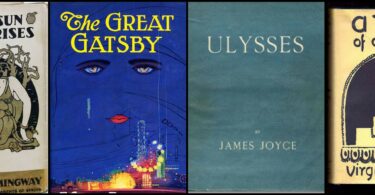
F. Scott Fitzgerald may now be most famous for the The Great Gatsby, but his earlier work, This Side of Paradise, was more well-received when it was first published.  Of course, there were so many spelling and grammar errors, as well as logical inconsistencies, in the first edition that he became almost as famous for the errata as for the plot!  The errors were removed for later editions.

145294018.0.m

A FAREWELL TO ARMS
Signed by Hemingway, Ernest

This particular example of errata does not appear to be a mistake by Hemingway himself.  Inside the front flap of the first edition, first issue dust jacket, the female lead’s name, “Catherine Barkley", is misspelled as “Katherine Barclay".  Later editions and printings of A Farewell to Arms have the correct spelling, making the mistake very rare indeed.

Provide your own examples of errata in the comments section!


War and Peace and Many, Many Mistakes

9780140444179.OL.0.m

If you wish to destroy your own copy, I recommend a reading copy.

It just happened so fast.  One minute, I was innocently ignoring a copy of Tolstoy’s War and Peace, and the next moment, I was killing it.  And it was a slow death.

A painful death.

A few weeks earlier, I was having coffee with one of my classmates, Brad*.  I really liked Brad, but it wasn’t really going anywhere, so I was beginning to lose hope.  After about an hour, he mentioned that one of his favorite books was War and Peace, and so of course I immediately mentioned that I had always wanted to read it, but, so sadly, I had never gotten around to purchasing a copy for myself.  It was only a few days later that Brad was loaning me his beloved copy.

Never before in my life had I enjoyed the slightest desire to read War and Peace, and that disinterest continued for the three weeks Brad’s copy sat on my bedside table.

Brad’s copy was worn with use, but still in excellent condition.  There was plenty of highlighting and notes scribbled in the pages, but judging by the covers, it looked almost new.  But that was before I knocked an entire glass of water on top of it.

In my rush to save the book, I promptly fell off the bed and nearly gave myself a concussion.  By the time I was actually able to lift the book off the now drenched table, it was too late.

The book was now completely waterlogged.  The pages were already waving and fusing together, and the colors from the front cover were bleeding into the first few pages.  In my quickly building panic, I began to violently shake the book in an attempt to unstick the pages.  I tried to wipe the water from the cover, but that only caused the coloring to further smear.

After a few hours of ironing each (still wet) page in an absurd attempt to dry and straighten the pages simultaneously, I laid the book open and went to bed.

The next morning I realized that after hours of being shaken and ironed, and combined with the weight of the water, the spine had cracked in a few of the weaker spots.  The book was now far beyond repair, and so I began to search for a copy with the same cover.  I knew what I needed to do.

I found a copy and began to painstakingly highlight the exact same passages Brad had highlighted in the destroyed copy.  I spent about an hour a night until the highlighting was identical, and then I spent another three nights trying my best to copy his handwritten notes in the margins of the pages.

Throughout this period, our class was ending, and every time when he would ask me where in the book I was, I just parroted off some plot points I found online.  Even though I was highlighting almost half of the book, I still hadn’t read a single word.  I now had a personal grudge against the book, Tolstoy, and the entire nation of Russia.

After our class ended, Brad soon graduated and I was able to effectively avoid him until he moved across the state.  Even after the weeks of work, I was still terrified he would be able to tell that it was not his original book.  So I kept both.

I burned both copies of War and Peace in a quiet, dark ceremony of shame.

*(Not his real name.)


Book Review: Agrarian Socialism in America: Marx, Jefferson, and Jesus in the Oklahoma Countryside, 1904-1920

Agrarian Socialism in America, by Jim Bissett

Agrarian Socialism in America, by Jim Bissett

Historian Jim Bissett argues that socialism became a powerful and influential political force in early twentieth century Oklahoma. He contends that the populist legacy of the 1890s left a cadre of trained activists. These individualists demanded a democratic variety of socialism atypical of the Socialist Party in the United States. A synthesis that blended a Marxist critique of capitalism with the American ideal of the yeoman farmer and many teachings of evangelical Christianity helped socialism gain support in rural Oklahoma in ways unlike other areas of the United States. Bissett further argues that the Socialist Party developed as a native Oklahoman institution rather than one imported wholesale from outside the state. Bissett’s book first examines in detail the rise and fall of the Indiahoma Farmer’s Union, an important organization spanning both the Oklahoma Territory and the Indian Territory in the first years of the twentieth century. His analysis of the political struggles of this union both internally and against the status quo demonstrates its importance in shaping the attitudes and honing the skills of union members. Controversy over tactics arose between rank-and-file members and large landowners who came to dominate the elected leadership of the union. By the time that the Oklahoma and Indian Territories joined and achieved statehood the union’s power had dissipated and agrarian activists began to find a new home in the Socialist Party.

Land issues predominated, and by 1912 the Oklahoma Socialist Party supported private land ownership by individuals as official policy. After 1912 leaders decentralized party authority so that local party organizations much autonomy. In 1912 Eugene V. Debs, the Socialist Party candidate for president, won sixteen percent of the popular vote in Oklahoma. Their success frightened the Democratic and Republican parties enough that they passed a “New Election Law” making it more difficult for tenant farmers to register to vote. The rules restricting the election of socialists only foreshadowed far more direct suppression during the war years. Declaration of war in April of 1917 and the passage of the Conscription Act in June of that year led to an armed revolt. A sheriff’s posse and the state militia ended the Green Corn Rebellion very quickly. The federal government used the recently passed Espionage Act of 1917 to prosecute many who had nothing to do with the Green Corn Rebellion. Bissett concludes that “nowhere else in the United States did socialist activists succeed in making the European doctrines of Marxism speak so unambiguously in American terms.” (185-86)

Bissett presents important events and organizations not elsewhere analyzed. Oklahomans adapted socialism to their own circumstances, culture, and economic reality in a way unlike anywhere else in the United States. Experienced agrarian activists in the state found a resonance between socialism, yeomanry and evangelism. This synthesis formed the backbone of the movement in this unique state. Their withering denunciation of capitalism based on American ideals threatened established power and ironically led to their own destruction. New material and analysis here helped in understanding some of the complex issues of agrarian socialism in Oklahoma. This work provides important insights that will be helpful in any research project on related topics.


Book Review: The Giver, by Lois Lowry

The Giver, by Lois Lowry

The Giver, by Lois Lowry

Winner of the prized John Newbery Medal, Lois Lowry paints in subtle strokes and subdued hues in her classic work, The Giver. Set in a dystopian society, The Giver dramatizes the struggles of the protagonist, Jonas. While the adolescent trials of Jonas are at the same time unique and profoundly familiar for Lowry’s intended audience, adults will find them equally compelling.

Taught in many middle and high schools across the United States, The Giver offers fascinating critiques of equality, fairness, and justice. Set in a community where the citizens are in a forced state of “Sameness” and where everything is regulated through a strict bureaucracy and medical manipulation, Jonas’ trials are riveting and do well to maintain the reader’s attention. The plot focuses on Jonas’ training to be the community’s new “Receiver of Memory”, a role that entails much mental and emotional anguish. The book centers largely on his reactions to the hypocrisy that infects Jonas’ world.

This should be considered a safe book for most children to read, and the depictions of war and poverty are descriptive, but not graphic. It is an excellent introduction to both science fiction and dystopian literature, and the language used by Lowry is easy to understand and accessible to even young readers. While some of the plot twists require certain leaps of logic, this is an excellent read and will be sure to spark conversation and debate at the dinner table.


You did it!

reading

A young student enjoys reading, thanks to your help.

The BiblioWorks 2nd Annual Literacy Festival has been completely funded! 

We would like to offer a sincere “Thank You" to everyone who contributed to the recent IndieGogo campaign.  The folks at BiblioWorks, the staff at Biblio.com, and of course the students themselves appreciate every effort encouraging the spread of literacy and the love of books.

What else has been going on with BiblioWorks?

***The library at Sopahcuy was opened in 2008, and it is soon to be a completely sustainable library, meaning that the city and community will be able to keep the library going without being dependent on the support of BiblioWorks!

***BiblioWorks has teamed up with two great projects, Inti and Cara a Cara, to be able to bring the joys of art to 31 children in Bolivia.

***Learn about volunteer opportunities with BiblioWorks.

***Did you miss the IndieGogo campaign?  Donate to BiblioWorks!


Are International Edition Textbooks Legal?

international_edition

International Edition textbooks listed on Biblio are marked by this image.

Are International Edition Textbooks Legal?

YES!

For years now, we have been hearing that question asked by concerned students, booksellers, publishers, and college professors.  The selling and buying of International Editions within the US has been considered a grey-market area for many years – while not specifically restricted by law, it is definitely frowned upon by the publishers themselves.

An International Edition textbook is a version of a textbook that has been published for intended distribution outside of the U.S., and they are much more cost-effective than the new U.S. editions.

On March 19, 2013, the recent Supreme Court decision of Kirtsaeng vs. John Wiley & Sons upheld the “First-sale" doctrine, which means that International Edition textbooks are allowed to be sold and purchased within the US.  It also upholds the right of anyone to sell or otherwise dispose of their purchased material however they choose, which means that college students are still able to resell their textbooks when the semester is over!

For more details about exactly what an International Edition is, and the potential differences between US and International Editions, check out this post:  What is an International Edition textbook?


Fools in Literature

The true origins of April Fool’s Day continues to be a mystery, but National Geographic offered this possible explanation:

“Joseph Boskin, professor emeritus of American humor at Boston University, has offered his own interpretation of the holiday’s roots—as a prank.  In 1983, Boskin told an Associated Press reporter that the idea came from Roman jesters during the time of Constantine I in the third and fourth centuries A.D.   As the story goes, jesters successfully petitioned the ruler to allow one of their elected members to be king for a day."  – from April Fools’ Day: The Joke’s On Us

The folks at History.com also summarized many popular theories in their article this morning:

“Some historians speculate that April Fools’ Day dates back to 1582, when France switched from the Julian calendar to the Gregorian calendar, as called for by the Council of Trent in 1563. People who were slow to get the news or failed to recognize that the start of the new year had moved to January 1 and continued to celebrate it during the last week of March through April 1 became the butt of jokes and hoaxes…"

“April Fools’ Day spread throughout Britain during the 18th century. In Scotland, the tradition became a two-day event, starting with “hunting the gowk," in which people were sent on phony errands (gowk is a word for cuckoo bird, a symbol for fool) and followed by Tailie Day, which involved pranks played on people’s derrieres, such as pinning fake tails or “kick me" signs on them."

Regardless of its true origins, there are many fun and harmless pranks that you can play on your friends.  If you are out of ideas, check out these books below to buy a copy on Biblio.com and prepare for next year:

Cubicle Warfare: 101 Office Traps and Pranksby John Austin

Cubicle Warfare: 101 Office Traps and Pranks
by John Austin

Museum of Hoaxes, Edited by Alex Boese

Museum of Hoaxes, Edited by Alex Boese

Black Cats and April Fool's by Harry Oliver

Black Cats and April Fool’s by Harry Oliver

Stuntology by by Sam Bartlett

Stuntology by by Sam Bartlett

Mischief Maker's Manual by Sir John Hargrave

Mischief Maker’s Manual by Sir John Hargrave


Book Review: And Still the Waters Run, by Angie Debo

And Still the Waters Run: The Betrayal of the Five Civilized Tribes

And Still the Waters Run: The Betrayal of the Five Civilized Tribes

In her groundbreaking work, historian Angie Debo challenged convention and exposed the exploitation of Native Americans in Oklahoma from the end of the Civil War through the 1920s. Published in 1940, Debo’s thorough use of documentary evidence provided the first thorough scholarly examination of these events. Debo argues that monied interests systematically despoiled the Five Civilized Tribes of their sovereign territory and political power, and stripped the members of those tribes of their mineral, agricultural and land wealth. Debo chronicled the transition from Native American communal land tenure through the allotment process, and described in detail the effort to seize land and resources at every stage. Her work examined the dissolution of tribal governments after Oklahoma statehood in 1907, and the gradual disappearance of Native American political influence in Oklahoma.

Though her work is considered foundational by scholars of Native American history, her sharp criticism of leading citizens and institutions in Oklahoma led to her being banned from teaching in the state for many years. Debo devotes over half of the book to problems with allotment. In addition to her concerns over corruption in the allotment process, Debo repeatedly details the exploitation of Indian children. Orphan children lost control over their allotments in large numbers. Debo details the complexity of the years between statehood and World War I in great detail. Her research provided the first factual scholarly narrative of the events of this period. She successfully challenges many assumptions of white superiority and directly contradicts the conclusions of her contemporary Frederick Jackson Turner about the nature of the frontier in America. Today she is celebrated as one of the greatest historians from Oklahoma, and is revered both by scholars and political leaders from the state.

Purchase a reading copy of And Still the Waters Run from Biblio today.


Dead Feminists Live On

 Keep the Change: No. 16 in the Dead Feminists series

The Dead Feminists is a broadside series created by the dynamic duo of Jessica Spring and Chandler O’Leary.

dead-feminist jessica and chandler

Jessica of Springtide Press and Chandler of Anagram Press unite to resurrect feminists from days gone bye whose messages still ring true when looking at the current political and social landscape.

The series has been going strong since 2008.  The broadsides are letterpress printed from hand-drawn lettering and illustrations in limited editions.

The size of each edition corresponds to the subject matter.  The edition of  "Gun Shy" featuring Annie Oakley was printed in an edition of 151 copies to represent each person injured or killed in a shooting rampage  in 2012! And, of course, a portion of the proceeds for each broadside goes to an organization related to the issue at hand.


 Gun Shy: No. 17 in the Dead Feminists series

The broadsides retail for $40 and usually sell out pretty quickly.

Let’s hope that someday they reprint some of the early broadsides!

More from:

 Springtide Press

Anagram Press

The Dead Feminist broadsides where also included in our latest Bibliology e-mailing, a salute to National Women’s History Month.


Old Movies and Big Books

Hollywood loved books in the 1930′s and 40′s. Not only were many of the films adapted from books but books also played a pivotal role in promoting the films.
Above is Alan Ladd with a well-designed, super-sized copy of The Great Gatsby. Ladd played Jay Gatsby in the 1949 film version.
and here are a few more striking examples:
Charles Farrell and Janet Gaynor promote High Society Blues, 1930
Loretta Young, Alan Ladd– And Now Tomorrow , 1944


Jennifer Jones, Charles Boyer– Cluny Brown,1946


Toby Wing, actress in the 20′s and 30′s

All images via Sergio Leemann’s A Certain Cinema, an amazing repository featuring over 12,000 images.

Unfortunately, none of these giant editions have made it to the marketplace yet but here are copies of the original books including copies of the crown jewel of the Modern First Edition genre of book collecting ; A First Edition of The Great Gatsby in the original dust jacket.

The Great Gatsbyreading copies

And Now Tomorrow by Rachel Field – First Editionreading copies

Cluny Brown

and some sheet music for High Society Blues